
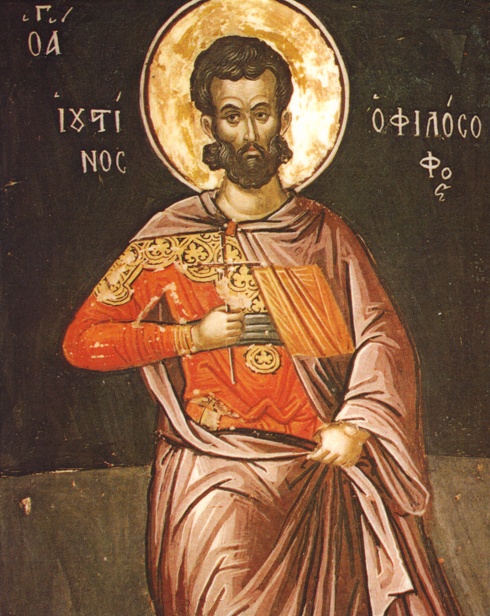
In Justin Martyrs First Apology written to the Emperor in defense of the Christian faith, we see a robust, holistic, and well-rounded approach to apologetics. His approach to apologetics begins with knowing the theology of the church, that of the pagan religions, and that of the complaints and allegations that have been made against the Christians in his time. He then disproves the allegations to be false, teaches the truth of the Christian faith, and then lastly points out the errors of the other religions in a polemical fashion. Both establishing the truth of the Christian religion and dismantling the self-supposed truth of paganism.
His approach begins before his writing does, with knowing before speaking. First, he knows his own church’s theology, life, and practice. Yet he knows also the theology, worldview, and ethics of the world and the false religions around him that his opponents support. And lastly, he knows very well the reasons that those he contends with opposed Christianity. It is this knowledge of these things; his faith, their faith, and their hangups with the true faith that fuel his apologetic thrust in defense of Christianity and in argument for it over and against the paganism of his day. Knowing these things he then begins to engage thoughtfully and meaningfully with them. Beginning first with the complaints that the pagans around him make against Christianity, Justin Martyr begins his apology by acknowledging the allegations that the people of his time had made against the Christian faith. Of these allegations he calls the emperor to rightly investigate these accusations, that if found guilty the perpetrators be punished, and yet if not, that these allegations be dismissed as fallacious slander. As he says; we demand that the charges against the Christians be investigated, and that, if these be substantiated, they be punished as they deserve; [or rather, indeed, we ourselves will punish them.”1 In that he does this he begins by offering to his opponents a granting of their own desires, as well as a hearing of their complaints. They have heard that awful and criminal things are being done by the Christian Church. In hearing, thoughtfully considering, and answering the accusations against the church in this manner what Justin Martyr is doing is showing that the Christian church is not a criminal cabal society that seeks to secretly cause harm so long as they get away with it. Rather, Justin Martyr is showing that this is a community that cares for truth and goodness, just as the emperor himself should. As such, he shows that the Christian church is a force for good in society, and in many ways shares the same concerns of the emperor.
Then he goes through the allegations that have been made and dismisses them as false one by one, while also at the same time teaching the truth of the Christian faith in a manner that is itself convincing and persuasive. The first time that he does this is in regard to the accusation that Christians are atheists. The people of his time believed that this was true because as it was known, the Christians rejected the false pagan gods. Which, at that time, was an exorbitantly large number of supposed gods. To the pagans this seemed absurd. They rejected the existence not only of Zeus, but also of Appolo, and yet still also of Hera, and Bacchus, and nigh on every god that the pagans had ever heard of. Yet as Justin Martyr says, the Christians are in fact not complete atheists, though it may seem so. But rather, as he says; “we confess that we are atheists, so far as gods of this sort are concerned, but not with respect to the most true God.”2 Yet in dispelling this erroneous accusation against the church, he also takes the opportunity to rightly teach the Christian faith in the Triune God, continuing on, saying that this true God is; “the Father of righteousness and temperance and the other virtues, who is free from all impurity. But both Him, and the Son… and the prophetic Spirit, we worship and adore.”3 Thus, as he goes through his apology to the Emperor, he does so by both at once dismissing the slanderous accusations that have been made against us while also teaching the truths that we confess. This method he repeats with every accusation against the church. Where we are accused of treason through waiting for our new kingdom or proclaiming that we already now enjoy its reign, he first denies, and then corrects the accusation by showing that the kingdom we believe in a spiritual and heavenly one, as Christ taught.4
As he goes through these accusations one by one, he adds also polemics against the false pagan religions that surrounded him. In the case of the accusation that we are atheists because we neither believe nor worship the false pagan gods, he first dispels the rumors, then teaches the truth, and then attacks the falsehood of the pagans.5 This methodology, seen in just the first few pages of the First Apology of Justin Martyr flows throughout the whole of the work.
What we can see and learn here is that the church as she is attacked by the world, which she will be as she operates faithfully and truly among those she is called to minister among, must be a church of those who deeply know and understand not only the Christian faith, but also the faith of the people in the context we live. She must also be a church that is not afraid to engage, but which willingly, thoughtfully, and articulately deals with the accusations of the world, dispelling the slander, teaching the truth, and dismantling the errors of the world, for the purpose of persuading and convincing those we interact with in the world around us.
In all this we ought to notice Justin’s emphasis upon the mortal virtue of the Christian religion in connection to our apologetic work in the world. In this he seeks to show the Emperor that the church is a source of goodness, and a positive force for and in society. Here we stress first the importance of the church living up to the standard that she claims to keep. We must, if we wish to maintain the reality of what we claim, live into the goodness and virtuous things that God laid out for us in His Word. Where this does not happen, we cannot with Justin Martyr point to the goodness of the church in her defense. Where Justin Martyr says that the church protects the orphans and the widows, supports chastity and personal holiness, faithfulness and humanitarian charity aid, we run the risk of being able only to say that we believe these are good ideas and concepts without ourselves actually doing or embodying these things, being no different from the world. Thus, the church must continue to not only teach holiness, but live it out in the world if we seek to be an apologetical and evangelistic community
But as we acknowledge this truth me must also look to the reality of our own changing context, with its drastic shift in values since Justin’s time. Simply put, the world no longer values chastity, it no longer values purity, it no longer values innocence. And this being what it is, the world can no longer value the virtues of the church. To be those who protect the life of the unborn is to be labeled as evil and oppressive in modern western society. So also is our condemnation of sexual deviancy, and our stress for the goodness of virginity and the need for chastity and marital faithfulness. There remains of course universal goods still held by the western world, such as the feeding and clothing of the poor, and the instructions on peace. Yet, these differences do lead us toward a different position than Justin Martyr found himself in. If we seek to use the virtue and goodness of the church as an apologetic, we must, unless we want to focus only on those things which the world agrees with us are good, first teach them about natural law, and goodness itself. This will require us to utilize Justin Martyrs theological apologetic-polemic structure of acknowledgment, clarification, defense, and polemic, in matters of natural law and ethics just as much as we would seek to use it in matters of theology and faith. Yet, just as this method works efficiently for convincing and pursuing people toward Christ, so also it can and has been used faithfully by Christians of our own time in ethical dialogue with the world around us. This is perhaps seen best by those who serve in pro-life advocacy groups and pregnancy care centres, who begin their task by acknowledging the beliefs and concerns of those who would seek abortions, dispelling the false accusations against the church in this regard, teaching the truths of the matter, and then walking them through the reasons for abandoning the pro-choice position. Where this method is used faithfully, the outcomes are positive. In seeking to apply Justin Martyrs method of apologetics we must do so, not only with theology but also with matters of goodness in secular life, and we must also ourselves live that good and virtuous life among our neighbors in the world. In doing so, there will surely be great reward.


