
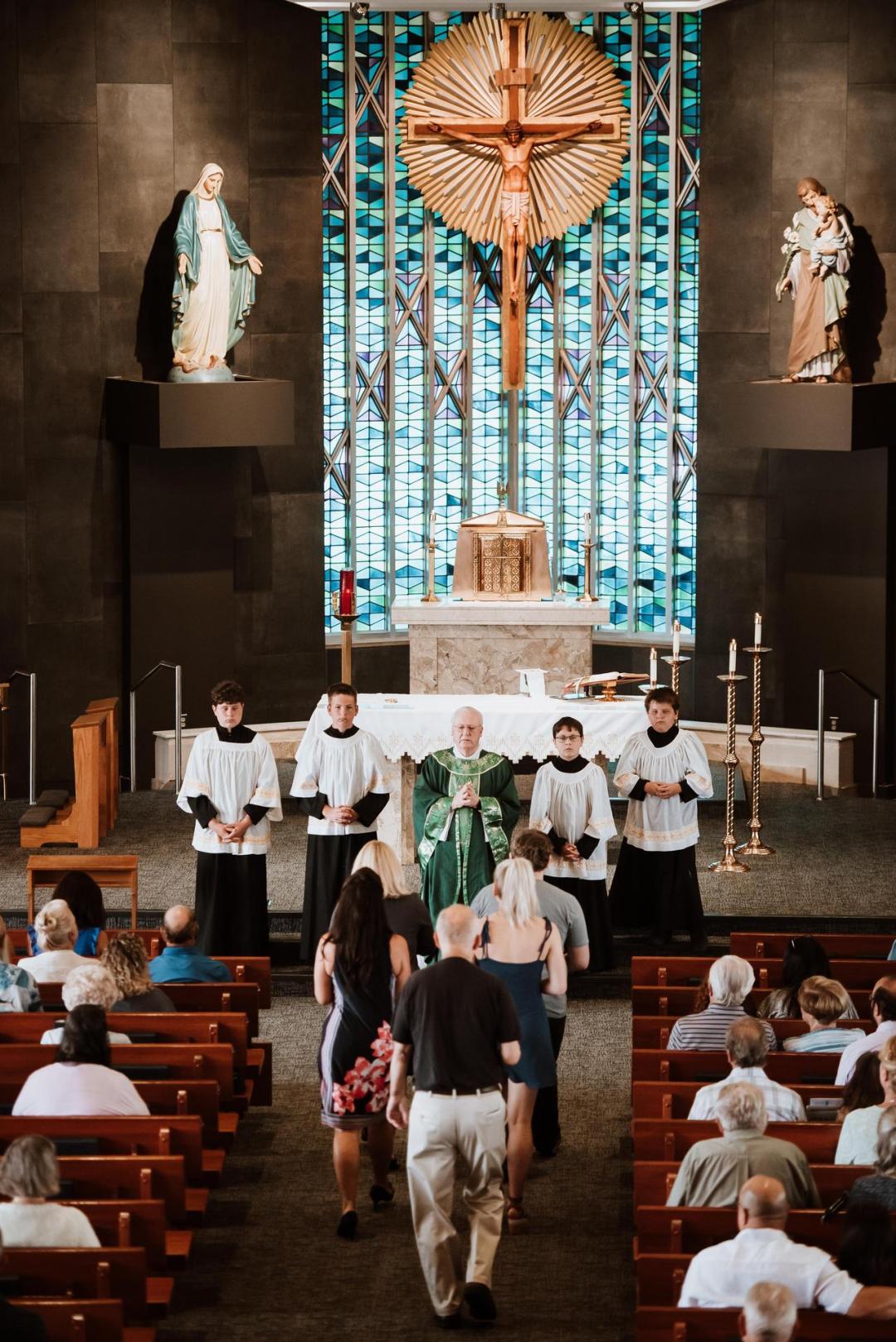
AC 10: The Lord’s Supper: Concerning the Lord’s Supper it is taught that the true body and blood of Christ are truly present under the form of bread and wine in the Lord’s Supper and are distributed and received there
Last Wednesday we meditated upon the Advent mystery of God revealing Himself to us in hidden and sacramental ways that can’t be seen by the eye but only by faith
We spoke of the mystery of God’s Messianic king coming as a baby ,of Salvation coming through defeat, of eternal life coming through death, we spoke also of declarations of God’s forgiveness coming thorough the mouths of sinners, and off the mere words of a page, we spoke of the drowning of sin and the old nature with the sprinkling of Baptismal waters, we spoke of the humble requests we make to God in prayer as the shaking of the devils domain and the coming of God’s kingdom, We spoke of the church as God’s kingdom, of their being surrounded and protected by the Holy Angels, of their identity as the mystical body of Christ in this world, We spoke of the sinner as being a righteous saint in Christ, and last of all we spoke of the sacrament of Communion – the Holy Eucharist. Merely bread and wine to the eyes of the flesh, but seen clearly with the heart of faith – seen to be Christ’s body and blood, for the forgiveness of our sins.
And that’s what we’re going to focus in on today, the Sacrament of Holy Communion.
We hear in Isaiah of
- Isaiah speaks to us of a Feast prepared upon a hill (and this hill really, is golgatha. It is the place where He prepares all of salvation, all of this sacrament, accomplishes it, and makes it real. The true Hill of Zion, the place where God’s glory and God’s grace and God’s mercy meet, and come into one in the person of Chriist Jesus, and are actually made real and effectual through His death on the cross)
- from this one act on this hill, God accomplishes all good things. And through this cross, He makes for us:
- A feast of well aged wines and fat meats
- a feast of salvation
- a feast that lifts the veil of deep darkness, that destroys death forever, and that wipes away every tear.
And yet we ask, what is this feast? A feat of fat things (of meat and marrow), a feast of well aged wines? How can meat (notice, not bread but meat – flesh), how can meat and wine be for us salvation? How can a meal save our souls? How can wine take away our reproach, our guilt, our sin?
Let us read on,
We hear just the same in our Psalm
- God’s comforting presence (the Lord is with me, His rod and staff…)
- the nourishing and live giving power of the sacrament of Baptism (leads me beside still waters, which restore my soul
- He sets a table before us in the presence of our enemeies and in the shaddows of deep darkness,
- ^ and this table, this feast, it is for us a feast of victory, a feast and a meal unto our comfort and our salvation in times of distress and in the places of deepest darkness.
- He fills our cups with rich wine, until our cups overflow .
- And this feast turns the Psalmist away from the deep darkness that enshrouds Him, and away form the troubles and trials that ensnare Him, toward the promises of hope, and victory, and life, and the goodness and mercy of God!
Yet, how? How can a meal, a feast, a table, do all this? It cant!
And that’s the whole point, which then brings us to our Gospel reading
- The apostles are gathered around Jesus, a vast crowd of thousands upon thousands.
- And here, Jesus demands that the disciples do a miracle for them.
- That the disciples do the impossible for theem.
- That they feed this crowd of thousands. Yet how can they? What do they have? Nothing really, just 7 loaves and a few fish.
- And what can that do? How many can 7 loaves and a few fish really feed? DO you know?
- Yet in their inability, and in the midst of this utter impossibility, what does our Lord say? Does He say, Oh that’s too bad, but at least we can feed some? Does He say, Oh well, let me just call down mana from heaven instead? No.
- Rather, the apostles come and they bring what little they have to Jesus. Knowing that while these loaves and few fish themselves can do absolutely nothing toward the goal they hope to achieve. Yet Jesus can do anything. He can do all things.
- And so they bring these things which themselves can do nothing – and Jesus takes them, and He GAVE THANKS (which in Greek is eucharisteo – form which we get the Word Eucharist), and blessed, them, and gave them back to His disciples to give out to the people
- And Throguh this EUCHARIST, and through Christ’s blessing of these gifts, what was utter unable to feed 100, became super-abundanly able to feed thousands.
This is what we do in the sacrament of Communion. This is the movement of the Liturgy. Have you noticed this? We don’t merely go from the sermon to the prayers to communion. What do we do, do you know? We hear the Words and the promises of God. We grasp them and exercise our faith in them through prayer, and then together as one church, we bring up to God our gifts in the Offertory, we bring up our money, our time, ourselves, our concerns and our prayers and our worship – we bring all that we all, all that God Himself has given us – but chief of all – we bring up bread and wine. And none of any of these things themselves can accomplish really much of anything. Ourselves, our time, our effort, our sincerity, our sorrow, our care – really, we know, what can they do? Yet we bring all these thigns to God that He might bless them, and use them for His purposes, not because they are so useful in and of themselves, but because He has willed to invite us to bring all that we have and are into His work of redemption. And so we do. And so, bringing to God all these things. Bringing to God all that we are. Bringing to God this bread and this wine – we ask, Him, and entreat Him – to make Good on His promise. To take this bread and to make it into the body and blood of Christ. To take this little meal, not even substantial enough to feed one person, able to feed forever the whole human race. To take this table, and make it an altar. To take these sinners and make them saints. To take our sorrows and make them joys. And this – and more, He does.
And so we bring all that we have to Him, that He might bless them and transform them and use them. And so He does.
And this is really the heart of the sacrament of Communion. It is the union between the ordinary and the extroardinary. Of the natural and the supernatural. Of the creation and of the creator. Of bread and embodied God. Of food and of divine fire. It is where God unites Himself sacrmaentally to bread and wine, that we He might be all the more united to us. AN dthorugh this, that we, and all these things, might be transformed. So that we might confess, along with Dr. Luther, in the Smalcald articles on the Sacrament of Communion – that, and quote “the bread and the wine in the Supper ARE the true body and blood of Christ”
And so I ask again, Communion – what is this thing? This thing that is for our salvation? So we believe anyway. What is this thing, that is for the forgiveness of our sins and the salvation of our souls? What is this? The eyes of flesh tell us that it is bread and wine. And so we have heard, it is indeed bread and wine. Yet what things have come from bread and wine? Calories. Intoxication or diabetes if you drink and eat too much of it I suppose, but really what? Nothing really.
Here is the matter of truth for you all. The sacrament of Holy Communion does far more than bread and wine could ever do. For in fact, the sacrament of Holy Communion is not merely bread and wine. This is the truth .For though, in this sacrament, just as the apostles brough to Jesus 5 loaves and 2 fish, or 7 loaves and a few fish, we too now, bring to Him our bread, even less than 5 loaves. Even less than one. And yet in and with His blessing, and together with His promise, with these 5 loaves, no – with even less than 1 loaf, and with that blessing and promises, we come away from that altar not just with bread, but with the body and blood of Christ, and every blessing from Him unto salvation, given surely, in this sacrament – because here is no longer just bread – but the very God who formed you and shaped you, come here to give Himself to you. That He might be yours, and that you might be His.
For this is no longer just bread.


