
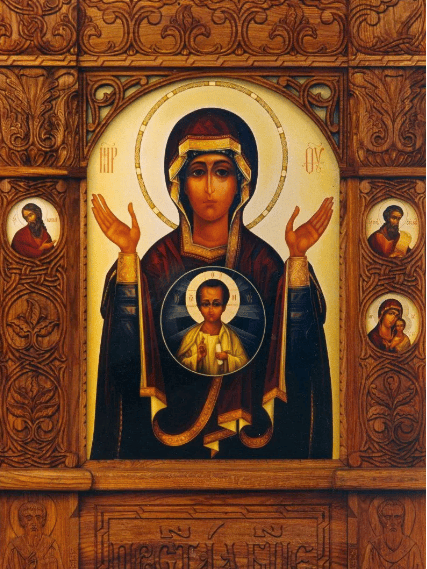
FC, on the Person of Christ: We believe, teach, and confess that God is a human being and a human being is God. Therefore, we believe, teach, and confess that Mary did not conceive and give birth to a child who was merely, purely, simply human, but she gave birth to the true Son of God. Therefore, she is rightly called and truly is the Mother of God. Therefore, we also believe, teach, and confess that no mere human being suffered, died, was buried, descended into hell, rose from the dead, ascended into heaven, and was exalted to the majesty and almighty power of God for us, but rather it was a human being whose human nature has such a profound, indescribable union and communion with the Son of God, that this human nature is one person with the Son of God. Thus, the Son of God truly suffered for usin His humanity, which he had assumed into the unity of his divine person and made his own, so that he could suffer and become our high priest for our reconciliation with God. For as it is written, “They crucified the Lord of glory,” and, “With God’s blood we have been redeemed
Today I want to preach to you the gospel of Christ’s conception. Particularly, I want to preach to you this one Gospel truth: that eternal life begins at Christ’s conception. I say again – eternal life (for all who will receive it), began, was made, was formed, and came into concrete reality, in the conception of Jesus Christ – and this is a matter of our Creedal Christian Faith. But before we hear the gospel that we confess in faith, let us first look to our context.
These past few weeks in Advent (as with every Advent season), and the weeks anticipating it, we’ve been focusing upon themes of hope and waiting and expectation. A lot of those themes focus upon this idea that something is coming. That something is about to happen. And so we have heard cries from the darkness for the light. Cries for a salvation that God’s people have so long been waiting for.
But this Sunday, (3rd Sunday in Advent), this Sunday is different. This Sunday is special. This Sunday we take a break from our anticipatory focus on the coming of what is now still not quite here yet, and focus instead upon what has already now come. And as we do so, we rejoice. And that’s what this Sunday is known as. Not – “3rd Sunday in Advent.” No. But – Gaudete Sunday. Gaudete – rejoice! Rejoice – because the long awaited salvation is no longer one that is merely coming. But one that, now – in Christ, at least in part, has come. In His conception in the womb of the Virgin Mary.
And that’s what today is about. Today is about God’s people turning away from their cries for salvation, toward God’s proclamation that in Christ – that salvation has come.
We see this idea in our Scriptures today. In Isaiah we begin in the same place we’ve been the last few weeks.
The people of God were oppressed, they were brokenhearted, they were captive, they were prisoners, they were mourning in sack cloth and ashes, they were faint of Spirit, and had found themselves devastated and in ruin. All because of their sin. All because they had turned away from the Lord God, and away from goodness and virtue, and instead toward idols of stone and wood, toward themselves and their pride, toward sin and greed and gluttony and arrogance. And as a result – they were undone. And that’s where so much of Advent is situated. Its situated in that need to be saved.
But the people met in this place, (in that need) today, are met by God’s preachers and prophets with a message of Hope and a Word of promise.
For as Isaiah says, this day the Lord has sent His anointed one – in Hebrew, His – Messiah. Or in Greek, His Christ. And this Christ, this Messiah – this anointed one, – He has been sent, He says,to bring good news to the oppressed, to bind up the brokenhearted, to proclaim liberty to the captives, and release to the prisoners;2 to proclaim the year of the Lord’s favor, and the day of vengeance of our God; to comfort all who mourn;to provide for those who mourn in Zion— to give them a garland instead of ashes, the oil of gladness instead of mourning, the mantle of praise instead of a faint spirit. They will be called oaks of righteousness, the planting of the Lord, the display of His glory. That is – He has come to undo all evil, to bind all that is broken, and to fix all that is wrong and to lift up those who are bowed low and broken down. To name sinners righteous. And to crown in glory those who languish in humiliation. And that is what Israel was at the time that this Word was spoken.
The people of this time were bound up in political oppression. Subjugated and captive to a foreign political power that had taken them into slavery and exile. Yet – here they hear of their salvation. Here they hear of their liberation. Here they hear of their release. The year of the Lord’s Favour. The year of Jubiliation. When all slaves be set free. All wrongs be made right. And all debts be forgiven. And all this because the Messiah has come.
And yet – while the Israelite’s in Isaiah’s time HEARD of this Messiah’s coming, it was Mary who first sensed and sung of this promises actual fulfillment, in her Magnificat that we sung earlier today. Where she sings all about God finally having made good on that promise given through the forefathers of Israel. And all of this she sings – not as smoething that God WILLdo, but something that God HAS done. And just what has He done?
- He has made His people to rejoice – for He has come and has saved them. He has shown great strength with His arm, and scattered those who held His people captive
- He lifted His people out of oppression
- He has looked with favor and grace on the lowly and undeserving state of His people
- He has lowered Himself to lift them up
- He has emptied Himself that He might fill them
- He has given Himself to gain us
and all this – all this work of salvation and redemption, in Mary’s song, HAD happened. And do you know where and when? Is she singing about the cross? No. Is she singing about His preaching and miracle doing? No. Is she singing about Christmas and the coming Birth of the Messiah? No. Not even that! But what then? What is this song about? Do you know? It’s about the incarnation of Christ itself. The enfleshment of Christ. The union between God and Man in Christ – itself. And that – is not Christmas. That is not at His birth. But that is His CONCEPTION. For Christ Himself – and His becoming man – that is, a real human person, took place before His birth, in her womb. And that conception in her womb (which we confess every Sunday in the Apostles Creed; I believe that Jesus Christ was conceived by the Holy Spirit and born of the Virgin Mary, and in the Nicene Creed; I believe that Jesus Christ, by the Holy Spirit was incarnate of the Virgin Mary and Made Man), – that conception that we confess as our faith, that conception WHERE HE BECAME MAN, that conception WHERE CHRIST ENTERED THE WORLD – marked the beginning of the salvation of the whole human race. For it is in His very person, in His coming down low to us, as Mary sings, that the lowly have been lifted up. It is in His emptying Himself, and taking on the lowly form of a human baby, and being laid in a manger – a feeding trough for animals that He was shown to be food for the world, – come to fill the hungry, with His own flesh and blood.
This we see also in the writings of St. Paul, who says in Philippians chapter 2; though he was in the form of God, Christ Jesus did not regard equality with God as something to be exploited,but emptied himself, taking the form of a slave, being born in human likeness. And being found in human form,he humbled himself and became obedient to the point of death— even death on a cross and as he says in his letter to the Hebrews – we see Jesus, who for a little while was made lower than the angels, now crowned with glory and honor because of the suffering of death, so that by the grace of God he might taste death for everyone.10 It was fitting that God, for whom and through whom all things exist, in bringing many children to glory, should make the pioneer of their salvation perfect through suffering
This is the message of Mary’s Magnificat that God has proclaimed to us through her mouth. That God had done all these things through the conception of His Son in her womb. That God had come to us. He had come into the world. That the Word of God – who was God, who was with God, who had made all flesh formed all flesh and fashioned all flesh, for our sake, BECAME FLESH in Mary’s Womb. And all this that He might redeem, save, and liberate those who were captive, bound, and enslaved. Not to Babylon or Rome – but sin, to death, and to the devil.
And this salvation, IN MARY on that day of His conception – had come to us in Christ. For the one who was to come. On that day, had come. For as all human life begins at the miracle of natural conception, so now we hear, receive, believe and truly confess that ETERNAL LIFE, salvation, and redemption from sin, death, and every power of the devil, began at Christ’s Supernatural conception. For though He had not even yet been born – Christ had already brought the whole world to life in His very own conception. That is Mary’s Song. That is our confession of faith. And that – is GOOD news.
So let us rejoice in that news. For this day – we celebrate the conception of Salvation in Mary’s Womb. This day – we proclaim that life eternal for all people in Christ has come.


