
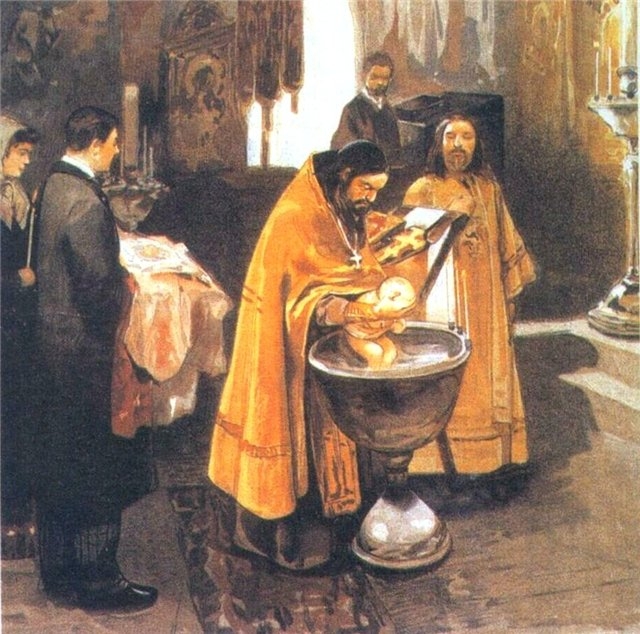
Acts 8:9-19 (EHV) 9Now there was a man by the name of Simon, who had been practicing magic arts in the city. He amazed the people of Samaria while claiming that he was someone great. 10They all paid attention to him, from the least of them to the greatest, saying, “This man is the power of God that is called ‘Great.’ ” 11They paid attention to him, because he had amazed them for a long time with his magic arts. 12But when they believed Philip, as he preached the good news about the kingdom of God and the name of Jesus Christ, they were baptized, both men and women. 13Then even Simon himself believed. After he was baptized, he stayed close to Philip. As he observed the signs and great miracles that were taking place, he was amazed.14When the apostles in Jerusalem heard that Samaria had received the word of God, they sent Peter and John to them. 15When Peter and John arrived, they prayed for them that they might receive the Holy Spirit, 16for he had not yet come upon any of them. They had simply been baptized in the name of the Lord Jesus. 17Then Peter and John laid their hands on them, and they received the Holy Spirit.18When Simon saw that the Holy Spirit was given through the laying on of the apostles’ hands, he offered them money 19and said, “Give me this power too, so that anyone on whom I lay my hands may receive the Holy Spirit
Acts 19:1-6 (EHV) While Apollos was at Corinth, Paul traveled through the interior districts and came to Ephesus. There he found some disciples 2and asked them, “Did you receive the Holy Spirit when you became believers?”“No,” they answered, “we have not even heard that the Holy Spirit was given.”3Paul asked, “What were you baptized into then?”
They replied, “Into John’s baptism.”4Paul said, “John baptized with a baptism of repentance, telling the people to believe in the one coming after him, that is, in Jesus. 5When they heard this, they were baptized into the name of the Lord Jesus.”
6When Paul laid his hands on them, the Holy Spirit came on them, and they began to speak in other languages and to prophesy
Have you ever wondered what Confirmation is? Why do we do it? Did Jesus institute it? It is apostolic? Or a Roman innovation? Is it a Sacrament? Or a man-made tradition? Who gets it? At what age? Why? For what purpose?
Im glad you asked
You see, in our Lutheran churches there has been much confusion shrouded upon Confirmation for various reasons (holdovers of 13th cent. Roman innovations/perversions, reactions against state-churches, and Reformed/Protestant influence upon our ranks) which have all led up to our churches more or less treating confirmation as a glorified german bar mitzvah at worst, or an Arminian “decision” that is used to bulldoze the sacramental objectivity of both baptism and the Eucharist. Pushing against that, and operating from the mind of the ancient church of East and West, we will seek to put forward a clear, concise, and reasoned argument for a baptismal confirmation given regardless of age, granting immediate admission to the sacrament of the altar and full inclusion in the Christian Church, with all responsibilities and priveledges included therein.
But – in order to do that we must start where all Christianity begins. With Baptism. But not Christian Baptism. No. We need to start with an earlier baptism. with John’s Baptism.
You see, John’s baptism was one of water. Only water. Actually, it was in fact what the Jews called a proselyte baptism. Basically, a ritual washing for conversion. The idea was just like any of their innumerable ceremonial washing. A thing was, let’s say “ritually” or “ceremonially” unclean, and so they would subject it to a ritual/ceremonial washing, to make it ceremonially clean. Gentiles, of course, were in the eyes of the Jews at this time, entirely and wholly unclean in every way possible. Thus, if one wanted to convert to Judaism, they were subjected to a whole body wash, to get rid of that ethnic inferiority they suffered from. John – being “of God,” thought this was beyond cringe. And so, he went out into the view of the public, and declared them all unclean, and in need of cleansing, and then rebuked them for thinking that their ethnicity would save them, and instead, calling them to a life of virtue, and of repentance toward the Lord by faith in the Messiah. (Luke 3:7-11)
as it was, the Jews had many non-sacramental washings. These represented symbolically the need for the people to be made clean, the washing off of the old, and the cleaning away of what was wrong with them. But these did not actually do anything to them. This is what John’s baptism was. A use of this concept, and an employment of this practice.
^ and so the disciples go out and there are people who are “baptized” (into John’s baptism – Acts 19). But they haven’t been baptized into the name of the Father, the Son, and the Holy Spirit. In fact, they haven’t EVEN HEARD that there is a holy Spirit. And so, they had not been baptized.
And so the disciples ask them,
into WHAT then, were you baptized? Into WHAT? What do they say? Into John’s baptism. But wwhat IS John’s baptism? John baptized with Water. Only water. As He Himself said, I Baptize with water (that is, with only water) but there is one coming after me, who will baptize with the Holy Spirit.
And so what is the real answer to this qeustion?
Into what were you baptized? Into water.
And yet the promise GIVEN on Pentecost Sunday is this – JOHN BAPTIZED YOU INTO WATER, BUT – when the Holy Spirit comes you will be baptized with water and the Word, by the power of the Holy Spirt, INTO the triune God.
Maybe now you’re thinking, okay, so what? Why did you say all that and what does any of it have to do with confirmation? The answer is this; – if confirmation did not exist, thatwoudl be the end of it. These people would be unbaptized, then once baptized they would have received the holy spirit. that would be the end of the story. But it wasn’t. NOr was it the case in Acts 8 that the Gospel preaching in Samaria did the Job. Nor was it the case that they baptized and went home. But there too, perhaps even more explicitly, Luke tells us in no uncertain terms; they prayed for them that they might receive the Holy Spirit, 16for he had not yet come upon any of them. They had simply been baptized in the name of the Lord Jesus. 17 Then Peter and John laid their hands on them, and they received the Holy Spirit. (Acts 8:15b-17, EHV). Here in both Acts 8 and Acts 9 we see that the Apostolic norm being established is not merely that we preach to these people about the Holy Spirit, and about Christ, and Trinitarian Baptism, nor to merely give them this baptism (to channel Lukes words on the matter) but He lays hands on them. He – confirms them.
and this is the rub; in both of these texts, the Holy Spirit comes, when? How? Where? Why? Through the laying on of hands here. He preaches to them. He baptizes them. And he lays hands on them. and then at this laying on of hands, they receive the Spirit. And what is this? This is confirmation.
Perhaps you say, but Pastor Connor, the people in these texts didn’t undergo catechism classes, they didnt’ recite Luther’s small Catechism, or make public profession before the church. True – because that’s not what confirmation is, or was, or ever will be. That’s just what some of us pretend it is because we think that somehow apostolic norms in the Holy Scirptures are “merely descriptive” and unimportant unless Our Lord Christ Himself explicitly wrote it in red ink on our ecclesiological to-do list. And this is the other rub – that’s all confirmation is. The laying on of hands upon the baptized by one of apostolic authority together with prayer for the full blessing of the Holy Spirit upon that person. That is what was practiced in the ancient church of the East, of the west, and of the Orient. That is what was practiced by the apostles. That is the sacramental confirmation we should administer. There is no other
You say to me yet still , P.C., that’s not traditional the Lutheran position.
True. It’s far more traditional than the traditional Lutheran position.
You see, this is the confirmation of the early church. It was always connected to baptism. It was always cauusal. It was always done to babies. It was always about the confirmation of God’s grace given through baptism, and the completion of through the laying on of hands through the apostolic office of the bishop. The first time we see echoes of this changing its already 813 A.D., almost halfway through the churches entire history, but ONLY in select parts of France. Yet still then, in the west as a WHOLE, this only changes in the 13th century, AFTER the East/West schism, AT THE SAME TIME that the Western church CONDEMNED, the administration of Christ’s blood to the laity and decided that all kids needed to be defacto excommunicated from the altar.
That terribly grace-less horror was continued through the Lutheran Reformation, originally for reason of pastoral concern (just as was the allowance for those who didn’t want to partake of Christ’s blood to continue to abstain) for people’s consciences, so as to not scandalize them (but this too, was an error, wasn’t it?). Yes, and I dare say it is, because what is worse? To offend someone who doesn’t think kids should be confirmed or communed just because that’s not what they’re used to? Or to withhold the grace of God from little children? Doesn’t our Lord speak to this Himself? Let the little children come to me. In no way hinder them. If you want to at all enter the kingdom of God – you must become WHAT? Likle them! If any of you cause them to stumble, it would be better for you if… if what? A millstone was tied around your neck and you were thrown into the sea. Is this the kind of God who wants them pushed off away from the altar of His promises for the sake of our broken sensibilities? Or is this the Author of life Himself who scandalized the whole world by being born solely to die? Is this not the God who scoffed at the scandalized Pharisees while He supped with civil turncloaks and hookers?
Perhaps yet still, you say “but-but-but, children can’t _ (x,y, or z).” Does it matter what children can’t do? Do we not confess “I believe that I cannot believe?” (SC Creed 3rd art). What can we do that children can’t? Better question yet, what can we do without God’s miraculous work doing it in us? Example; Ezek 37, the valley of dry bones. Where He resurrects and brings to life, and fills with His holy spirit the dead corpses. OR Ephesians 1 and 2. where God SAVES those who are DEAD – in trespasses and sins. Unable to believe. Unable to care. Unable to understand. We do not have the kind of God who would rather wait until we’re ready, worthy, able,… to receive Grace. He is the God who saves the sinner. He is the God who forgives the unforgivable. Who died for us WHILE WE WERE YET SINNERS. Of course the church which embodies that will Baptize, confirm, and commune infants who cannot speak, reason, profess, confess, memorize, recite, attend classes, or do anything else whatsoever. BECUASE salvation is freely given. And it comes without pre-condition of intellectual ability, biological age, or class attendance. That is exactly, what the confirmation of infants conveys. and so they did it. For 1200 unbroken and unblemished and unquestioned years they did it, according to the apostolic norm and example (the french outliers notwithstanding the last 400 years of that).
Yet what does this modern notion of confirmation convey to us? What did we communicate when we pushed confirmation back to an age when the children were considered “able” or “worthy” or “ready” to receive it? By this – we not only completely transform confirmation itself, but so too also baptism, and communion, and even grace and Christ’s gospel and the nature of church itself, to the point that these things become no longer about anything to do with God’s grace, but are now about “proving” that you’re saved, and “affirming” what you believe. It became a German bar mitzvah. It became a subversive denial of the radical grace of the Gospel and the objective reality of sacramental efficacy, to the point that Infant Baptism, in many of these parishes, was only done with a future eye toward the child, real salvation event , when they made their ‘public decision’ for Christ. That is the fruit of modern confirmation. That is the fruit of excommunicating babies. That is the fruit of ignoring the apostolic norm and example, and the great tradition of the ancient church.
And while the Orient and the East NEVER let this fall (and reaped the benefit of that faithfulness)… for us, it wasn’t until the 70s that Lutherans in North America, and only in specific synods, restored confirmation and communion to their rightful place in OUR CHILDRENS LIVES. That was some 450 years after we restored the cup to the laity (two errors that came from the same 13th-century council). What were we doing all that time, while we were letting children be HELD BACK from grace, because of demonstrably false Western Roman errors? Losing our children is what we were doing. Forsaking our children is what we were doing. Excomunciating our own children is what we were doing.
HOW, I must ask you, did we get HERE, from the place we came? In the beginning, it was in connection with Baptism. In the beginning, it had everything to do with God’s grace, and nothing to do with YOUR worthiness, your understanding, your faith, your strength, your will or your decisions, It was all of God. It was given to babies. It was given to the disabled. It was given to do something, and it was given with baptism, and followed by first communion. That’s what confirmation was. But what confirmation WAS – and what it has become in the modern Lutheran church, (germanic barmitzvah) are at stark contrast with one another. And the only way it got there were from errors, and aberations , and sin.
If this is not yet enough to convince you, then hear what the ancient fathers have to say about confirmation and judge for yourself, which is the traditional position?
Theophilous of Antioch “Are you unwilling to be anointed with the oil of God? It is on this account that we are called Christians: because we are anointed with the oil of God” (To Autolycus 1:12 [A.D. 181]).
Tertullian, “After coming from the place of washing we are thoroughly anointed with a blessed oil. the oil runs on the body and profits us spiritually, in the same way that baptism itself is a corporal act by which we are plunged in water, while its effect is spiritual, in that we are freed from sins. After this, the hand is imposed for a blessing, invoking and inviting the Holy Spirit” (Baptism 7:1–2, 8:1 [A.D. 203]).
Hypolitus :
“The bishop, imposing his hand on them, shall make an invocation, saying, ‘O Lord God, who made them worthy of the remission of sins through the Holy Spirit’s washing unto rebirth, send into them your grace so that they may serve you according to your will, for there is glory to you, to the Father and the Son with the Holy Spirit, in the holy Church, both now and through the ages of ages. Amen.’ Then, pouring the consecrated oil into his hand and imposing it on the head of the baptized, he shall say, ‘I anoint you with holy oil in the Lord, the Father Almighty, and Christ Jesus and the Holy Spirit.’ Signing them on the forehead, he shall kiss them and say, ‘The Lord be with you.’ He that has been signed shall say, ‘And with your spirit.’ Thus shall he do to each” (The Apostolic Tradition 21–22 [A.D. 215]).
Cyrpian of Cathage: “It is necessary for him that has been baptized also to be anointed, so that by his having received chrism, that is, the anointing, he can be the anointed of God and have in him the grace of Christ” (Letters 7:2 [A.D. 253]). “Some say in regard to those who were baptized in Samaria that when the apostles Peter and John came there only hands were imposed on them so that they might receive the Holy Spirit, and that they were not re-baptized. But we see, dearest brother, that this situation in no way pertains to the present case. Those in Samaria who had believed had believed in the true faith, and it was by the deacon Philip, whom those same apostles had sent there, that they had been baptized inside—in the Church. . . . Since, then, they had already received a legitimate and ecclesiastical baptism, it was not necessary to baptize them again. Rather, that only which was lacking was done by Peter and John. The prayer having been made over them and hands having been imposed upon them, the Holy Spirit was invoked and was poured out upon them. This is even now the practice among us, so that those who are baptized in the Church then are brought to the prelates of the Church; through our prayer and the imposition of hands, they receive the Holy Spirit and are perfected with the seal of the Lord” (ibid., 73[72]:9).
“[A]re not hands, in the name of the same Christ, laid upon the baptized persons among them, for the reception of the Holy Spirit?” (ibid., 74[73]:5).
“[O]ne is not born by the imposition of hands when he receives the Holy Ghost, but in baptism, that so, being already born, he may receive the Holy Spirit, even as it happened in the first man Adam. For first God formed him, and then breathed into his nostrils the breath of life. For the Spirit cannot be received, unless he who receives first has an existence. But . . . the birth of Christians is in baptism” (ibid., 74[73]:7).
Anonymous patristic treatise on re-baptism;
“[B]y imposition of the bishop’s hands the Holy Spirit is given to every one that believes, as in the case of the Samaritans, after Philip’s baptism, the apostles did to them by laying on of hands [Acts 8:14–17]; in this manner also they conferred on them the Holy Spirit” (ibid., 3).
Cyril of Jerusalem
“After you had come up from the pool of the sacred streams, there was given chrism, the antitype of that with which Christ was anointed, and this is the Holy Spirit. But beware of supposing that this is ordinary ointment. For just as the bread of the Eucharist after the invocation of the Holy Spirit is simple bread no longer, but the body of Christ, so also this ointment is no longer plain ointment, nor, so to speak, common, after the invocation. Further, it is the gracious gift of Christ, and it is made fit for the imparting of his Godhead by the coming of the Holy Spirit. This ointment is symbolically applied to your forehead and to your other senses; while your body is anointed with the visible ointment, your soul is sanctified by the holy and life-giving Spirit. Just as Christ, after his baptism, and the coming upon him of the Holy Spirit, went forth and defeated the adversary, so also with you after holy baptism and the mystical chrism, having put on the panoply of the Holy Spirit, you are to withstand the power of the adversary and defeat him, saying, ‘I am able to do all things in Christ, who strengthens me’” (Catechetical Lectures, 21:1, 3–4 [A.D. 350]).
Council of Laodicea
“[T]hose who have been illuminated are, after baptism, to be anointed with celestial chrism and thus become partakers in the kingdom of Christ” (Canon 48 [A.D. 360]).
Pacian of Barcelona
“If, then, the power of both baptism and confirmation, greater by far than charisms, is passed on to the bishops, so too is the right of binding and loosing” (Three Letters to the Novatianist Sympronian 1:6 [A.D. 383]).
The apostolic Constntitutions
The bishop (is he), by whom the Lord gave the Holy Spirit among you upon the laying on of his hands
Confirmation, therefore, my friends, is not SUPPOSED to be divorced from baptism but united to it. United with it. Confirmation, the laying on of hands, is not something WE DO, but something we receive. It’s not, as it became in recent centuries in State church-Europe, a Lutheran barmitzvah, done for US to confirm “OUR FAIHT”. But the confirmaiton of God’s GRACE, given to us. It is part and parcel to the sacrament of Holy Baptism. Our LBW shows this in the baptismal liturgy. (open with me, if you will, to the baptismal liturgy beginning on page 121. Note, right after the baptism itself, what is then done? What is then said? The pastor prays, anotings the head with oil, and imposes his hands). He does not wait until the child is 13 or 14. or old enough to “affirm his or her faith.” No, but rather, the gift, as ALWAYS in the spirit of Christ, is freely given. There is nothing we need to do, or wait to be able to do, in order to earn this GIFT, or become worthy recipients of this gift, or become eligible for this gift, rather, in spite of what we are, and are not, God freely gives ius this gift all by His grace. It is part of baptism. It always has been. And the great cost of removing this gift, if that children have been held back form the great riches of God’s grace. And im not talking only in regard to the laying on of hands. But I’m also referring to the cause-and-effect- of this. Which is that children have been held back from the altar.
That we have kept children AWAY from God’s grace. We have NOT confirmed them. In so doing we have insulted the sacrament of baptism as being enough to enter one into the fullness of Christ’s church, qualified His unmerited grace by refusing to let the little children be fed by His felsh and blood, and have thus cast them out of the church. We have literally – LITERALLY, ex-communicated the children of the western church. And why? Because we wanted to have a stake in our salvation. We wanted to have a say. We wanted to have a conscious experience, whereby we proved that we were understanding, or worthy, or able, or “enough.” But the fact of the matter, the GOSPEL of the matter, is that there was never any room for your worthiness, in God’s grace freely given to you. Or anyone. That includes babies. That includes people with Alzheimer’s, or mental disablities, or the deaf, or the blind…
so the question we have before ourselves today is this. Does the laying on of hands, does the imposition of hands from the officers of the Church actually do anything? Yes. Unequivocally, yes. Not as something separate from Baptism. But as something inseparable from it.
So in another way let me put the proclamation of these texts to you in this way – the function of the true understanding of confirmation, is that it seals you and confirms you as completely, and wholly saved by God – without your doing anything at all (which is equally true of infants as well as 40-year-old Doctoral professors) – and it brings you to Christ’s holy altar, where you receive Him in His flesh and blood.


