
If you’ve been a Lutheran for any amount of time, you’ve likely had the displeasure of having someone tell you about the supposedly pious practice of “fasting” from communion. This is usually part and parcel of Pietistic Lutheranism which tends to oppose weekly communion on the basis that frequency implies frivolity rather than necessity (oddly enough, they don’t apply this to the preaching of the Word). Sometimes this practice comes up in conversation more than others. Good Friday is sadly (and oddly) one of those days.
Without attempting to address why people hold this view, I’m instead going to focus on why they’re wrong and why we should never fast from communion, least of all on Good Friday.
Let’s begin here; what is the Sacrament of the Altar?
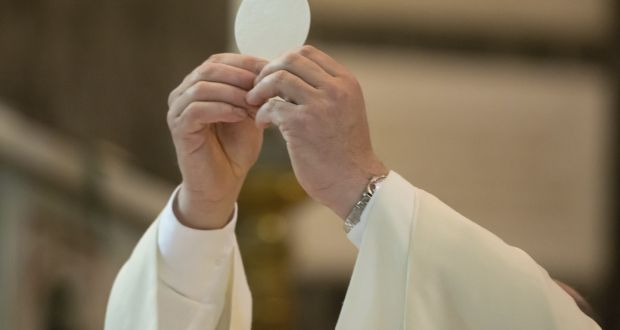
As any good Lutheran knows, it is the true body and blood of our Lord under the bread and wine instituted by Christ Himself for us Christians to eat and to drink. But it’s not just that, is it? No – for Christ held up this bread and said this is my body given for you, that is, the body that suffered, was crowned with thrones, that was beaten and bruised, nailed to a cross, and given all the way down to death for the forgiveness of your sins. The blood likewise. This meal is not one apart from the crucifixion and death of Christ Jesus our Lord. This meal IS the crucifixion and death of our Lord tasted and seen, for the forgiveness of our sins, and for the salvation of our souls.
In the same way that Maundy Thursday is the institution and inauguration of the Lord’s Supper, Good Friday is its consumation. Good Friday is when this body came into our world in history to be given unto death for us on the cross, and when that blood for us was poured out onto the for our iniquities. One might very rightly say that not Maundy Thursday, but Good Friday is the liturgical feast most tightly and inseparably connected to the Holy Sacrament of the Altar. This is after all why we call it the Sacrament of the Altar, rather than the Sacrament of the Table. For in this feast we eat the very flesh of the Lamb of God, sacrificed once for all for the forgiveness of our sins.
If I would be so bold to guess why this has become a controversy over the years (and I am), I would say that it would almost certainly be due to the phenomena of pastors preaching the passion of Christ as the climax of Law, rather than the historical manifestation of the gospel of Christ Jesus. Indeed it is some pastors impious opinion that Good Friday is the Law at its heaviest, which finally gives way to the Gospel on Easter Sunday. Such an opinion is a lot of things, but right is not one of them.
However, if Good Friday and it’s texts are properly understood, then we must ask ourselves what business we have fasting from the Body Given and the Blood Shed as we preach its fulfillment and consummation.
Ultimately what this ends up coming down to is the relationship between the death of the old Adam and the Good news of Christ Jesus. While that may sound like a difficult theological struggle to work through, I promise you that it isn’t. It’s as simple answering this one simple question; when did 1 cor 15:1-4, John 3:14-16, Roman’s 6:4-6, Isiah 53, 1 John 2:2, and 1 peter 3:18 cease to be gospel texts?
Or how about the Small Catechism, 2nd article of the creed? Did this suddenly become Law? Or is it indeed true that the good news is that Christ was born, lived, suffered, died, and rose for you, rather than only that last part about rising? One must ask, what is it about Christ that is “for you?” The resurrection? Or the whole thing from womb to tomb?
To answer this question, let’s turn our eyes quickly toward Luther’s Heidelberg Disputation, where Luther defines the Law as that which is to be done and the gospel as that which is to be believed. The law says “do this,” but the cross does not. The death of Christ doesn’t invite you to act, and the atonement is not there guilt trip you into moral reform,. The cross is there to actually put you to death through the flesh of Christ by virtue of the incarnation, and actually pay the penalty of your sins on the cross. Jesus Christ died to actually suffer the wrath of God for your sake. That is the object of our faith and the thing to be believed. That is the Gospel.
In conclusion; just as the Heidelberg Disputation states that the gospel does not say do this, but believe this, so now I say to you, don’t merely believe this and preach this, but for the sake of your souls, eat this.


