
As many of our readers know, we are in the throes of Holy Week. Traditionally, there are daily services that go along with this week. In the modern era we have foregone the Monday-Wednesday services. On our calendar one can see that the major focus going to Holy Weekend beings on Maundy Thursday. What exactly is a Maundy Thursday you ask? Well you have come to the right place.
The word “Maundy” comes from the Latin word mandatum, which means commandment. This echoes Jesus’ words in John 13:34, “A new commandment I give you…” The Latin tradition took that as an all-encompassing thrust of the institution of the Lord’s Supper. Maundy Thursday, by name, was an early liturgical development in the early church. During the 3rd Century there was a distinct emphasis on the Pascha (the whole of Easter season). Eventually this is broken down in to the individual recognized Holy Days, and this development happens early on in the late 3rd Century. So as far as church holy days go, this is far from a new invention and is merely an extension of how the church is already celebrating.
The institution of the Sacrament is a Biblical account given to us in the Synoptic Gospels, and for our purposes here we will focus on Luke’s account in Luke 22. The Sacrament of the Lord’s Supper happens in the context of the Passover Feast of the Jewish tradition. We know this purely from the narrative given by Luke and the other Synoptic writers. This clearly indicates that Jesus is making a connection between what has happened and what is about to happen. However, this connection has been poorly understood in modern evangelicalism, and this understanding has slowly worked its way in to some wings of Lutheranism.
As a good Lutheran theologian, I will openly play my hand…Christians are NOT celebrating Passover at the Maundy Thursday service. The goal is NOT to retrieve ancient Jewish festivals as relevant to the Christian faith. Bluntly, the Passover does not give more meaning to the Lord’s Supper as instituted by Christ, rather Christ destroys the command of the Passover and posts the promise anew for all. Christ gives meaning to the Passover, not the other way around. As we will see the Passover Seder is full of symbolism and signs. Christ came to abrogate the sign, symbol, and letter of the meal and instead gives us something real, that is, faith through the Real Presence in the Supper.
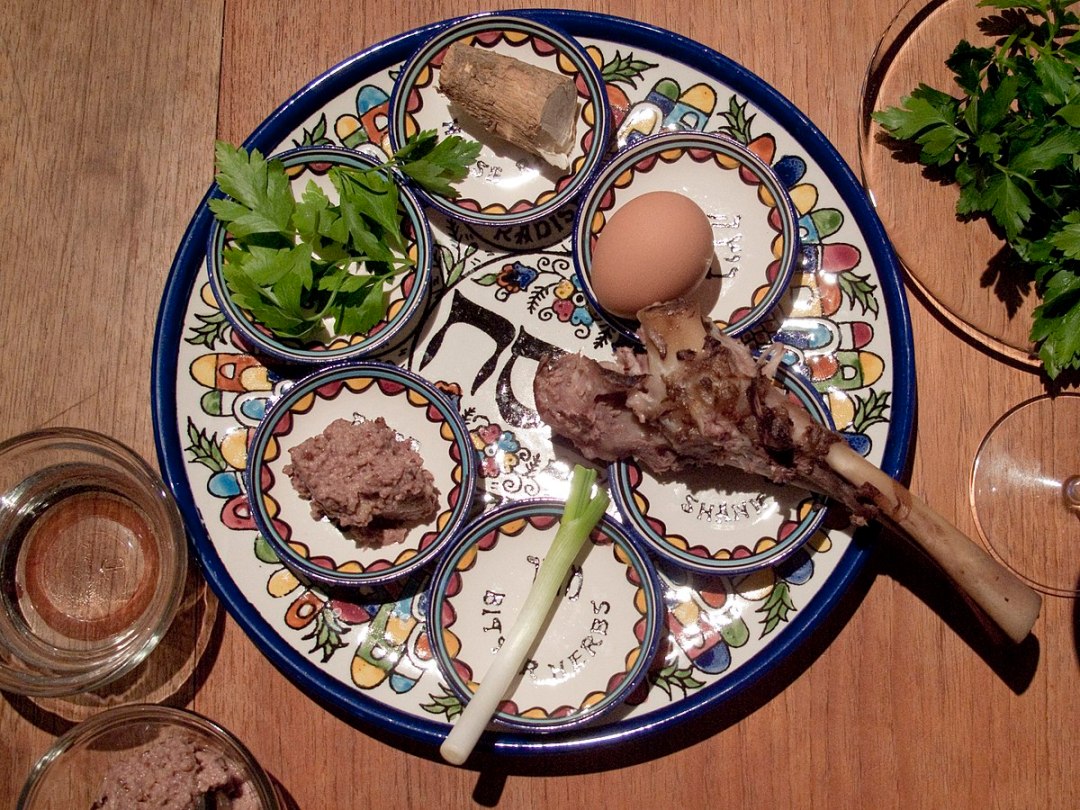
The Seder is a symbolic meal of the Passover. In many ways, for the Jewish custom, it is the main thing. Here there are many symbols present in the meal. I will not go through them here as they are not overly important to what I seek to accomplish. The meal symbolizes the freedom the Jewish nation was given from the Egyptians by God. It is a deep and ancient meaningful celebration…if you are Jewish. If Christians want to attend a Christian or Messianic Jewish version to better understand the holiday then great! It will give one a really meaningful picture of what the Passover means within the context of the Jewish faith.
It has become a more and more common practice to advocate for a “Christian” Seder, or applying a lightly Christian symbols to the Jewish Passover. This is a modern phenomenon that began in the 1970’s with organizations such as Jews for Jesus and various other “Messianic” Jewish groups. In recent years, we have seen this occurrence creeping in to Lutheranism as well. The reason for this can be left the sociologist, but much of it comes from 1) an attempt to be unduly sensitive to modern cultural perceptions and 2) an attempt to connect the Jewish history and spirit to Christianity. This is a highly problematic undertaking.
Here we should note that the Lord’s Supper is instituted in the context of the Passover, but it is not the Passover itself. Also, modern Seder practices developed over time alongside the development of Christian tradition. A modern Seder or Passover already misleading because it is not the same way Jesus would have been celebrating with his disciples anyway. Those who attempt to make this connection do so on the basis of unbelief in the Sacrament. They have already done away with the Real Presence in the Supper, so more symbolism is all this can deliver. Practicing a “Christian” Seder is not disrespectful, blasphemous, or even heretical…it is worse…it demonstrates unbelief in the Words of Institution.
The crux of the matter is this, to practice a Seder, is to celebrate the shadow of what is to come, that is, Christ and his promises. You are not enriching the Sacramental nature of the Supper, but taking away from it. A Seder in no way places our eyes on Christ and his good gifts. As stated earlier, Christ brings new meaning to the Passover. Instead of a remembrance of delivery from slavery to the Egyptians, Christ delivers the real forgiveness of sin in bread and wine. Christ brings a new covenant in the bread and the cup (Luke 22:19-20). He is not simply recalling past events, but shows their fulfillment. Here is a true picture of the old ritual customs and signs being put away, and the very person they point to has arrived. “This IS my body, this IS my blood, do this in remembrance of me.” We are not being given a mere memorial, we are being given faith. So, as we go to church on Holy Thursday, look not to past events for meaning in the cup and the bread. But look to Christ, and receive him in bread and wine for the remission of sins. Amen.


