
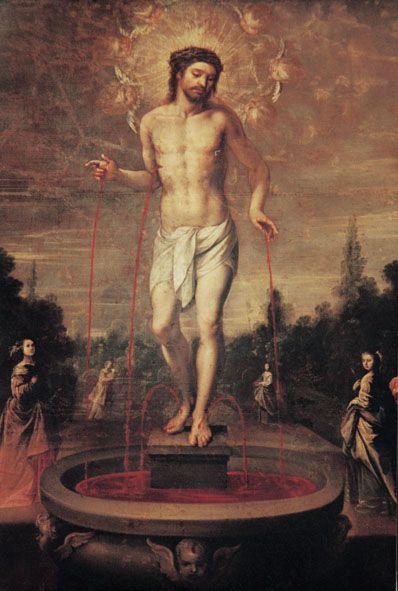
Two Natures in Christ by Martin Chemnitz is a book written about the hypostatic union written from the Lutheran Scholastic perspective. It covers the entire breadth of the topic all the way from the definition of terms used in the discussion all the way to the outcome that it has on the practice of our faith. The book can be broken down into a simple order of the person subsisting in two natures, the union of two natures, the communication of the attributes that result from the union of two natures, and finally the way that this communication affects our Christology.
To begin Chemnitz goes over the various terms that are used in the discussion of the two natures in Christ and defines them. The terms are substance, nature, person, and attributes. He divides these between the human and divine natures as well as between abstract and concrete. From this point, He builds on the idea of the person of Christ. Chemnitz outlines that He is eternal God who in time became incarnate, one substance with the Father, yet distinct in person. The reason for this incarnation is the recreation, vivification, adoption, fulfillment of the imago Dei, the mediation between God and man, reconciliation, and revelation, all of which pertain to humans, thus requiring God to come as a man Himself to bring these gifts to all men.
The true incarnation of Christ is defended through Scripture’s testimony of Christ’s bodily functions and the titles given to His flesh. These titles given to His flesh regarding the true humanity have to do with it being of one substance with ours and of His human will being not contrary but distinct from that of His divine will. In this incarnation, Christ’s human nature is not absorbed into the divinity. The incarnation is a hypostatic union, that is, the natures remain distinct and unchanged, yet belong in inseparable union with one another. The hypostatic union is an act of the whole Trinity, by the will of the Father, through the Son by the power of the Spirit. The two natures do not come together to create a person but rather the eternal person of the Logos in time assumed a second nature and now subsists in both of them together. The enhancement of the flesh is not an enhancement of its essence but a communication of the divinity and its attributes as fire when heating iron. During the time of humility, Christ did not always exercise the divine majesty through His body, though once glorified His glory was no longer hidden but was revealed in power. The two natures in Christ are functionally inseparable. Wherever is one nature, there is the whole Christ working as a concrete person who subsists in two natures. The Logos assumes a human nature to His own person; thus, the person of the Logos post-carne subsists in two unchanged natures. The difference between a hypostatic union and all other types of unions is the perpetual inseparability in single personhood. In this union each nature has full communion with the other in such a way that the flesh of Christ is illumined by the divinity at the transfiguration and the glorification although unchanged in its own essence.
As a result of this hypostatic union, Christ’s two natures always function in union together. In this way the two natures are in communion with one another; that the humanity is made partaker of the divinity and the attributes in both natures are made shared between the natures of the one person. There is in all of the functions of Christ two natures working in and through one another. In this way, we can say that God is man and man is God in the person of Christ. In the communication of attributes, there are three genera (kinds). The first being from the natures to the person, the second being a co-operation between natures in the functions of the person, and the third being from one nature to the other. In this first genus, genus idiomaticum (attributes), there is no true communication of attributes from nature to nature but the essential attributes of one nature are attributed to the person in concrete. The key to understanding the first genus is that resulting from the hypostatic union in one person the attributes essential to one nature are held in common to the whole person. We can derive comfort from the first genus because a mere man does not have the power to defeat Satan, remove our sin, or mediate between us and God, yet, if Christ were not true man His work would not serve for the redemption of men. The language which articulates the communication of attributes in the first genus assures us that this work is not the work of a mere man, nor of un-fleshed divinity, but of the God-man. The second genus, also called genus apotelusmaticum (actions), is seen in functions that only belongs to one nature, but are done with the cooperation or acquiescence of the other. In this way, both natures participate in all the activities of Christ whether or not the function belongs to their essence. This is seen in the miraculous and redemptive work of Christ. It is the divine power that defeats sin, death, and the devil, but the Logos chooses to exercise this divine power in and through His humanity. Examples of this are in touching the eyes of the blind man, the raising of Lazarus, and the death and resurrection of Christ’s humanity. This power does not belong to the humanity but the divinity is working in and through the humanity to administer its power. In doing this Christ uses His humanity as an organ for His redemptive purpose. Through co-operation or acquiescence, the person of Christ always works in both natures. In the hypostatic union, there is a non-mutual communication of divine attributes to the humanity which exalt Christ in the flesh, which is called the third genus, or genus maiestaticum (majesty). In this genus Christ’s human nature receives gifts from the divine nature. Unlike the gifts given to the saints, Christ’s humanity receives the fullness of all power and grace. On top of the glory that Christ had according to His divine nature, there was communicated to Him at the glorification according to His human nature an exalting glory. This is what happened during Christ’s glorification and exaltation, for divinity cannot itself be exalted any more than it is. This genus allows for Christ’s divinity to shine through His humanity in a visible way, exhibited outwardly. The communication of divine majesty is not essential, sustentative, or nominal, but is one where the divine attributes are communicated to the flesh and shine through it. Some of the common terminology used by the early church fathers for the third genus was deification, addition, and acquisition. These were used in a qualified manner to mean a partaking of the divine nature rather than an essential deification. The example given is “firing” iron in a furnace –> deifying the flesh. The iron does not become fire. In fact, the Iron is just as much Iron as it was before the union of fire and iron but the fire has communicated its light and heat to the iron, which except for its union, would not be had.
The study of the three genera of the communication of attributes does not stay in theory, but is taken from Scripture and ought to be applied to our theology. Chemnitz goes into some of these matters to show how the communication of attributes can help us understand Christ and the functions of His offices in an organized and categorical way that is set up to fend off ancient heresies. Some examples of these are Christ’s ascension, the worship of Christ’s person, Christ’s presence with the church, the post-ascended body, miracles, and the state of humility. Christ’s ascension to the right hand of the Father was according to the humanity because the divinity was always there. It is an exaltation of His flesh and speaks of His authority and co-equality with the Father. We can see this as functioning in the third genus whereby the humiliation of Christ is lifted and there is no longer a shadowing of His divinity, but an exhibition of it through His humanity. The worship of Christ is to be given to His person according to both natures following the first genus. This is especially important so that we do not end up viewing Christ’s body as a vehicle that only serves to carry around the actual Son of God and reject the human nature as being that which belongs to the second person of the Trinity, and as His body. The man Jesus truly is as much in His divinity as well as humanity, the Son of God. If the Logos subsists in two natures then He ought to be worshipped according to both natures. Although Chemnitz is careful to qualify that if His humanity were not in communion with His divinity, we ought not to give worship unto it, not simply because it would lack divine communion, but because it would therefore not be His. Christ’s body is present with us everywhere through the divine illocal presence. Not according to its essence but according to communicated attributes of the divine nature. This perhaps of all implications is most obvious in the Reformed and Lutheran difference on the Supper. Both traditions agree that Christ’s human body in its essence is stationary in heaven according to its own nature, yet the Lutherans confess that the humanity not in the physical and local mode but in, through, and with the divinity is present so that while they may not say that He is present the way the bread is present in the Supper, they may say that Christ’s body and blood are truly present in, with, and under the local elements and tied thereto. The post-ascension body of Christ is not thrown away following the work of redemption that it was necessary for but in fact, both natures are now present with us at all times in way of filling all things. To the Fathers this was a source of comfort, knowing that their personal God was with them in the fulness of His person in a way that they could relate to. He doesn’t deal with us as unclothed divinity but joins us to Himself through and in our own substance meeting us both where we are and as we are to make us like He now is.
The miracles of Christ are not to be explained as miracles pertaining to objects, such as Christ walking on water as explained by the water being frozen over, or of the water being miraculously made walkable to all creatures. Nor are they a change in Christ’s nature whereby His humanity is made one that can walk on water according to His nature. In truth this miracle and all others are a result of the hypostatic union wherein Christ is exalted in the flesh by doing that which is contrary to His nature but without a change in nature. Not by the Ghost as He worked in us to perform miracles in the apostolic age but by the Son of God’s own power shown through His flesh. Finally, Christ’s humility was not a lessening, giving up, or ceasing of His divine power as the Kenosis theory teaches but it was merely a lack of exercise of this power visibly through Christ’s humanity. This is the acquiescence spoken of in the handling of the second genus.
In all of this material, Chemnitz seeks to promote orthodoxy and protect from heresy. He shows that Lutheran Christology is truly orthodox and not the Eutychian or Monophysite heresy that it is often accused of being as shown by the essential change of attribute and communicated attribute distinction. Touching on how this relates to Reformed or broader “Evangelical” Christians, this Lutheran teaching though contrary to the Reformed Christology known as “Calvinist Extra” which posits that the hypostatic union does not extend beyond the bodily frame of Christ’s flesh, is not contrary to the plain words of the Reformed confessions and therefore should be seen as a valid option for members of Reformed churches, and generally, is the most common Christology among evangelical and Reformed laity regardless of their pastors condemnation of it. To answer the question of how Christ can do certain miraculous things by saying; “He is God”, is entirely natural. It is only the ivory tower Reformed and evangelical scholars sitting in their entirely reformed libraries sheltered from the rest of Christendom and unreformed church history that would point to the isolated human nature of Christ praying to God to receive enablement by the Holy Spirit as the answer. The perceived danger of necessitating “a bodily presence in the sacrament” is not one founded in reality, as the Lutheran view of the Supper is that the humanity is present in, through, and with the divinity in the divine illocal and a-physical mode of presence. The second commonly held Reformed fear regarding the Lutheran Christology is that it necessitates that God died on the cross and that Mary bore God in the womb. Both of these issues were dealt with by the early church fathers who condemned those who will not call Mary the God-bearer or confess that God died on the cross as heretics. The unfounded fear of the evangelical and Reformed in this matter is that they misunderstand the fathers to mean that the divinity in its essence died. This is not so, but rather as the Lutherans and early church fathers taught were things that the Son of God; the person, did according to the essence of His humanity and thus attributed to the person (genus idiomaticum). Through birth, illness, hunger, temptation, sorrow, and death, the divine nature was active, not according to its own nature, but in through and with the human nature (genus apotelusmaticum). With these things accepted one realizes that there is no heresy, nor implicated issue with the Lutheran Christology and that Reformed, evangelical, or otherwise, all Christians should be allowed with free reign to hold this as true and biblical doctrine.


