
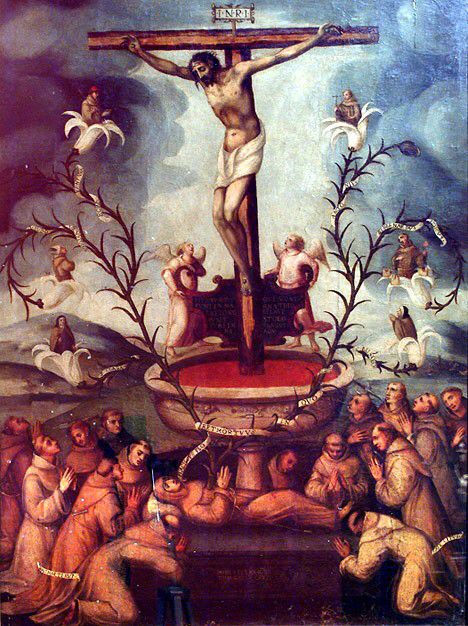
The infinite worth of the death of Christ
All of Protestantism is centred upon a forensic justification worked by God incarnate in His life, death, resurrection, and intercession, received by faith alone, and effectual unto eternally secure and final salvation. Evangelicals across the board agree that it is the once for all sacrifice of Christ’s atoning death that forgives us of our sins (Heb 10:12, 14). But there is disagreement on a key issue; the worth of Christ’s death. In what regard does this death have worth? Is this worth inherent or by virtue God’s decree? Is the worth qualitative or quantitative? Can we speak of this worth in sense of capacity only or can we speak of its objective application? In this paper, these questions will be worked through and several historical answers will be examined in light of the full counsel of God with the hope of truly understanding why Christ’s death redeems, how Christ’s death redeems, and who Christ’s death redeems.
In what regard does this death have worth?
The death of Christ as it relates to worth is only ever to be spoken of concerning its atoning value. That is its value, ability, or capacity to pay the due penalty for the sins of man, that God might have justice against sin and yet be reconciled to the original offender. The Canons of Dort confess this to be the object of its value in CD 2.3; “The death of the Son of God is the only and most perfect sacrifice and satisfaction for sin, and is of infinite worth and value, abundantly sufficient to expiate the sins of the whole world.”[1] If one wishes to truly grasp why the synod made this statement then they must turn to the scriptures for two things; the normative worth of death itself and the purpose of the Messiah’s death.
The first step to getting a good grasp of why this is the case is by examining the normative worth of death itself. Beginning at the fall, death is not Biblically described as being natural, but a direct result of sin which is contrary to God’s created order (Gen 2:17). We can understand this in two ways; as a punishment from God in wrath against sin (Rom 1:18), but also as the inevitable result that occurs from being outside of union with and conformity to God (John 1:14). In this way, death not only lacks any positive worth but is itself loss and therefore of negative worth. Its design is not of God but in a sense of our own making. Herman Bavinck writes of death, saying: “This death of man is not annihilation, however, but a deprivation of all that makes for life on earth.”[2] The only worth therefore that we may think of when we talk about the death of Christ is its Messianic function which is unique among all deaths. This death’s unique value is derived not from the death itself but Christ’s person. Particularly, the power of the Son of God is confessed by the Reformed church in CD 2.4.[3] However, we must not confuse the cause of this infinite worth, the hypostatic union, with its object, the expiation of imputed sin, as is confessed in CD 2.3. Confusing the cause of worth with its object in this matter will inevitably land one in the heretical territory of denying the atonement altogether.
Secondly, we can look for the OT testimony regarding the purpose of the Messiah. Since the beginning of redemptive history, God has progressively revealed the truth of the Messiah who would serve as a blood sacrifice for the atonement of mankind. The proclamation of this future once-for-all sacrifice begins in Gen 3:15 immediately after the fall where the Seed of the woman’s heel is bruised by the serpent whose head He crushes. By the time of Gen 4 sacrificial offerings come into play in the case of Cain and Abel; however, only Abel offered a sacrifice of blood and only Abel’s sacrifice was accepted. During the slavery in Egypt in Ex 12, God tells Moses and Aaron to have every family acquire a lamb, to slaughter it, paint its blood on the doorframe, and eat of its flesh so that each household may be passed over when the wrath of God comes to take the firstborns. In Leviticus, a special sacrificial system is administered to the people of God which includes sacrifices every day for sins, as well as on a special day of atonement. The Levitical sacrifices for sin always included an animal being slaughtered for the remembrance of sin and our need for forgiveness (Heb 10:3). In Isa 53:7,10 Isaiah ties together both the prophecy of the proto-Evangelion and the sacrifices of the lambs together into the Messianic office, of which the end, as stated in Isa 53:11-12 is the justification of fallen Man. If any would ponder the mystery of the death of the Messiah, they must first take into account the purpose that the Messiah was coming into the world, which was to redeem Mankind from its fallen state and then they must grasp the progressive arch of increasingly descriptive atonement practices that prefigure the coming Christ, “the Lamb slain from the foundation of the world” (Rev 13:8). This progressively revealed Messianic trajectory in the Scriptures moves towards an atoning death for the sins of fallen Man and therefore we can point the OT as being instructive regarding what Christ’s death relates to.
Lastly, we can know this from the testimony of the NT which attributes the purpose of the death of Christ to the forgiveness of sin and redemption of man. The entire purpose of Christ’s incarnation, life, death, and resurrection was to pay for the sins of the world so that the world might be reconciled to God in Him as proclaimed in Lk 9:22, 1 Jn 2:2, Heb 2:14, and 2 Co 5:19. Throughout the NT the inspired authors recognize the inseparable connection between the death of Christ and the redemption of Man. The NT texts that speak of the death of Christ always do so concerning the redemption of Man or the Messianic office. Christ often spoke about His death being foreordained (Mt 26:39), vivifying (1 Pet 3:18), and imputational (1 Pet 2:24).
To conclude, the answer to the first question regarding the infinite worth of the death of Christ is this: the worth of this death is to be spoken of in regard to its ability to redeem mankind from sin by virtue of Christ’s humanity which the sins of mankind are imputed to and Christ’s deity which alone has the power to defeat sin, death, and the devil, only to rise again out of the grave bedecked in all glory and majesty. This can be known by a proper understanding of the nature of death and through the clear and unified witness of the Holy Scripture.
Is this worth inherent or by virtue of God’s decree?
Historically, this question has been posed as essentially being whether our redemption had to have been through the death of Christ or whether it hypothetically could have come about in other ways but God in His good pleasure simply chose the death of Christ to be the way that He would design our redemption. The historic concern surrounding this question has always been focused upon the justice of God. As Hodge writes; “the work of Christ was not, therefore, a mere substitute for the execution of law, which God in His sovereign mercy saw fit to accept in lieu of what the sinner was to render. It had an inherent worth which rendered it a perfect satisfaction so that justice made no further demands.”[4] However, this does not get to the root of the issue. The core of the subject matter is not the justice of God itself but is the death of Christ which propitiating the justice of God due to the sinner. The historic phrasing of this question in a way fixes itself toward allowing both yes and no to be considered “orthodox” opinions because both options are hinged upon this idea that God either planned it this way because He had to or because He wanted to. This flows from and perpetuates the idea that the death of Christ is just another point in the salvific plan. Our thinking, if following this presupposition will always miss the core of the issue, that is the death of Christ itself. This question should rather be phrased; Does God’s will save us or is it God’s will that Christ would save us by His death? The nuance here is small but important. We are not to deny that the sovereign will of God came before the actual death of Christ either historically or logically. As the WCF 3.1 teaches us, God’s decrees have occurred “from all eternity.”[5] The salvation of mankind is not primarily part of some predestined plan that uses Christ’s death as a second cause to accomplish the end, either by necessity or by choice. Rather, the death of Christ is the foundation, source, and motivator of all redemption. In the book Confessing the Gospel, the relation between salvation on account of Christ and election is spoken of as “God’s choice and election from eternity, for Christ’s sake, of those who are His own children and who are saved eternally.”[6] One cannot have the doctrine of election without first having the doctrine of an incarnate Christ redeeming a fallen Man by His blood and conveying that salvation to the world through Word and sacrament. No man was ever predestined to salvation without the means or foundation of grace in view.[7] When we speak of such a plan, we must always speak of this plan being in and through Christ, whom we receive by the means of grace (Jn 5:39, Gal 3:27, 1 Co 10:16). All parties agree that the death of Christ is of infinite worth. Yet, we do not all agree that that worth is inherent to the death of Christ itself. Calvin explains it thusly: “In discussing Christ’s merit, we do not consider the beginning of merit to be in him, but we go back to God’s ordinance, the first cause… Apart from God’s good pleasure, Christ could not merit anything; but did so because he had been appointed to appease God’s wrath with his sacrifice, and to blot out our transgressions with his obedience.”[8] What he here is positing is that the death of Christ although of infinite worth is only such because God predestined it to be so. This is greatly different from the former positions of Hodge and the Lutherans. While Lutherans are arguing that God only predestined some to salvation because they were redeemed by the blood of Christ, Calvin was arguing that the only reason that Christ’s death meant anything was that God decreed it to be so. This position is guilty of three doctrinal charges. Firstly, it confuses the naked will of God with the moral absolutes of His character that His predestined plan follows, bringing into question God’s justice, as Hodge points out. It also carries with it a fundamental misunderstanding of what salvation is and how it is effectually applied to man, as the SD XI warns against. Finally, it brings into question the way that the hypostatic union operates in the person of Christ particularly regarding the hypostatic union as the cause of the infinite worth as the Reformed churches confess in CD 2.4.
The first danger that comes from this error is that we confuse the hidden plan of God with His moral absolutes. To state this simply, God decreeing sinners as righteous and pardoned of sin does not make them so. Rather, in God’s decreeing of things He brings about means for His purpose to meet its end. In this case, God elects us according to the sacrifice of Christ and the means by which He plants the faith in our hearts that is necessary to grasp the gift of salvation in Him by the necessity of the moral absolutes of God. If one sins against God they are sinning against a moral absolute and God’s punitive justice must be administered to them. If this punishment is not administered then God will have turned a blind eye to crime and would cease therefore to be wholly just. In the death of Christ man is not made but is counted righteous and this not by some imagined naked will of God alone lest the death of Christ be reduced to an instructive ornament that rests upon arbitrarily designed compatibilistic determinism. When Christ died, the sins of men were really and truly forgiven on account of Christ because the justice of God had been satisfied in through the crushing of Christ physically on the cross and spiritually by means of separation from Him.
The second danger that we can run into with this error is that it carries with it a fundamental misunderstanding of what salvation is and how it is effectually applied. This is a very serious risk because it has a close kinship with the common caricature of Hyper-Calvinism in that hypothetically God could have designed salvation irrespective of faith, or even of the death of Christ thus sacrificing the moral absolutes of God and redefining salvation. In this case, one who believes that the death of Christ gains its worth by naked decree, not only is damnation not because of a moral absolute but neither is salvation an actual remission of sin through union with Christ.
The third danger that we must explore is that this doctrine is explicitly contrary to confessional Reformed orthodoxy as it concerns the cause of this infinite worth. The Reformed Church on the continent confesses in CD 2.4 that the cause of the infinite worth of the death of Christ comes from His divine nature. As stated earlier in this paper, death itself is of no value even in the case of a truly righteous man. The death of a man is the lack of human life. It is lower than worthless, for by its definition as lack and deprivation it is the negation of worth. Yet, even if the human death was one of a purely righteous man who had sins imputed to him the worth concerning such an expiation would not be infinite because humans by creaturely nature are definite. To forgive an infinite amount of sin one must have an infinite sacrifice. Unless this death is the death of an infinite being its worth regarding the forgiveness of sin cannot be infinite. Gladly, this is exactly who’s death it was. God the Son in and through the human nature that He took upon His eternal person experienced death while holding the fullness of sin imputed to Him and with His infinite capacity did sufficiently expiate the charges of man and propitiate the wrath of God, with power still yet to defeat sin forever and rise back up from the grave. Calvin admittedly was pushed into his belief on the worth of Christ’s death by his view of the hypostatic union which was rather fearful of attributing the death of Christ to the Logos in any way, thus seeing the personal union of Christ’s two natures as little more than a nominative or sustentative union.
Is this worth qualitative or quantitative?
The majority of Calvinists have favoured the answer of qualitative infinitude. What is by qualitative infinitude is that Christ’s death needed to be of infinite worth to attain heaven for a single person to match the infinite worth of the blessing. This answer has been favoured by the majority of Calvinists because it minimizes the amount of clash that it will have with other doctrines such as particular grace, irresistible grace, and perseverance of the saints. There are three reasons why this restriction of infinitude cannot coincide with the infinite worth of the death of Christ: it contradicts the keyword in use, it contradicts the inherency of the worth, and it risks making philosophy the master of theology.
Firstly, this limits the infinitude of the worth to the qualitative realm which contradicts the meaning of keyword in use. If one wishes to speak of the qualitative infinitude only then they must in their doctrinal work label their assertion as qualitative infinitude rather than infinitude proper. Just as the qualification between the infinite worth of the death of Christ and the infinite worth of the death of Christ as it relates to the atonement distinguishes the sentimentalist from the substitutionalist, so the qualification between qualitative infinitude and infinite worth distinguish between one who relates the death of Christ to all men and He who relates it only to the elect. In short, infinite worth by definition abounds beyond quantitative limitation. One contradicts themselves when they demand an infinite payment of charge that is limited in scope.
Secondly, it indirectly contradicts the inherency of the worth. It does this by turning our focus away from the atonement of the sinners towards the person of Christ. While this would maintain that the death of Christ is of infinite worth regarding salvation it does not directly apply that worth to the atonement for sinners under the punitive justice of God because it does not address actual charges against actual people, only the infinitude of Christ who died. If one speaks of a worth that is only qualitative then they are making the focus of the death a sentimental worth of Christ’s life to bless rather than a substitutional worth to forgive sins. Therefore, the infinitude that they are speaking of here is a depth or quality of salvific worth that can be given to as many or as few people according to God’s desire, yet its infinitude is maintained. To repeat an important component of this view, it can be given to as many or as few people according to God’s desire, that is, the worth of the death is not a payment of charge unless the decree of God makes it so, making the worth rely upon the decree of God as its enabler or source of worth. Which as stated earlier questions the moral absolutes of God, misunderstand salvation and its application and contradict the CD 2.4
Thirdly, it risks us making philosophy the master of theology. This point is well exhibited in the Grudem’s Systematic Theology, where he states that God’s omnipotence, immutability, and justice necessitate strict particularism in that regarding the omnipotence and immutability God could not set His hand to a thing which does not come to pass, secondly, regarding God’s justice, God could not punish one who’s sins were paid for.”[9] While Grudem does use some Scriptural evidence to bolster his position such as the high priestly prayer and texts that speak directly of Christ’s redemption of the church, the majority of his argument is focused upon why a limitless atonement cannot be true rather than spending time on why limited atonement is true. A better system which was had by many theologians of old is the distinction between sufficiency and efficiency, also called the Lombardian Formula. Ursinus, the author of the Heidelberg Catechism represents this view in his commentary on the catechism when he says; “Christ satisfied for all, as it respects the sufficiency of the satisfaction which he made, but not as it respects the application thereof.”[10] That meaning, Christ in a sense died for all, but not all have this salvation applied to them by faith. When the church has come to the point that she is reinterpreting the plain reading of “all” because it would not make sense to her, then she has erred on the side of philosophic authority. The reason of Man should be of ministerial use to the Scriptures rather than a magisterial authority over them. What this Lombardian formula does is it defends the truth of God’s provision of salvation to all mankind quantitatively so that none may point to God’s lack of provision as the reason for their damnation but only their lack of faith all the while keeping one’s Calvinism wholly intact.
Is this worth to be spoken of as a capacity or an objective application?
In 2 Co 5:19, Paul teaches that “in Christ God was reconciling the world to Himself.” How shall this be interpreted? When we speak of the worth of a thing we can truly and rightly speak of it only in regard to its capacity for a thing. In the case of the death of Christ, there is nothing that necessitates us to speak in the form of an application. For example, money still has worth to purchase things at a market regardless of whether or not anything has been purchased. The Lombardian formula has stood for some time as the unified orthodox answer to this since the medieval ages. However, stopping at capacity may question the inherency of the worth if the effect actually flows from the hidden will of God. If the worth of Christ’s death is a worth regarding the atonement of sinners through His own death, then it only remains an unpaid capacity before His death. His death is the payment itself, if we want to retain the inherency of the death’s worth then we must by necessity understand and discuss it in way of an objective application past-tense because that Christ has already died that death. To contrast two perspectives, we shall compare the thoughts of Francis Pieper and Charles Hodge. On the one hand, Pieper proclaims with certainty that the payment has already been paid, saying; “When Christ died, God became reconciled. As Christ’s death lies in the past, so also our reconciliation is an accomplished fact. 2 Co 5:19 does not refer – le this fact be noted – to any change that occurs in men, but describes an occurrence in the heart of God.”[11] On the other hand, Hodge says of the application of this worth; “that the benefits of a penal satisfaction are conferred according to the terms or conditions of the covenant in pursuance of which it is offered and accepted.”[12] What we can see here is that both claim to believe in the inherent worth of the death of Christ, yet, one of these men understands the application of its worth to be a matter of covenant conditions, the other sees it as being literally inherent within the death itself. If this were understood through the use of illustration what Hodge would be saying is that the money (death) confers worth according to the covenant conditions (faith). The problem with this proposition is that the death of Christ is not something that demands covenant conditions for the conferring of worth; it itself is the payment of charge. Hodge’s, position, therefore, succumbs to a self-contradiction wherein his earlier statements on the same page which argue zealously for the inherent worth of the death of Christ are forfeited on the basis of faith as necessary for the forgiveness of sins. Thus, in good spirit and for good reason Hodge unintentionally replaces an inherent worth with a worth that relies upon faith as its enabler, again landing one in the position of understanding the death of Christ as a piece of a foreordained puzzle rather than full payment of the charge itself. We must then ask ourselves, was Hodge’s, conclusion necessary? Or is there an important nuance missing from his work which will provide an alternative that both retains the inherency of the worth and avoids the heresy of universalism? This nuance, in Luther’s opinion, is the reception of the promise of pardon on behalf of Christ. Regarding praying for the forgiveness of sin he writes; “not as though He did not forgive sin without and even before our prayer (for He has given us the Gospel, in which is pure forgiveness before we prayed or ever thought about it). But this is to the intent that we may recognize and accept such forgiveness.”[13] All of this is to say, the worth of absolution in the death of Christ is found in the death of Christ.
Conclusion
Through answering all of these questions we have seen that the death of Christ is of gan infinite worth, limitless in expanse and in power. It is the satisfactio vicaria that God’s morally absolute justice demanded of us, made possible by the unfathomable hypostatic union of God and man in the person of Christ Jesus. In His substitutionary atonement, Christ has reconciled us to God, no longer charge with our own sins, this is the object of our faith.
[1] CD 2.3
[2] Orr, James Gen Ed, Herman Bavinck, The International Standard Bible Encyclopedia, vol. 2, (Grand Rapids: Eerdmans, 1939), p. 812.
[3] CD 2.4: “This death is of such infinite value and dignity because the person who submitted to it was not only really man and perfectly holy, but also the only begotten Son of God, of the same eternal and infinite essence with the Father and the Holy Spirit, which qualifications were necessary to constitute Him a Savior for us; and, moreover, because it was attended with a sense of the wrath and curse of God due to us for sin”
[4] Hodge, Charles, Systematic Theology, vol. 2, (Peabody, Massachusetts: Hendrickson, 2016), p. 432.
[5] WCF 3.1
[6] Nafzger, Samuel H., John F. Johnson, David A. Lumpp, and Howard W. Tepker eds., Confessing the Gospel: A Lutheran Approach to Systematic Theology, vo. 2 (St. Louis: Concordia, 2017), p. 1218.
[7] SD XI.9,23.
[8] Calvin, John, Institutes of the Christian Religion, vol. 1 (Louisville, John Knox Press, 2011) p. 529.
[9] Grudem, Wayne, Systematic Theology, (Grand Rapids: Zondervan, 1994), p. 594.
[10] Ursinus, Zacharias., The Commentary of Dr. Zacharias Ursinus on the Heidelberg Catechism, (Cincinnati: Elm Street Printing Company, 1888), p. 215)
[11] Pieper, Francis., Christian Dogmatics, vol. 2, (Saint Louis: Concordia, 1951), p. 348.
[12] Hodge, Charles, Systematic Theology, vol. 2, (Peabody, Massachusetts: Hendrickson, 2016), p. 487.
[13] LC III.88


