
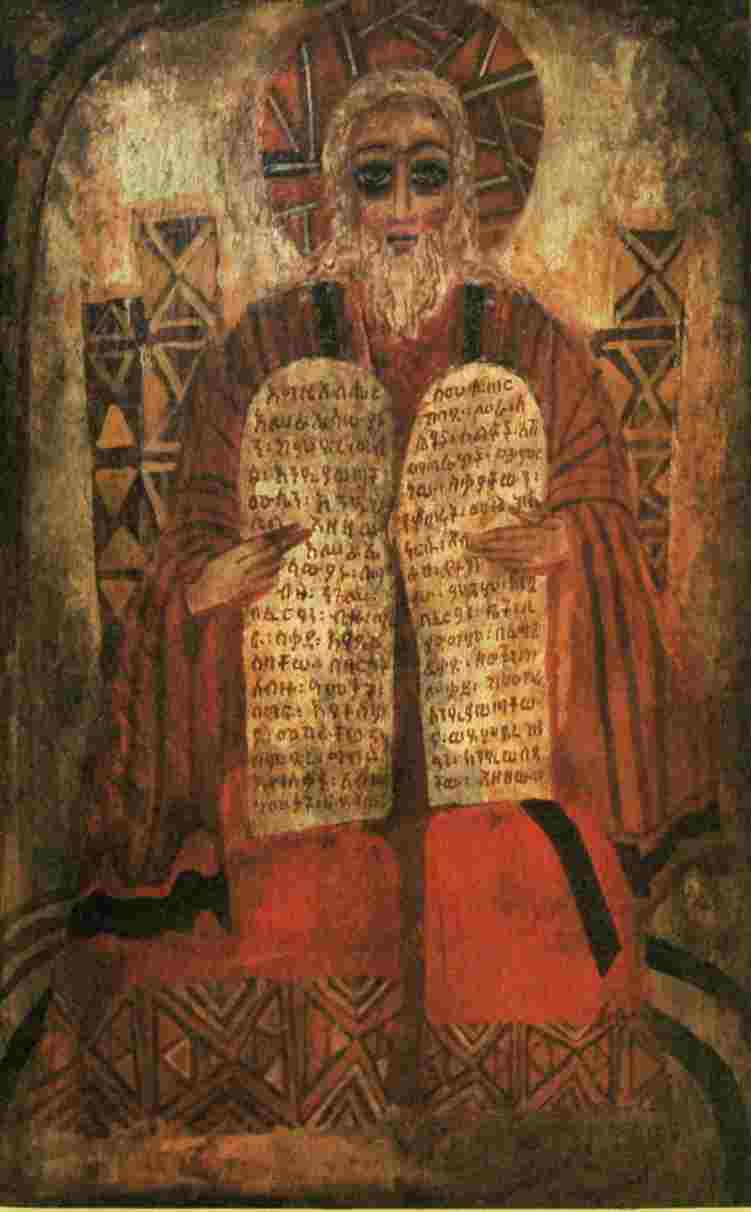
Sinai: Works or Grace?
There is perhaps no doctrine in Reformed thought that comes so close to the distinction and unifying power of Calvinism as does Covenant Theology. Yet, in the same breath, it may also be said that few doctrines in Reformed thought have come as close to the level of schism and division as has Covenant Theology. The basic foundation of Covenant Theology in Reformed thought is the dichotomy between the Covenant of Works and the Covenant of Grace. This system places the Covenant of Works in the Garden with Adam. The Covenant of Grace is placed after the fall, with the Covenants following the account of the garden being organized together as several different administrations of the Covenant of Grace. This plays out progressively through redemptive history. Instead of God re-administering the exact same covenant with the same conditions and promises He progressively develops the promise of the covenant that was originally given in Gen 3:15 in a way that builds upon itself to fulfill the proto-Evangelion.
However, one piece of this puzzle, the Mosaic Covenant, has caused great difficulty for many in their understanding of Covenant Theology. It comes in-between the Proto-Evangelion and its ultimate fulfillment in the New Covenant. Yet, its condition is obedience to the Law, with blessings and curses following the success or failure to meet these conditions. This paper will seek to discover the place and purpose of the Mosaic Covenant in Covenant Theology by looking at the characteristics of the Covenant of Works, the Covenant of Grace, and the unique typological function of the nation of Israel.
Covenant of Works
The WCF 7.2 speaks of the Covenant of Works as follows; “The first covenant made with man was a covenant of works, wherein life was promised to Adam, and in him to his posterity, upon the condition of perfect and personal obedience.”[1] God created Adam into covenantal relationship with Himself whereby he was given life in his body on the earth in the presence of God without death. The WCF phrases this as a promise, which can be misleading as it may sound as if one must fulfill the condition before they can receive the promise. But with Adam, the reality was that the substance of this promise was given upon creation because he fulfilled its condition upon creation. Therefore, this covenant is one that Adam is created into rather than offered, which, if anything, shows the gracious disposition of God towards Man. This creation into covenant is explicitly stated when the Lord says “let us make man in our image and in our likeness.” The image and likeness of God speaks to man’s threefold reflection of God; in substance, righteousness, and dominion.”[2] In order for us to have covenant union with God it was necessary for us to remain morally upright because evil cannot even dwell in His presence as we are told in Ps 5:4. If Man were able to fulfill the condition of righteousness necessitated by God’s justice then surely, He would covenant with Man immediately and unilaterally as was the case in the garden, for His disposition has always been to seek covenant with Man. Dabney says of this necessity of righteousness for covenant that “In the covenant of works, no mediator was required, because Man was innocent, and God’s purity did not forbid him to condescend to him.”
[3] Here, the matter is of what is forbidden for God to do by His nature rather than how much God was willing to give. It is the case that God’s grace in the garden was not limited by will, but by the necessity of God’s own nature.
When Adam failed to sustain that condition of righteousness by eating of the forbidden tree, he suffered the consequence laid out in Gen 2:17. That consequence was death, or in more technical terms it was an alienation from God and from his created purpose. The covenant that God created mankind into was a unilateral agreement whereby man upon necessary condition maintained complete righteousness and received eternal life with God on the earth in the flesh forever was lost and mankind suffered the greatest punishment, the loss of this covenantal substance.
Covenant of Grace
After Adam’s fall, God reached out to him again to give him hope. Instead of just leaving Adam with the pronouncement of curses He gives him the hope of a seed that will come from the woman who will crush the head of the snake. By this promised seed He will deliver a death blow to sin, its causes, and its devices. The WCF 7.3 phrases it this way; “Man, by his fall, having made himself incapable of life by that covenant, the Lord was pleased to make a second, commonly called the covenant of grace; wherein He freely offereth unto sinners life and salvation by Jesus Christ; requiring of them faith in Him, that they may be saved.”[4] In this covenant God offers up to sinners the same substance of the earlier covenant, life with God in the flesh on earth forever, although He does not reveal all of this at once or in alike clarity. Following the Proto-Evangelion, this section of redemptive history progressively unfolds the fulfillment of the Proto-Evangelion in several different covenants where the first promise is built upon in ways that progressively work towards giving a more complete view of the savior that was to come and bring the fulfillment of the first promise to completion. Instead of supplanting each other, these several post-lapse covenants work to further develop the foundation of the first promise. Speaking of this, Pascal Denault says; “there was only one covenant of grace which was revealed from the Fall in a progressive way until its full revelation and conclusion the in the New Covenant.”[5] It may, therefore, be said that the first promise itself is the Covenant of Grace before being fulfilled in Christ and officially ratified rather than one of many administrations thereof. The covenants famously called administrations of the one covenant build upon rather than supplant the first promise, operating in a way of being added onto the first promise which remained instated as a promise to be applied to the OT believer. This first promise and the covenants that come after it are not a 1:1 re-administration of the same substance promised nor do they all have the same condition. As Grudem points out, “The covenant that God made with Noah after the flood was not a covenant that promised all the blessings of eternal life or spiritual fellowship with God, but simply one which promises all mankind and the animal creation that the earth would no longer be destroyed by a flood.”[6]. A good example of the place of progressive revelation in post-lapse covenants is in the case of the Abrahamic Covenant. Abraham was considered righteous by God and therefore had fulfilled the condition of the Covenant of Grace. However, this condition is not mentioned in his covenant. His covenant is primarily conditioned upon walking blamelessly as seen in Gen 17:1, and although Abraham is called to believe in God as a part of his covenant the direct object of his faith is supposed to be in the birth of Isaac, the land, and the nations that come from his loins. This is not to say that Abraham was counted righteous by faith that God would give him Isaac. The faith that Abraham was saved by was one that grasped the first promise which this typological birth of Isaac would give detail to as Paul tells us in Gal 3:16. What we can gather from the example of Abraham’s covenant is that other than the New Covenant, the covenants post-lapse between God and His people are not of the same substance with the Covenant of Works. They do not promise life with God in the flesh on the earth forever. The substance that they promise points back to and drags forward into manifest reality the first promise which comes with the same substance of the Covenant of Works, albeit with a different party fulfilling the condition. These covenants are not themselves the salvific relationship between God and Man, but typological “superadded” covenants that prophetically teach of and drive us toward the fulfillment of the gospel promise. The Mosaic Covenant’s condition of works followed by material blessings and curses need to be understood along these lines so as to avoid misappropriating Moses’ redemptive-historical context.
The Unique Typological Function of Israel
The Mosaic Covenant among all covenants has been historically seen as the most typological of all with one of the parties, the nation of Israel, being itself a type. However, we see that other covenants do this as well. David or Isaac for example, are types. David being a type of the Davidic king who reigns over the kingdom people of God, and Isaac being a type of the promised seed who is Christ. The reason that people tend to gravitate towards emphasizing the typological nature of the Mosaic covenant in a way that they do not for the other “administrations” of the Covenant of Grace is because of the works-based conditions and the curses which follow. The purpose of Israel as a nation was to portray the Son of God, the true Israel[7]. It was a recreated people, a type of the new creation. We see this idea forming through the exodus where their deaths are paid for by an atonement lamb and they are brought through the waters of chaos which are separated as in creation, brought out into Sinai where the covenant between God and Man is re-established just before they are set into the promised paradise where they will be given dominion. What is happening in all of this is an echoing of the creation account, which we will see come to a climax in the decorations of the tabernacle where God will again dwell with His people, in this specific land as His son. The function of law here is tied back to the garden as well. The fall of Adam was a lack of righteousness that was necessitated by the holy justice of God in order for covenant union to be enjoyed. Coming back to this concept of law and righteousness in the re-created typological garden/sonship covenant with Israel brings back the original purpose of Adam, yet, also furthers the fulfillment of the first promise by creating the people and land from which the Messiah, the true Israel will come.
Sinai; Works or Grace?
The purpose of Sinai as we have seen is to re-create the garden scenario for typological purposes to both prophesy of the coming seed who will fulfill the purpose of the true Israel’s Sonship. In doing this neither law nor gospel is spared. There is gospel in the furthering of the details for the first promise and there is law in that Moses showed Israel her sinfulness and God stayed true to His promises of curses in return for the repeated sinfulness. Yet, this covenant was not itself the covenant by which eternal salvation was procured from God by Man. It was a superadded covenant that taught of the first promise fulfilled in Christ. Therefore, we may say fully that this was a covenant based upon works as its condition, but its substance was not salvation, only a type of it. Speaking on the superadded covenant Bolton says that it “doth not stand in opposition to grace, neither is inconsistent with the covenant of grace… yet it hath its subservient ends to the Covenant of Grace.”[8] In our studies of Biblical Theology, Moses should be instructive as to how we go about understanding the continuity of post-lapse covenants. As we have seen, all post-lapse OT covenants are types of the Covenant of Grace to come. Yet, we cannot strictly say that all these covenants are one substance under multiple administrations since the differences in administration are themselves the core components to a covenant; conditions, parties, and substance.
To conclude, the Mosaic Covenant is a Covenant between God and the nation of Israel that was conditioned upon perfect obedience to a set of laws given and subsisted in a promised land and material blessings. It was purposed for the typological prophesying of the fulfillment of the first promise that would come in Christ, as well as driving us towards faith in Him by showing us our own lack of righteousness. Neither the breaking nor keeping of this covenant would have gained salvation for any of us, since eternal salvation was never offered as its substance, thus making a true republication of the Covenant of Works in the garden unaffirmable. By definition, this covenant is a covenant of works, but it is not a republication of the covenant in the garden because of its difference in substance.
[1] WCF 7.2
[2] Francis Turretin, Institutes of Elenctic Theology, vol. 1, (Philipsburg, NJ: P&R, 1992), p.466.
[3] R. L. Dabney, Systematic Theology, (Edinburgh: Banner of Truth, 1985), p. 302.
[4] WCF 7.3
[5] Pascal Denault, The Distinctiveness of Baptist Covenant Theology, (Birmingham: Solid Ground, 2013), loc 1060.
[6] Wayne Grudem, Systematic Theology, (Grand Rapids: Zondervan, 1994), p. 520.
[7] Stephen J. Wellum, Brent E. Parker ed, Progressive Covenantalism, (Nashville: B&H Academic, 2016), loc. 1038.
[8] Samuel Bolton, The True Bounds of Christian Freedome, p. 145 as cited in Joel Beeke, Mark Jones, A Puritan Theology, (Grand Rapids: Reformation Heritage, 2012), p. 288.


