
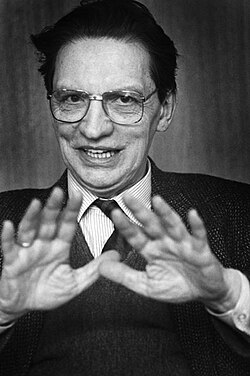
Wolfhart Pannenberg’s book Jesus God and Man is a monographical exploration of Christological method. It argues for seeing Jesus as a figure of historical study to be weighed according to the evidence of the witness testimony that one finds within Holy Scripture. This was to be done by exercising reason upon externally observable evidence, or, as he says, from below. What Pannenberg means here by from below, is really Christology done from the observational perception of His historical humanity. This, Pannenberg contrasts against what he calls theology from above, which begins with the presuppositions of faith and applies them to Christ, both in its conservatively orthodox and theologically transgressive forms.
The purpose of this paper is to critically analyze Pannenberg’s thought process in building his Christological methodology, with a specific eye toward conversion unto faith. Here we will tease out the key aspects of Pannenberg’s method and the presuppositions which underlie them, particularly as they contribute to the contrasting picture that they paint between Pannenberg’s conception of conversion unto faith in Christ, and that which is found in his opponents. This will be done through a careful and close reading of the key portions of the text in three stages:
1. Assessing Pannenberg’s own perception of the theological context from which he wrote
2. Assessing Pannenberg’s methodological response to what he saw around him
3. Teasing out the underlying presuppositions of Pannenberg’s method of Christology from below and tracing their impact on his theological outcome
4. Providing analytical critique
1. Pannenberg’s context as seen through his own eyes
The context in which Pannenberg wrote Jesus God and Man was one that was made up of two intertwining thought-groups. The first of these which needs considering due to its logical precedence is made up of those seeking to find the Historical Jesus such as was done in the various Quests for the Historical Jesus, which, in its earlier modes (arising in the 19th century) was characterized by an application of various forms of critical theory to the Biblical text in an attempt to peel back what was believed to be a layer of the mythological faith covering the real man Jesus. The thinkers who brought this theory to the forefront of the discussions are those such as Strauss, Harnack, Weiss, and others. While this quest affected many on both sides of the discussion, and was in large part accepted as being at least partially correct, the quest ended with some of its own key thinkers concluding that it was an impossible quest, as the quest was influenced by the investigator’s own presuppositions of what should be found. Stated in his own words:
Since the enlightenment the historical picture of Jesus has become farther and farther removed from dogmatic Christology in general. Since then it has appeared to be impossible to unite the God-man of Christological dogma with the historical reality of Jesus. The Christological thought of the nineteenth century and of the present also has been concerned with overcoming this growing cleft. However, it could not hinder the fact that the confessional statements about Jesus in the church’s tradition either became strange and impossible for contemporary Christians to understand or sank into the undemonstrable subjectivity of so-called perceptions of faith. (10)
Some, in response to these assertions, either assenting to them or dismissing them as irrelevant, sought the Christ of faith, believing that it was not the Jesus of history that mattered to religion, but Jesus as he is preached in the church and believed within the inner heart of man, regardless of whether there is a difference between the two or not. With Schleiermacher being the earliest thinker in this thought group, it spans the greater period between the two, moving from the 18th through to the 20th century. As it moved, and is traced by Pannenberg, it expresses itself in its early period as an acceptance of the presupposed antithesis between the historical Jesus and the kerygmatic one. Even Kahler, who superficially rejected the presuppositions of the early Quest, reveals that he did so not on the basis of a rejection on the grounds of a historically correct preaching of Jesus, but on the grounds that historical reality is determined by the contemporary consciousness of it. As Pannenberg recounts:
Kahler rightly protested against the tendency to drive a cleft between Jesus and the Apostles’ preaching about Christ. In this sense his statement is correct: ‘the real Christ is the preached Christ.’ It is based on the fact that in general ‘the personal effect which survives in a noticeable way for subsequent generations’ belongs to the historical reality of any important figure. This personal effect in the case of Jesus is ‘the faith of his disciples, the conviction that one has in him the conqueror of guilt, sin, the tempter, and death.’ We repeat, Kahler is correct in these statements, insofar as he protests against setting the figure and message of Jesus in opposition to the apostolic preaching in such a way that no sort of continuity between the two would exist any longer. However, it does not follow from the rejection of such false antitheses either (1) that the effects of the person Jesus are to be found only in the apostolic preaching or (2) that what is ‘truly historic’ about Jesus is only his ‘personal effect’ (23).
Kahler’s ideas here, which were followed by others, attempted to root reality not in the history of Jesus’ life. But to understand the history of Jesus, live in the historical effect of Him. This same idea of Kahler took on variant form with those who came later, such as Bultmann, who sought Him in the personal experience of Jesus, and finally with Koch, who rooted it in the Word and Sacrament worship of the gathered church. Thus, while the early Quest and the Christ of faith thought-groups differed from one another in their ultimate aim, they both took for granted an assumed antithesis between the objective reality of Jesus, which could only be known from the various forms of critical study as they pertained to historical theory, and the mythological legend of Jesus portrayed in the Holy Scriptures.
After this followed what Pannenberg calls The New Quest, which began with Kasemann, and included others such as Bornkamm and Conzelmann. This movement sought to connect the Historical Jesus to the Christ of faith. In large part, these thinkers challenged the assumed notion that there was such an antithesis between Jesus as He was and Jesus as He was preached. It was here that Pannenberg picks up his theological mantle, pressing forward on from the foundation of the New Quest, with a focus on seeking to engage in as pure a historical Christology as possible, that is, without assuming either the truth or error of the Kerygma. In this way, Pannenberg differentiates himself from the earlier Quest by refusing to presuppose the incredibility of the New Testament witness, as well as from those seeking the Christ of faith, by refusing to presuppose the credibility of the church’s confession drawn from those witnesses. For this reason, we may look at Pannenberg’s work not as delivering an alternative to Christological orthodoxy, as he comes to many of the same conclusions. But rather, as providing an alternative approach to arriving there, his methodology of Christology from below deals predominantly with the epistemological question of how one ought to come to believe orthodox things about Jesus.
For Pannenberg, it is the thought-group of those who seek the Christ of faith that takes up most space in his mind. The thinkers in this thought-group that Pannenberg makes mention of includes such names as Kahler, Schleiermacher, Bultmann, Weber, Kunneth, Hermann, Koch, Althaus and the entire Erlangen school, with Bultmann, Barth, Althaus and Schleiermacher taking up most of the discussion. Opening with the question of what Christology actually is, Panennberg asks what is meant when it is said that Christology is the study of Jesus. Which Jesus might that be, he asks? Might that be, as he asks, the Jesus of the past, “who appeared in Palestine in the time of the emperor Tiberius and who was crucified under the Roman procurator Pontius Pilate? Or does it involve Jesus as he is proclaimed today and is present through proclamation…”(22). This he viewed as the chief Christological question in his day. Not, what may we say of the incarnation, or what may we say of the descent of Christ into hell, though he deals with each of these along the way. But rather, which Jesus are we studying?
In a sense, the fact alone that he found this question a necessary one to ask, gives some hint as to what assumptions were popular in his day, and perhaps, his assent toward them. For it cannot be said that there are two Jesuses, one found in the Kerygma, and one who is historically and objectively real, unless one presupposes that what the church preaches of Jesus and what Jesus actually is are in fact different, whether in essence or accoutrement. Yet, that was in fact the exact presupposition in his day. And so he states:
The question is this: Must Christology begin with Jesus himself or with the kerygma of his community? The idea that theology, when it deals with Jesus Christ, must take its starting point in the proclamation of his community has become very influential since Martin Kahler. This idea was not completely original with Kahler. Albrecht Ritschl already had said this about the perception of Jesus: ‘one can attain the full extent of his historic reality only out of the faith which the Christian has in him.’ Such a point of view was suggested earlier by Schleiermacher and by the Erlangen school of theology. Kahler advocated this idea especially in his famous book The So-called Historical Jesus and the Historic, Biblical Christ (1892). In this book he attacked the theological claim of the quest for the historical Jesus which was that time in full bloom. The quest for the historical Jesus sought to lay bare the man Jesus and his message from the later development of the piety and Christology of the Christian community as they are combined in the New Testament writings. (22-23).
Here already, in the first two pages of chapter one, Pannenberg has given the reader two movements in the recent context that he is writing from, together with a smattering of names and references to their work, which continues throughout the whole of this chapter, and which come up repeatedly throughout the rest of his work. This he does to paint the picture of a stage that is set not by one mind, nor even one movement, but with a cascading development of several movements of thought, which both contrast with and build upon one another.
As Pannenberg states, in his time, the prevailing conception of Christology was founded upon the preceding context of the quest(s) for the historical Jesus, which he says, “was at that time in full bloom” (23). Harnack, as Pannenberg notes, was of the mind that the apostle Paul and his writings had “covered up the simple humanness of Jesus with his own bizarre Christology,” and placed a “harsh contrast between Jesus and Paul” (23). Here, Pannenberg refers to this notion of the historical Jesus and the quests for him as a thing that was at one time past in full bloom, that time being Kahler’s day, in the mid-19th century. That he sees this mainly as a thing of the past tells us that even though it was still around in his own day, through the work of Ethelbert Stauffer (among others), it was in his mind a thing that he considered a note on a past movement that most thinkers worth dealing with had moved beyond. However, this movement beyond the quest for the historical Jesus does not mean a moving without, but a moving with. For as one sees, there is a marked difference between the early quest and the new quest, in that the early quest presupposed that there was a distinction between Jesus as He was and the Jesus that is preached. Whereas the New Quest, led by men such as Kaseman, Fuchs, and Bornkamm, sought to tie the two together and vindicate the preaching of Jesus as historically verified. This is said most clearly by Kasemann, who is quoted by Pannenberg as saying:
Only if Jesus proclamation decisively coincides with the proclamation about Jesus is it understandable, reasonable, and necessary that the Christian kerygma in the New Testament conceals the message of Jesus; only then is the resurrected Jesus the historical Jesus. From this perspective we are required, precisely as historians, to inquire behind Easter… By this means we shall learn whether He stands behind the word of his church or not, whether the Christian kerygma is a myth that can be detached from his word and from himself or whether it binds us historically and insolubly to him. (46)
As is seen here, this is a sharp turn away from the presupposed antithesis of the earlier Quest. As Pannenberg says of this: “the new quest is formulated: it no longer involves – as did the liberal quest for the historical Jesus – the difference between Jesus and the apostolic kerygma, but it involves precisely the continuity between the kerygma and Jesus himself.” This same sort of moving entanglement of discussive thought is seen among those seeking the Christ of faith. For older thinkers in this thought-groupmaintained the belief that there was no need to find Jesus outside of the church’s kerygma about Jesus, as based upon the fact that it was mythological and legendary, as proposed by Harnack. Schleiermacher and Ritschl stand here as prime exemplars of the early response. Who, seeking to bypass what they viewed as an impossibility of the mythological legend in the biblical witness of Jesus as God-man, reduced their Christology to the resonance of His moral narrative within the inner man (38).
But the newer thinkers that Pannenberg cites who seek the Christ of faith, Bultmann excepted, do so on the basis of creating a faith that did not exist before it was believed, but which believed that faith cannot be arrived at without the church preaching it to make it believed. In this sense, many of the latter Christ of faith thinkers moved forward in their insistence upon finding Christ in and through His church, while attempting to also avoid proposing faith as being historically empty. Or, said another way, they sought to find the historical Jesus in the church’s preaching. Althaus serves as an example here, who, as Panennberg says, “expressly differentiates himself from the Erlangen theology of experience. Even as ‘experience,’ faith is not directed towards itself but toward its ‘ground and object” (25). Yet even so, Althaus, as Panennberg recounts for us, insisted upon the insufficiency of history to bring us to the point of faith in Jesus as Lord, because while the history of Jesus is necessary, it is not by itself understood as revelatory unless it is preached. For faith, as Althaus understood it, could not spring from historical fact nor from our rational consideration of them alone (26). But together, the history of Jesus, which is the ground and foundation of faith in Althaus’ eyes, is shown to be revelatory by the church’s preaching of its encounter with us in our own personal history. So Pannenberg says: “Certainly, Althaus also wants to maintain the importance of knowledge about the historical Jesus. ‘The revelatory character of the history of Jesus is not known by means of historical reflection or historical reasoning. But, on the other hand, it is not known without these” (25). For Althaus, “faith that that is without security in the sense of the pure kerygmatic theology is ‘faith without foundation” (25).
2. Pannenberg’s response
It is here at this point in his context that Pannenberg moves from the foundation of those around him, seeking the historical Jesus in the preaching of the Christ of faith, toward instead, seeking a Christ to believe in the history of Jesus. This, we may characterize, in a sense, as the opposite of Anselm’s faith seeking understanding, which is reason finding faith. From this point of connection between the two competing Christological movements of his day, he seeks to tie together the Jesus of History and the Christ of faith into one, not by peering behind the Resurrected Jesus, as Kaseman sought to do, to verify the church’s kerygmatic claims. But by starting with the historical Jesus to see Him revealed as God in the moment of Easter. He states at the opening of his book: “The procedure of Christology, on the contrary (to his context), begins with Jesus himself in order to find God in him.” (21).
From the opening pages of this book, it is clear that Pannenberg viewed the starting point of his method to be key to his contribution to the discussion. Whilethose like Kaseman and Althaus began with the resurrected and ascended Jesus in the revelatory preaching of God’s Word and moved backwards toward the history of Jesus, Pannenberg wanted to begin with Jesus. For him, this was the necessary answer to his earlier question as to what Christology was intending to study. If it was studying the church’s theology of Jesus, then beginning with Easter made sense. But if it pertained to the study of the Jesus was walked the earth in first century Palestine, then we need to begin with Jesus as man.
In a sense, this starting point is closer to thinkers of the earlier Quest(s) for the Historical Jesus. But the key difference here between Pannenberg and those of the early Quest is that in Pannenberg’s mind, the New Testament witness is a reliable historical document insofar as they witness to the event of the resurrection. This argument is based upon three main grounds. Their closeness to the event they mention, the observability of the events they mention, and the unity with with they mention them.
Beginning with their closeness to the events, Pannenberg finds the historical starting point not in the Gospel texts themselves but in Paul’s 1 Cor 15 witness, which came before them, stating:
Corinthians was probably written in the spring of 56 (or 57?) in Ephesus. However, Paul speaks form a still older, personal knowledge. According to Gal. 1:18, he was in Jerusalem three years after his conversion and there visited at least Peter and James… Paul would have been in Jerusalem between six to eight years after the events. From this the statements in 1 Cor., ch. 15, are very close to the events themselves. This observation is strengthened by a further finding. Not only does the author of this text stand very close to the events, but in addition he uses formulations coined previously. Thus he does not create his statements ad hoc from a possibly inaccurate memory, but he appeals to a formulated tradition, for whose formation little time remains between the event and the composition of First Corinthians.
From this, Pannenberg concludes:
In view of the age of the formulated traditions used by Paul and of the proximity of Paul to the events, the assumption that appearances of the resurrected Lord were really experienced by a number of members of the primitive Christian community and not perhaps freely invented in the course of later legendary development has good historical foundation. Under such circumstances it is an idle venture to make parallels in the history of religions responsible for the emergence of the primitive Christian message about Jesus’ resurrection (68).
As to the universal and objective observability of the event of which the Scriptures report, Pannenberg makes two points. Firstly, he draws on Althaus, saying:
Althaus has rightly seen this point: ‘in Jerusalem, the place of Jesus’ execution and grace, it was proclaimed not long after his death that he had been raised. The situation demands that within the circle of the first community one had a reliable testimony for the that the grave had been found empty.’ The resurrection kerygma ‘could not have been maintained in Jerusalem for a single day, for a single hour, if the emptiness of the tomb had not been established as a fact for all concerned’ (74).
This same point is made regarding those who positioned themselves against the Christian community, such as the Jews. For of the Jews, Pannenberg notes their polemical attacks against the resurrection of Jesus, which supposed many alternative ideas to explain the empty tomb, but at no time denied or doubted the tombs emptiness itself (75). What Pannenberg means by this is that the empty tomb that Scripture makes witness to is one that was so objectively observable that even those who had most to gain from disproving it made to attempt to do so, and thus verified it by their silence.
Yet, all of the reliability that the Scriptures had, in his mind, as witnesses to the resurrection, for Pannenberg, this reliability to testify to the resurrection is by no means any sense of essential reliability with in them, nor a universal reliability as historical reports. He states:
The appearances reported in the Gospels, which are not mentioned by Paul, have such a strongly legendary character that one can scarcely find a kernel of their own in them. Even in the Gospels’ reports that correspond to Paul’s statements are heavily coloured by legendary elements, particularly by the tendency towards underling the corporeality of the appearances (67).
Drawing further upon this dynamic view of Scripture as both reliable in some ways and unreliable in others, Pannenberg notes both their diversity and unity as points of support for their reliability in points of unity. For as much time as Pannenberg devotes to the disunity of the New Testament witness in the details, he concludes that their unity is not found in the exactitude of stated detail, or even in their freedom from mythological legend, but rather in their witness to the empty tomb. Of this, Pannenberg says: “If the appearance tradition and the grave tradition came into existence independently, then by their mutually completing each other they let the assertion of the reality of Jesus’ resurrection, in the sense explained above, appear as historically very probable” (78).
However, while Pannenberg does bear these differences with those of the early Quest, he remains closer to them in methodology in certain ways than he is to the early seekers of the Christ of faith. In this regard we see three means of difference again. Firstly, confession for Pannenberg is not to be self-directed within itself, as faith in faith, but grounded in the observable events of the historical Jesus. Secondly, this event cannot be subjective or invisibly personal, but needs to be externally and objectively observable. And thirdly, based upon those first two, the faith confessed must not be defined by a sense of certainty in its propositions, but defined by conclusion that is weighed by reason on the basis of probability.
While thinkers like Schleiermacher found their way toward a conception of faith in God a posteriori from the experience of redemption (25), Althaus as a leap or risk (81), and Bultmann, quite literally in the existence of faith itself (26), Pannenberg’s definition of faith was founded outside of faith itself. He defines this perhaps most clearly in his Systematic Theology, when he states:
Faith is a form of the way we relate to truth and is comparable in this regard to knowledge. In Hebrew the terms for “truth” (˒emet) and “faith” (he˒emin) are linguistically related, deriving from the same root. Truth in the sense of ˒emet is what is constant and therefore trustworthy, so that we can build on it. He˒emin denotes the confidence that establishes itself on the basis of that which is constant, so that those who have it achieve steadfastness and constancy1
In this regard, faith, for Pannenberg, is not a thing which grasps hold of its own self, but which is founded on the basis of something else, namely a rational conclusion on the basis of historic facts. As such, for Pannenberg faith’s connective concepts are not things of experience, risk, encounter, but knowledge, truth, and trustworthiness. But the way that he uses these concepts differ from the theologians who begin from above, in that the trustworthiness of these the Scriptural witness is not found in their essence as the product of a Divine source but concluded on the basis of scientific probability. This we might understand as a faith from below. In this way, faith, for Pannenberg, is a correctly aligned relation to the truth as assented to on the basis of rational inquiry. Or, a faith, defined as the reasonable conclusion of evidence correctly considered.
Secondly, in that the event must not be subjective or invisibly personal to the seeker, Pannenberg, as we have already seen, stresses the universal observability of the event, over and against a proposed concept of faith that can only be seen either in the individual personal experience or the Christian community of the believing. For as he says of experiences, “how can one distinguish them from self-delusion” (27)? And of church confession, it “could simply be a particular case of deification that often appears in the history of religions” (28).
Thirdly, Pannenberg differs with these thinkers on the very conception of faith. The language here becomes difficult for the reader, as Pannenberg himself uses the term certainty to mean a sense of scientific confidence based probability. As he says, “whether or not a particular event happened… is not made certain by faith but but only by historical research, to the extent that certainty can be attained at all about questions of this kind” (74). What we may understand by this statement will be seen by his use of the word faith in contrast with his use of the word certainty. For Pannenberg, faith cannot be defined as certainty, but rather is had on the basis of scientific certainty, at least inasmuch as one can conclude from the evidence, through likeliness and probability.
Here it is seen that Pannenberg is utilizing the concept of scientific probabilities with these matters, rather than what he would consider a blind trust. While he critiques those such as Bultmann, Ebeling, and others for placing faith in faith, the basis for that critique is founded on the difference between on the definition of faith. For Pannenberg, faith that is not founded on a reasoned consideration of observable evidence is not faith. And so Pannenberg concludes that, “the essence of faith is destroyed where it appears as an unfounded risk. The ground of faith must be as certain as possible” (82).
3. Teasing out the underlying presuppositions in his method and tracing their impact
That Pannenberg understands faith as a correct knowledge of the truth reveals to us that his conception differs from the concept of conversion as the ex-nihilo creation of faith through the Word as used by other thinkers. For while he does affirm the language of the Spirit of God as present and powerfully at work in the Word, he defines this as power of the Spirit in the Word as a thing which “points back to the uniqueness of Jesus’ history, which penetrates into the ears and understanding of men through the word of proclamation” (126). And, while using the language of throughness, inness, and withness, to speak of the Word and Spirit, he does so only as a way of referring to our being directed back to the historical event. As he says: “This word brings with it the Spirit, through whom we perceive God’s revelation in the history of Jesus recounted by the word” (126). That is to say, Pannenberg’s understanding of the Spirit’s work in the Word is one which firstly directs our attention, and secondly, enables us to perceive God in the event. Yet for all of this that the Spirit does trough His Word, it is not, for Pannenberg, the creation of faith itself. But rather, the direction of the Spirit through the Word toward the evidence, which he understands to be the act and revelation of God, and the empowerment of the possibility in man to come to the correct conclusions from it, by the use of reason. Only this, does Pannenberg call faith.
From this, we can identify in Pannenberg, both a primacy of human reason, as well as it’s necessary reliance on the power of the Spirit in conversion unto faith. For while Pannenberg defines reason as essential to the nature of faith, he also states that it is incapable of grasping the fullness of truth in faith without the work of the Spirit which directs us to the evidence and enables us to perceive it as God’s revelation. This being the case, Pannenberg situates human reason, as it is supernaturally empowered by God to act upon historical evidence into the place of ordinal primacy. And in turn, orients God’s role in man’s conversion around the concepts of evidence, rational inquiry, and correct conclusions, which God relates to man through by means of assistance. First accomplishing the historic event, then pointing man back to it in His Word, and lastly empowering man to be able to reason through the evidence. With the final stage of the correct alignment with the truth as based on reasoned probability, remaining to man himself. Thus, God’s work, while performative in the historical event, is beyond that point, more directive and perceptive than it is creative.
This impacts both his understanding of God and of man. Of God it views Him as interacting with creation primarily through tangible acts in history. His understanding of God’s revelation, likewise, is rooted in that act of history. And his concept of God’s Word, likewise, is functionally reduced to an instructive, propositional force that directs back to the historic act, and empowers human beings to recognize the act as divine. As such, he does not view the Scriptures as being directly sourced by God, though powerfully intertwined with the Spirit, but as being the purely human testimony of what God has done (which he refers to as the Word of God, 121-122) as they understand it, with mythological legends and errors included therein.
This then orients God around man’s reason, on one side giving man evidences to ponder and weigh according to their reasonable probability, and on the other, supporting his rational capabilities beyond what is naturally within grasp by the power of the Spirit, in order to enable him to better engage in this rational quest for alignment with the truth, which Pannenberg calls faith. This, while certainly having a focus on reason, does not seek to use it in its naked purity, as those who first presuppose ideas or conclusions about God and then follow them through according to logical necessity. But rather, this use of reason is one that is both applied to external evidence as well as aided by the external power of God’s Spirit. In this way then, Pannenberg’s method of theology can be classified in a sense as a supernaturally empowered application of the Scientific Method to hypothesized moments of Divine Activity in history. Understand the performative action of God as the historical event considered, the work of God through the means of grace as augmentative, and faith being the successful conclusion, in alignment with objective truth
4. Analytical critique
From the very moment of its proposition, Pannenberg’s theological method is faced with the question of its own possibly. For while Pannenberg intends to start with the historical Jesus rather than the Jesus of faith, the text that he uses to engage with that history is a product of faith in the Kerygmatic Christ. He acknowledges this in at least two ways. The first being that, as he says of Paul, he is working with previously acknowledged and accepted doctrines of Christ-resurrected, and secondly, of the Evangelists, that they put forth ideas that he views as mythological. The two issues exhibit the fact that for Pannenberg, the Scriptures are themselves tainted with the faith of their authors. As such, there is no witness for Pannenberg to use which is pre-Easter, or untainted by the Kerygma. For even from the very beginning of each of the four gospels, and from Paul, the death and resurrection of Christ is presupposed onto the very beginning of the written account of His life. And so, we are faced with a problem. Because, Pannenberg believes that we cannot begin work in Christology from the starting place of confession of Christ as God, but must start instead with the man Jesus. But to do this he has to rely upon the Evangelical document of the Holy Gospels, which are themselves a preaching of the man Jesus who is proclaimed right form the very beginning to be God, as known through the Resurrection.
As such, the theology which Pannenberg opposes, namely the theology from above, is the theology of the Scriptures. This poses a serious problem for Pannenberg, who, as has been seen, uses the Scriptures critically. Not taking them as a single authoritative whole, but deciding for himself what is true or not within, on the basis of what he finds reasonable. So the question of objectivity begged. For it must needs be answered whether or not it is the case that Pannenberg’s method is an investigation into the evidential witness testimony of Scripture, or within what he finds reasonable within them. Said another way, Pannenberg’s method posits itself as an investigation into the historical witness while at the same time rejecting the universal reliability of the witness claimed, resulting in an investigation, not according to an external body of evidence, but according to the subjectivity of what he found rationally palatable within them. This was the same issue those engaging in the early Quest fell into.
Secondly, if Pannenberg’s method is considered possible, it must also be judged defensible. For in many ways his method resembles that of the Quests for the historical Jesus, and yet concludes in a fashion that radically differs from their own. Thus, it must be asked whether nor not Pannenberg’s own method was properly executed. Because, while Pannenberg proposes that Jesus must be considered historically, according to the scientific probability of that which is externally observable without the tampering of faith-confessions or church dogma, he does this together with those who deemed from the same or very similar methodologies that Jesus was a mere man that died and did not rise. This begs the question as to whether or not the method of Panneberg as objective in its conclusion at it may seem, as Pannenberg’s difference with those thinkers of the Quests for the historical Jesus is not found within the universal reliability of Scripture, or of the church’s confession, but only in the one event of the resurrection. Why this is, is found to be little more than a different estimation of the evidence.
Lastly, one has to reckon also with its suitability. For if it is true that faith is come to, not, in a way, from the Scriptures, but through reason, judging between texts within the Scriptures, then the faith that one will inevitably come to will be, in many ways, contrary to the Scriptures. As such, one who does this will be faced with a conceived perspective on the faith that is explicitly poised against both Holy Scripture and Church Confession. A clear example of this is in Pannenberg’s rejection of the Virgin Birth (104-110), which both Scripture and Christian faith confess to be true.
From all of this, we may conclude that Pannenberg’s method presents to us a sort of spin on the Quest for the historical Jesus, which flips upside down the latter developments of the New Quest, seeking the Christ of faith in the history of Jesus. This is done through the central theme of man’s reason, augmented with the power of the Spirit, and applied to the evidence of the divine act of resurrection in the historical Christ. The outcome of which, is an affirmation of the resurrection and Divinity of Christ, without the need to affirm the universal authority of Scripture or the inerrancy of the church’s Credo.
1 Wolfhart Pannenberg, Systematic Theology, vol. 3 (Grand Rapids, MI: Eerdmans, 1991–1998), 136.


