
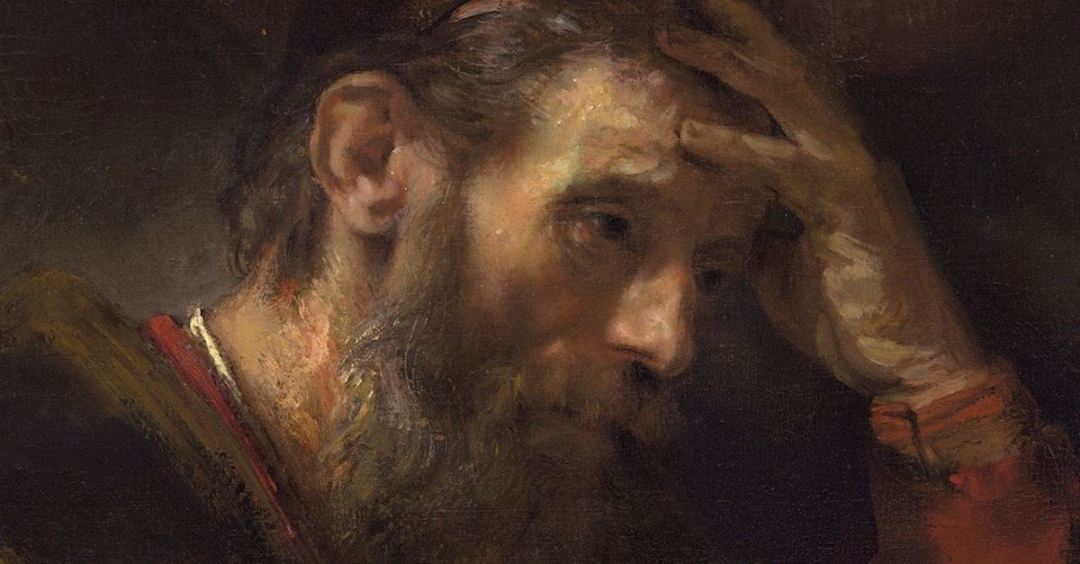
11 Let a woman learn in silence with all submission. 12 And I do not permit a woman to teach or to have authority over a man, but to be in silence. 13 For Adam was formed first, then Eve. 14 And Adam was not deceived, but the woman being deceived, fell into transgression.
As some of you may know, I am not a theological egalitarian, and I stand squarely within the Church’s traditional position on gender roles and the pastoral office. For those interested in reading more about that traditional position, see the following article below; much of which deals with the text in front of it and those following it in 1 Timothy and those it mirrors in 1 Corinthians, Genesis, and Titus
The Conservative Deaconess
That being said, neither am I one of those who feels the need to make that traditional position a central pillar of my pulpit work or to place it at the forefront of my ministry in the Congregational context, just as I am not like to do so with issues of sexuality or politics. I am always primarily a Law & Gospel, theology & Liturgy kind of guy. I usually leave social ethics to the Pietists.
Yet – it just so happened that this… lets say, interesting text fell into my lap for this past Wednesday Night Vespers service. And? What then? Was I to fold the cards and pretend like it doesn’t say what it so very obviously says? Of course not. Was I to succumb to placing the gospel on the backburner while I brought up disputes about gender roles in the church? Or course not. Far be it from me to fall into either of these holes. And so instead, I wrote a sermon about Christian service in vocations at both the bottom and the top of society for the sake of the gospel and as an imitation of the gospel and the providential Fatherhood of God.
And yet, although I felt that I did justice to both the text as to what the congregation needed to hear (law & Gospel applied to their real lives as they’re lived in the world) a dear friend and fellow pastor mentioned to me as I told him of my battle plan that no matter what I said of this text, people would be mad simply for having this text read in church. And? He’s not wrong. And that’s the problem. Of course, this gets far worse when we continue into the end of this book (or back in Colossians 3&4) where Paul speaks to slaves and slave owners – but even just here with the issue of women in the church we run into problems. And it’s a problem that we run into problems. Why CAN’T I openly read, teach, and declare without fear what the BIBLE SAYS in a church service? Are we really at the point where people get mad and cancel you FOR READING THE BIBLE in Church? I think we might be. And that’s the problem. Actually let me take this a step further, because I don’t simply expect to be able to read the Bible in church as God commanded me to do as a responsibility of my vocational office, but I actually expect that Christians who hear that Word believe that Word, submit to that Word, and actually do that Word. And yet, apparently, the church in these latter days has come to know the wills and ways of God better than His own revelation proclaims it to us and as such it now stands over the Scriptures deciding what is and what is not acceptable to say or believe or do, to look over the Scriptures and determine what is bound culturally and what is an eternally abounding and steadfast rule of the faith handed down by God. In other words, the determination of what is right and wrong according to God seemingly, in these current days has less to do with the Scriptures and more to do with our opinions.
Really and fundamentally this is a question of Biblical authority, biblical inerrancy, and perhaps most importantly of all, biblical clarity. That is to say, to echo Paul, in this selfsame epistle; “If anyone teaches otherwise and does not consent to wholesome words, even the words of our Lord Jesus Christ, and to the doctrine which accords with godliness, 4 he is proud, and knows nothing.” Because the only way out of these texts is to assert our own opinions above God’s Words. That stands as an unbending rule of truth. And yet, I KNOW, even in spite of almost everyone agreeing with what I just said in principle that as this text is read complaints and discomfort will fly up, such as “who does this Paul (or this pastor for that matter) think he is to tell women how to dress, how to speak, how to act, and even to forbid them of becoming pastors?!” But the reality is friends, that this is God’s Word before it is Paul’s. That Paul (and all of the Scriptural penmen) spoke and wrote not as they willed to, but as they were moved to by the Holy Spirit. If God said it, that settles it. Or at least, it should.
In this text, Paul states that He does not permit women to teach in the church. Now, as I said, those who disagree with this can only do so on 3 grounds of denial.
1. Biblical authority
2. Biblical innerancy
3. And biblical clarity (perspecuity)
The claim goes like this; “Paul only forbade women in office because of the context he lived in so as to not cause offense similarly to the restrictions in the Jerusalem council.”
Basically what he have here is encapsulated in its most conservative form our first problematic claim. That while this text is not technically “errant” or “unclear,” that it bears no authority upon us because it only speaks to a contextually relative situation unlike our own for the sake of peace and harmony among those who dwell in oppressive systems and societies.
So let’s start here. How does this fail to affirm the authority of Scripture?
Interestingly, those in the theological center and left of it like to speak of authority in a non-offensive and non-confrontational way, playing the game of etymology and linking it to a nature of creativity and life-giving relationship to those it acts upon. And perhaps that’s where the nature of Scripture itself in the minds of these two groups diverges (or maybe not), but nevertheless what we mean by authority is slightly broader, and, a good bit simpler. Does such and such a person, or thing, actually hold the “authority” to say what they said? And, if that thing is a command or an ethical declaration, is it binding upon me? That is to say in another, more simple way, do I have to listen to what _ says on a given issue? Or can I dismiss it? This same understanding of authority (which is the one in our English dictionaries by the way) functions identically whether we’re discussing Law or Gospel. Does God have the authority to forbid certain things as sin, and command certain acts of obedience? Does God have the authority to pardon and forgive sins? Yes and yes.
With this in mind, the question basically functions in this way. Paul said X thing I don’t like, but, he was only speaking to people of a certain context and thus it isn’t authoritative for us today in our modern context (“conservative” articulation of the concept). Or, Paul said X thing I don’t like, but, what he said isn’t in line with the direction of Christ’s ministry, and since Paul isn’t Jesus He has no authority over me and I don’t have to agree with what he said (“centrist” / “moderate” articulation of the concept) Or, Paul said X thing I don’t like, but, he is only a man speaking his opinion as he understood it, so it isn’t authoritative for us today (“Liberal” articulation of the concept). You see in this first conservative articulation of the concept that the inerrancy, reality, and authority of Scripture is retained. In fact this is an inherently Christian hermeneutic to employ, and bears only a circumstantial posteriori error rather than a priori methodological error. For example; Moses said that I can’t eat pigs. I don’t like that. However, what he said there was only applicable to the Jews in their specific context, for the reason of a type and shadow of their being “set apart” form those around them, and has been fulfilled in Christ and so to us, Scripture has explicitly declared all foods clean. This goes for all of the “ceremonial law” and that vast majority of the civil law so long as it doesn’t overlap with the moral law, to use the tripartite distinction for the sake of conversation and ease. Yet in the centrist articulation of the concept the authority of Scripture begins to slip, and no longer is all Scripture God-breathed (2 Tim 3:16), but now much of it is mere straw, with the authority remaining only with the red letter Words of Christ, or the words of the rest of Scripture when we feel like they cohere with Christ’s own mission or mindset or “kingdom protocol” (to use their terms and phrases). Lastly, as we see this enter into its full Liberal formulation, Scripture is relegated to an error-ridden book that I stand over critically analyzing for divine truth wherever it might possibly be found.
Yet of course the truth of the matter is that what Paul has written, God has spoken.
And that means that the authority of Scripture is the authority of God Himself, no matter who the “human author” is. And what this means, is that it shares His divine attributes. Meaning that Scripture is without error and in fact actually cannot err by reason of God’s omniscience and impeccability, that Scripture is performative and creative by virtue of its connection to the cause of all existence (Gen 1:3), and that speaks with transcendental authority due to the geographical and temporal omnipresence of the God who’s Word it is. Thusly; God’s Word cannot be excused or dismissed by means of calling PAUL a man of his own time, because before this is Paul’s Words they are God’s Words, spoken through Paul, written by Paul, not as he willed to do so but as the Holy Ghost in HIm moved him to do so. And God, unlike Paul, is not merely a man of ANY specific time (or place) but one who dwells everywhere, and in every place, and in every time all at once. Meaning what, exactly, you might ask? Meaning precisely this; that the God who is in all places, and in all times, speaks to you in the Scriptures what he does from that omni-perspective. As such when He speaks He does not speak to us as a 1st-century Jew. Nor does He speak to us as one who does not know all of what we know. He knows far more than we could ever know, and interestingly He still disagrees with us on what we think we know. Yet He, (not we) as the holder of all knowledge, as the standard of all goodness and righteousness, and as the measure of Justice itself is the one who wields the authority to make declarations on what is right and wrong, what is justice and oppression,and what is liberation or backwards thinking – NOT US.
This leaves us with two possibilities, firstly, these statements are eternally authoritative, or two, God spoke an eternal principle into a contextually relative and temporary precept (such as He did with the Jews in the cermonial laws). I.e., as the concept goes, God knew that if women were allowed to preach and teach and hold church authority in this time and this era and this place then it would cause disunity and hurt in the church because that would be going against cultural values and norms. Thus, this is not God’s teaching, except as a toleration of sin, for the sake of peace, unity, and the suffering under undue injustice for the sake of mercy and love. Now, before the conservative readers start getting up in a stampede about this, let’s first acknowledge that this is indeed entirely possible and that there is tonnes of precedent for this in the Old and New Testaments. What we then need to ask is is that the case?
Well – let’s look at the matter by turning TO that aforementioned precedent. In the case of O.T. Mosaic food laws, how do we know that the the binding nature of the precept is contextually relative?
Very simply, we look at the text. Indeed we could look at the O.T. institution of those Laws, and what you will find there is a typological function whereby in eating, dressing, acting, and the living out of concrete matters of culture that the Israelites were to be separate (aka holy) and set apart from the gentiles. So they ate differently, dressed differently, wore their hair differently, so on so far, it all seems arbitrary, and technically is, except for the matter of God calling the Israelites to make their whole selves (diet, dress code, haircut, lifestyle, etc) into a consecrated offering to Him. But even more importantly (and simply) we look at the New Testament and the matter is cut dryly and simply; where we can go to Mark 7, or Acts 10-11 where “all foods” are made clean. And in Acts, with Cornelius, we have also the tie of the Jew/Gentile separation to the O.T. institution of these foods (which actually goes back before Moses to the time of Noah) spelled out for us explicitly. But the N.T. doesn’t stop there for Paul also declares all food clean in Col 2:16, in 1 Tim 4, in 1 Cor 8, Rom 14 (etc, etc, etc.) Here we see the precedent of a Law that was in place but was clearly not eternal. The text itself not only declares that we are no longer under this Law which was once in place upon God’s people, but, it declares also the temporary nature and purpose of this contextually relative precept.
Turning then to one example of a N.T. precedent for contextually relative temporary precepts, we look at the uber famous “Jerusalem council” in Acts 15, in which the apostles and the NT era churches restrict the “Christian freedom” of the gentiles for the sake of the Jews that they share one church with. At least, that is how it’s often read. There is another more conservative way of reading that text, which has an exceptionally strong case to make (that nobody wants to hear) but I’ll spare you of that for now, and simply say this, that assuming that the normative reading of the Jerusalem council is right, and the forbidding of blood is a temporary law (ew, who wants to drink blood anyway) along with all the other laws in the Jerusalem council still forbidden, the the matter is already very clear in motivation and reason, as the Jerusalem council was specifically held to address the tension between the gentiles and jews as they attempted to get along together as one body. And so here too, the answer is found in the text itself, rather than in our feelings, or our opinions, or our culture, or scientific advancement which says that eating blood is good now or anything of the like or of such sort.
That is to say, that in both of these case studies, in O.T. as well as in N.T. the Scirptures are what determines contextual relativity over and against transcendent eternality.
But the opposition is not without a response to our complaints. And so, they turn to Jesus’ teaching on divorce to prove their point, wherein He says that Moses, because of the hardness of your hearts, permitted you to divorce your wives. Here with this text, they attempt to show that there is a precedent of unjust (not merely arbitrary or indifferent as in the case with food laws) laws being given for the sake of lessening the harm done by sinners in the world (and here they also point to slavery, to polygamy, etc. Yet even here in this very text that they so favor, we are pleased to point out to our opposition that Christ shows that these temporary Laws (in which we see the eternal law of love and of harm reduction) fail to meet the standard of righteousness in that they fail to cohere with the creation order and natural law. Notice right here as Jesus Himself says, Moses permitted you to divorce your wives, but… it was not this way in the beginning. THEREFORE whoever divorces his wife, except for sexual immorality, commits adultery. Notice that in this text before you, Christ points to WHERE for the truth? Not the changing context of the culture, not some new declaration that hadn’t been given yet, but TO THE BEGINING, TO THE CREATION. and that’s just where Paul heads with his own thoughts in 1 Tim 2, isn’t it? For, WHY – Paul asks, is this to be so? WHY are women to be characterized by silence and submission, to not be permitted to teach or preach or hold authority over men? Not because of culture, not for the sake of tolerating sin and systemic oppression, but BECAUSE Adam was formed first, then Eve. 14 And Adam was not deceived, but the woman being deceived, fell into transgression.
Does that sound culturally relative to you? Was Adam only formed first in the 1st-century Mediterranean culture? Was the woman (rather than Adam) being deceived something that stopped being true in the late 1900s when we started ordaining women? I think not. Whether we like and agree with this argument or not is not the question. The only question we’re to ask ourselves is what Paul’s argument is. Is Paul arguing on creation order and natural law, as Jesus does? Or is he arguing on the basis of a contextually relative situation as the Jerusalem council and the Mosaic food laws were?
Secondly, if Paul is utilizing the same argument as Jesus on the matter of Divorce, then not only dos that mean that we have to either reject both or accept both, but it means that if we reject either of these arguments as invalid, then you must face the realization that you are accusing GOD of making a hermeneutical fallacy.
And not only would that land you into heretical waters, but it would also place you firmly in the LGBT affirming camp, because this is also one of the main arguments used in the scriptures against homosexuality. For right there in Romans 1, Paul insists that homosexuality is unnatural as seen in nature and in the creation. As he says, even their women exchanged natural use for what is against nature. 27 Likewise also the men, leaving the natural use of the woman, burned in their lust for one another, men with men committing what is shameful. Is that a valid argument? Then on what ground do we deny 1 Tim 2:8-15? Is 1 Tim :8-15 rejected? Then on what ground do we accept Rom 1:26-27? If you affirm female pastors, by what standard do you reject homosexual marriages and transgenderism?
If these stand TODAY against homosexuality, against transgenderism, and against infinite unlawful no-fault divorces, then 1 Timothy 2:11-14 stands as well against female pastors. And if it doesn’t, then neither do our arguments against homosexuality or transgenderism or infinite no-fault divorces. For if the blatant prohibitions can be swept away by our historical contextualizations then so can the blatant prohibitions and condemnations upon homosexuality. For these, all use the very same argument. The divinely instituted creation order, the law of nature, and the beginning. And what do we see at the beginning? Aside from Adam being created first, and Eve falling first, what do we see? We see two things. Firstly we see the created order; Adam formed first, and Eve second from Adam, to be a helper unto him. Secondly, post-fall, (which also factors into Paul’s reasoning here) we see that as part of the curse Eve’s desire will be for (or in the ESV; “contrary to”, or, in the NLT; “to control”) your husband, but he will rule over you. Whether the matter is discussed from the perspective of God’s intention at the very beginning of creation, by reason of the Fall, or as a result of the curse, or by almost all of human history, nature has shown, creation has shown, God’s deliverance of the consequences of the fall have shown that only Words scripture speak directly on this matter (rather than the descriptions of what they claim are contrary happenings to the direct dictions of God on the matter) are entirely contrary to that of the evangelical feminists.
as such, the only possible way to escape this matter is to plainly, clearly, and flatly say that creation (which Jesus Himself points to) has no authority over you, natural law (which Paul points to in Romans 1 & 1 Cor 11) has no authority over you, and even blatant divine commands in Holy Scripture have no authority over you, except for when you personally already agreed with them, making yourself (or culture, or science, or whatever else), rather than God, the real functional authority.
This brings us to our second issue, the inerrancy of Scripture, what is this?
Very plainly, this issue comes up in the conversation after the first matter of authority, and it goes like this; “Paul was wrong.” It varies in why he was wrong. both here and in other places. Some thinking he was using ancient medical misconceptions that believe that women couldn’t do the job well. That he was wrong in that he was unjust and sinful. And if you think this is beyond the pail of things pastors can get away with saying in churches today, just wait until you hear what they’ve to say about Jesus’ conversation with the Syro-Phonecian woman.
Anyways, the matter is laid out and the question asked; can the scriptures err, or can’t they? No. They can’t. This is not a mistake. This is not Paul being societally backwards and undeveloped or wrong. This is truth. You, my friends, are the ones who err. Not God, not His Word, and not His apostles or prophets as they spoke it and wrote it to us in the Holy Scriptures. Paul was not wrong. And yet, some have written books about how he is. Yet as we confess in the Holy Scriptures, let God be true though every man a liar. Here we will however, admit to the opposition that the doctrine of inerrancy is not explicit in the Scriptures, in that they say “the Scriptures cannot and do not err.” Yet, one cannot at once admit that these Scriptures are God’s Word (see first issue above) while also denying that they bear His inerrancy. To confess that God cannot err, but that the Scirptures do, is to deny the very source of those self-same Scirptures.
The perspicuity of Scripture, what is this?
The perspicuity of scripture, meaning the clarity of scripture, is actually just what it says it is. It is a confession of faith in the CLEARNESS, plain-ness, and obvious-ness of the Scriptures that God puts before us. It is the belief that I don’t need to “study” the Scriptures at the level of analytical Koine Syntax in order to get the point. It’s the idea that there is nothin hidden in the bible but rather that the bible is given that truths might be REVEALED. It’s the belief that instead of the bible being mysterious, it’s actually revelatory. That is to say, as those who oppose God’s Word on this or other matters scramble all over the place looking for grammatical-syntactical arguments or arguments from ancient culture in secular sources or archaeology or whatever else, we point back to the utterly sufficient and plain text before us and point out all the more that Paul said what he meant and meant what he said and that it’s not a riddle but a revelation.
But how, might you ask, does this actually come to be a part of this conversation? In this conversation and in this context the matter arises thusly; “It’s not clear what Paul is saying, in some areas it SEEMS like he’s saying that the gender roles and hierarchies are passing away, in others he enforces them. In some it SEEMS like he’s saying this is eternal and rooted in creation yet in other areas of scripture it SEEMS that he speaks to contextual relativity. Really, we just don’t know, and can’t know what he meant. These texts are unclear and ambiguous.” That is to say, this argument (which is aboundingly common) is one that’s based squarely upon a denial of the clarity of scripture. After all, they say, if a text is unclear, it cannot (or should not) be proclaimed or enforced, but rather , left up to debate. Other texts they like to parade around with in this same vein are those such as Paul’s words on baptism for the dead, or the angels as reason for headcovering, or the eschatological prophecies. And yet, one cannot help but notice the similarity between this line of thinking and that of the radical liberals.The text is unclear very soon becomes the text is inconsistent, very soon becomes the text is rediculous, very soon becomes who cares about the text except as mythological inspiration for self-invented spirituality. But even in it’s most “conservative” of forms this line of thinking is not only utterly “un-Lutheran,” but fails to make proper note of any legitimate use, function, or purpose of the Scriptures as revelatory.
But take that general truth out of the equation for a second and focus in on the matter at hand. Even if you think other texts are unclear, do you REALLY think this one is unclear? Or is it just that you don’t like what God (through Paul) so clearly says? Is the lack of clarity felt about this text found in the text itself, or is it found in the lack of congruity with the nature of God as they understand Him (in their own image rather than as He revealed Himself)? So many times I have heard this question; “what does it mean to learn in silence?” And, in one respect, this is a valid and good question to ask, because elsewhere Paul speaks of women prophesying in 1 Cor 11 (as is also found in Joel 2:28, and Acts 2:17), making a literal rendering of silence impossible. And so, this notion of learning in silence is chalked up to a seemingly contradictory mystery, if not a contextually relative notion that bears no authority upon us. But, if we would just engage in a slight but more reading of Paul, the meaning becomes clear. Paul calls women to learn in silence and does not permit them to teach or hold authority over a man. The reason he cites as creation order. and yet, Paul, Peter, Joel, and Luke attest to Women teaching men individually (Priscilla), prophesying (1 Cor 11), evangelizing (Anna), etc. Yet what do we not see women doing, or being given permission to do? To be pastors, to function in the office and role of pastor, or to hold the authority of church orders, or to preside in the Divine Liturgy, or to lead public worship.
And yet. still this does not satisfy everyone. And to those people I would say this; if you are still confused about what it means that women are to learn in silence and not be permitted to teach or hold authority over a man, and are not sold on the conclusion that this refers to church orders and ecclesiastical offices, then perhaps instead of wondering to no end what it does mean, let it be sufficient for you to know that it obviously does not mean that they should be ordained into the pastoral office, as there are no positive arguments FOR the ordination of women, but only Scriptural prohibitions against it that one must maneuver around if one wants to defend the practice. At the very least if anything, such a thing would place our relationship to the Holy Scriptures back on revelatory grounds and keep us away from seeing the Word of God as an obstacle to His will.
So, what’s the point of all of this? It’s not entirely to dispell the egalitarian arugment surrounding 1 Tim 2:8-15, but even more importantly to say that the church needs to actively guard herself against decidedly setting herself against the decrees of God’s Word. This includes everything from outright offense at the reading of God’s Word all the way down to the slight shrugging off of its express and explicit commands and prohibitions on the basis of authority, errancy, or ambiguity. Simply put, condemning the bible (for whatever reason) is not justice. it is idolatry of self and of society. It is sin. And it is blasphemy. It needs to stop, folks. God is always right, and the Bible is always His Word.


