
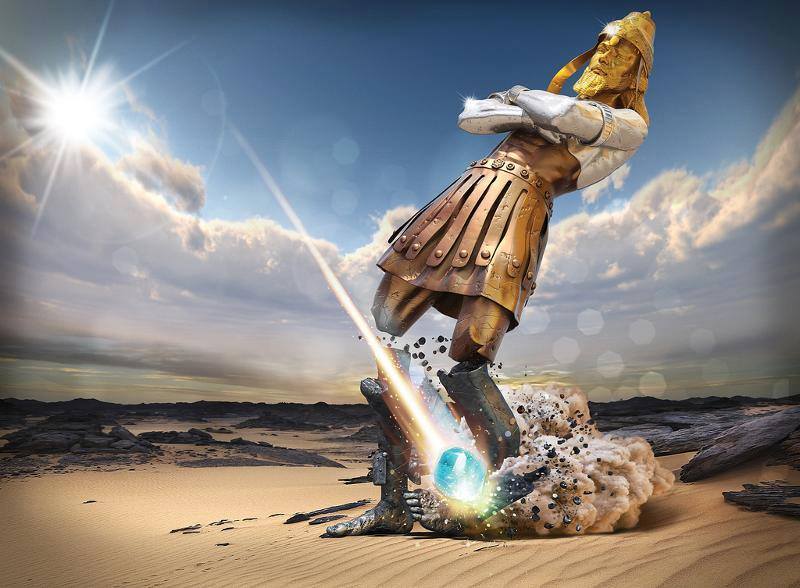
Philippians 3:18-20, Evangelical Heritage Version
To be sure, many walk as enemies of the cross of Christ. I told you about them often, and now I am saying it while weeping. 19Their end is destruction, their god is their appetite, and their glory is in their shame. They are thinking only about earthly things. 20But our citizenship is in heaven. We are eagerly waiting for a Savior from there, the Lord Jesus Christ
This year, as is the case every year, we find ourselves preparing for Christ the King Sunday in the midst of the world’s fussing and fighting over issues of kings and kingdoms. On this side of the flat sphere, these Amerikaners have just finished their mid-term elections (whatever that means). On the eastern side, the Russo-Ukrainian war rages on. I couldn’t honestly tell you that I know what’s going on down below but I can promise you that whatever it is, it’s political. And that shouldn’t shock or surprise us, because by nature we are political people. For all of the desire that I personally might have to live in an Anarchical utopia, I am not yet so deluded as to actually think that one would ever exist. No matter what age, culture, race, or gender of human beings we’re speaking about, if you put them together in a group they naturally, and out of some kind of primordial inclination organize themselves in a hierarchical society. No matter how much we try to hold our natures at bay or pretend that they do not exist by calling ourselves democratic, and claiming that voting is a basic human right, our natures will remain our natures, and our inclinations will remain our inclinations. As such, wherever you find human beings, there you will find human beings ruling and humans being ruled. And where you find humans ruling and or being ruled, there also you will find them resisting their rulers, usurping their rulers, and complaining about their rulers. Human beings are always thinking politics, always living politics, and always talking politics, even when they think they aren’t. The politics may change in scope depending on the age group, gender, or context, but they always remain political. Because we are by nature a political people. Last year, Pr. Roland Weisbrot wrote a CTK article about this very thing. An excellent article it was, so I won’t belabor the point again this year, although I do admittedly love turning horses into glue. What I will instead write about, is the need and purpose of CTK, and its theological role and impact upon us through the liturgical calendar.
Instituted by Pope Pius XI in between the two world wars, CTK was intended to cool down the hatred and fighting that had so filled the world due to politics by turning our eyes away from whatever earthly kings or kingdoms existed before us, toward the heavenly King, and His heavenly Kingdom. The idea was (and still is) that in continuing to remind ourselves every year that Christ, rather than our petty little earthly leaders, is King, that we would clue into the fact that our hope is in Him and His rule, His Kingdom, His ways, and His policies, rather than the inevitably stupid ones that our flesh-sack leaders came up with, is where hope and salvation will be found. That He, rather than them, is the one that we bow to. That He, rather than them, is the one that we obey. That He rather than them is the one that we look to. The one that we hope in. He is the one in whom we receive rest, peace, and security. He is the one in whom we find our personal identity – AND our national identity. That the church, not the state is the only place that patriotism belongs. That the church, not the nation, is the place where unity is found and enjoyed. And therefore, there simply is no justifiable reason to be shedding blood, or even squabbling over what economic policy, foreign policy, healthcare policy, or whatever policy people happen to be talking about at the given moment. National identity is not worth dying for. Immigration policy is not the ground or center for unity between individuals, and the security of your culture’s future is not a reason to kill.
In short, Christ the King Sunday bulldozes your political opinions, rebukes your senseless wars, smashes the divisions that have been drawn over non-ethical policies, and it condemns the idolatrous sin of placing faith and hope in human governments. In doing this, Pope Pius XI hoped that war, violence, and division in the world would be replaced by unity and a renewed faith in Christ. And along with this, he hoped that human governments would likewise turn to Christ, and reshape their policies and morality into a biblical and cruciform model, bowing to Christ’s will and Christ’s ways, thus handing back to Him to the Kingship that He already has over us.
But obviously, as can be seen from the fact that this feast was instituted in the time BETWEEN the 1st and 2nd world wars, Pope Pius’ intentions were not fulfilled (in an earthly sense). But really, this is the whole point whether he was conscious of it or not. That just as our hope cannot be found in the kings and kingdoms of this earth, so also the peace, righteousness, blessedness, and joy that is had and celebrated in this heavenly Kingdom because of the reign of this heavy King cannot be found in this earthly age. And this is why it is so crucial that we celebrate the Kingship of Christ precisely when we do in the liturgical year. Not so that it immediately follows closely after remembrance/veterans/armistice day, but so that it follows after Hallowtide (All Saints Eve, All Saints Day, All Souls day), the “Triduum” of death, the texts of the resurrection, and of the final judgment, yet before the beginning of Advent, where the texts proclaim to us the coming of our Lord. The feast of CTK is placed where it is in order that it be experienced unmistakably as an eschatological feast that proclaims to you a gospel that simultaneously is now and yet even more so will be. The hope that we place in the kingship of Christ is not found in the kings and kingdoms of this world, and as such the fruits of dwelling in this kingdom are yet to be experienced in full while we still remain here. And that’s okay. In fact, that’s how it is meant to be. In fact, that is why the gospel of Christ’s kingship is, in essence, a future hope.
So this year, as you look around and notice that things still suck, that wars still rage, suicide rates still increase, economic policies continue to fail, and your state’s leaders continue to make things worse instead of better, remember that the age of this world and its kings and kingdoms has not yet ended and that we are still to continue to pray that God’s Kingdom come and that His will be done. For until our suffering fully ceases, this remains our future hope, which is at once already and not yet. And until we reach the last and final day, He remains the coming King. And until then, we must live as ambassadors of the heavenly Kingdom. Not as Canadians, Ukrainians, Russians, Americans, or Nigerians, but as Christians. Not as conservatives, progressives, moderates or libertarians, but as Christians. Not as Monarchists, democrats, republicans, or anarchists, but as Christians. For until Christ comes, we are called to be the now of His Kingdoms not yet. And neither the leadership, the policies, the morality, or the culture of Christ’s kingdom is up for debate or being left to a vote. The Bible does not teach dual citizenship. Bow or be broken. For the King is coming.
Come, Lord Jesus.


