
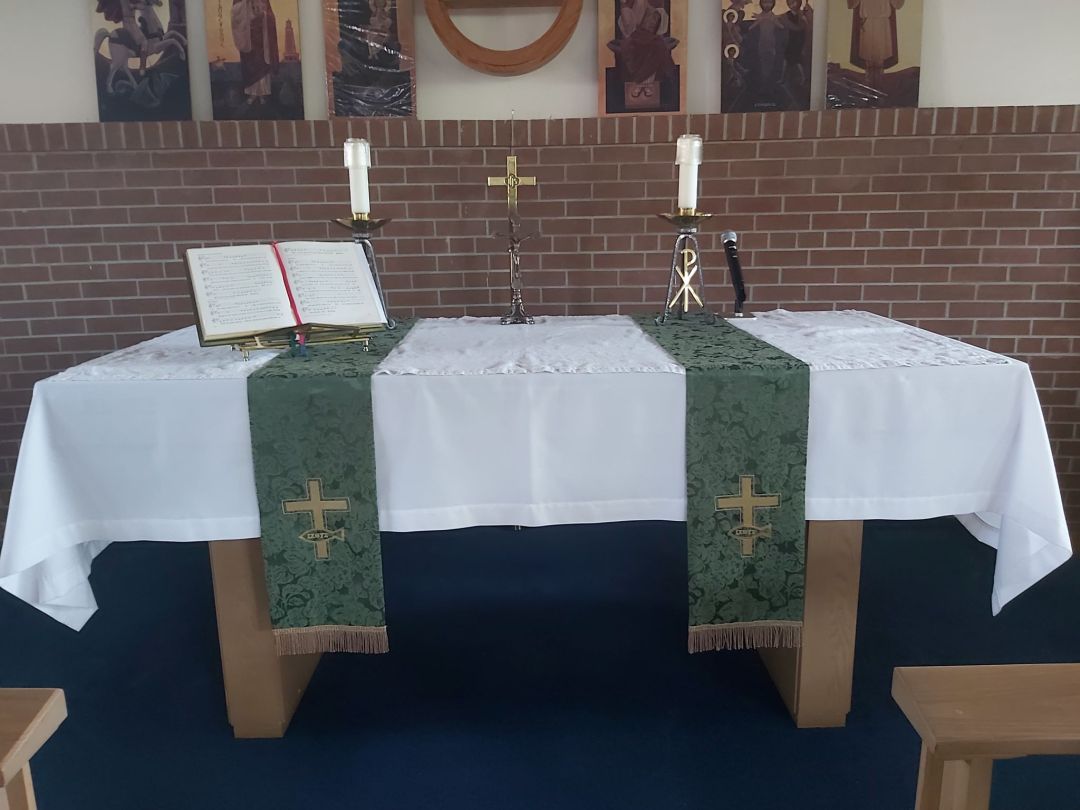
The matter of Communion is one that has sparked much controversy in Christian churches, particularly those of the Protestant variety. Not only do our differences on this matter pertain to the what of the doctrine of the Sacrament of the Altar, but also the who. That is, who is it to be given to, and who is to make that decision? For this reason, as well as for that of questions arising over my practice of what is called “Table Fencing,” that is, holding back those who confess different faiths or walk in different ways ethically speaking, it has become necessary to once again confess this Biblical, confessional, and historical practice and commit it to writing for all to see and engage with.
The matter of the doctrine and practice of communion is one that is self-revelatory. Communion is not a me-and Jesus endeavour, but a thoroughly communal and public declaration of common union and unity in life, doctrine, and practice. Communion is never owed, nor is it truly even given, but it is celebrated. We do not create a unity of life, doctrine, and practice by handing the Sacrament of Christ’s Body and Blood to any and everyone and truly we all know this deep down. If I or anybody else were to even suggest that we attempt to do this with Muslims, Jews, or explicit Atheists that suggestion would be shot down within seconds. But before anybody objects to this illustration on the grounds that the two matters are far too different to compare; one must note that their difference is not in kind but in degree. The difference between a Lutheran and a Muslim in fact, is particularly poignant because of the ethical heritage that the two groups share. Truly this person would not be rejected because of their lack of ethical vigour, but for reason of doctrine and theological identity alone. What causes the shock in the hearts and minds of those who find this to be an unfair comparison is that the Reformed, for example, are far close to us than are Muslims. However, that being the case, the difference is shown to be one of degree rather than one of kind. The matter of disagreement, therefore, is not one of whether or not doctrinal unity is necessary for admittance to the Sacramental Altar, but one of how much doctrinal unity is necessary.1 That is exactly the matter that we should be seeking to engage and answer in this work.
However, As the controversy on table fencing generally only exists in a broad cross-spectrum form to the extent of barring those of heterodox (other) confessions of faith to the Altar, this paper will deal only with the controversy insofar as it pertains strictly to the administration or withholding of the Sacrament from certain individuals upon reason of unity of faith and lack thereof.
The issue of communion fellowship (who is to be admitted to the altar to receive the Sacrament) in the Lutheran church is one that has been controversial since the very beginning of the Reformation. With thee positions more or less equally represented it can be difficult for pastors, parishes, and parishioners to know which practice is truly Lutheran. There is that of open communion, that of “close” communion, and that of closed communion. The matter is made far more difficult by certain synods claiming to hold to one, such as open communion, yet in practice holding to another, such as “close” communion. For ease of understanding a graph will be provided below
| ELCA/ELCiC | Open Communion |
| CALC | Open or Close Communion |
| NALC | Open or Close Communion |
| LCMC | Open or Close Communion |
| LCMS/LCC | Close or Closed Communion |
| WELS | Closed Communion |
| AFLC | Open or Close Communion |
| CLB | Open or Close Communion |
As can be seen, many synods, with the exceptions of the extreme left-wing ELC(A/C) and extreme right-wing WELS have churches that practices within their synods/associations that vary. This is sometimes due to the synod not having an official position, not enforcing their position, or having a position that recognizes and allows for variance on the matter.
However, it had not always been this way. Historically, the strict position of close communion and the fencing of the table to those who were of another confession of faith was part and parcel to the Lutheran (and historically catholic, orthodox, patristic, and apostolic) identity and confession of faith. To answer the question as to why this is the case, we will take a look at three spheres of witness that we see to the Biblical, confessional, and historic practice. We will also look at the practical and pastoral benefits to this practice. How it came to fall out of favour with those who claim the title of Lutheran, and will seek to tackle the best way to properly engage in this practice.
While many on the Open Communion side like to begin to tackle this question as if it’s answered as soon as it’s asked by appealing to the last paragraph in the article on the Lord’s Supper in the Small Catechism, which reads;
Who, then, receives this sacrament worthily? Answer: Fasting and bodily preparation are in fact a fine external discipline, but a person who has faith in these words, “given for you” and “shed for you for the forgiveness of sins,” is really worthy and well prepared. However, a person who does not believe these words or doubts them is unworthy and unprepared, because the words “for you” require truly believing hearts2
Their appeal here is founded upon the idea that all that is required of the worthy communicate is to believe that Christ’s Body is given for them and His Blood shed for them for the forgiveness of their sins. That is to say, only in these words “given for you” and “shed for you for the forgiveness of sins” as if the words immediately preceding them, namely “this is my Body” and “this is my Blood” are entirely without importance. However, as one sees in the corresponding article of the Large Catechism, what is seen in the Small Catechism is shorthand. As we confess,
“we do not intend to admit to the sacrament and administer it to those who do not know what they seek or why they come. The words are these: [3] “Our Lord Jesus Christ, on the night when he was betrayed, took the bread, gave thanks, and broke it, and gave it to his disciples and said, ‘Take, eat; this is my body, which is given for you. Do this in remembrance of me.’ “In the same way also he took the cup after supper, gave thanks, and gave it to them, and said, ‘Take, drink of this, all of you. This cup is the New Testament in my blood, which is poured out for you for the forgiveness of sins. Do this, as often as you drink it, in remembrance of me.’”3
It is not their believing that at one time somewhere far away Our Lord Jesus Christ’s body was given for us, and that His blood for us, so as to entirely divorce the faith required for admittance to the Sacrament from the Sacrament itself. Rather, it is to say that they believe that in the Sacrament they receive the very body and blood of Christ that was given and shed for them for the forgiveness of sins. It is that that we confess the require that they are aware of and that they seek in this Sacrament, it is that for which we require them to come to the Altar, not a symbol thereof, not a sign or seal thereof, but the very body and blood given and shed for the forgiveness of their sins. Continuing on we confess that “it is most necessary that we know what we should seek and obtain there.”4 It is not only necessary that we believe the sole and isolated words “given for you” and “shed for you for the forgiveness of your sins” but that as Dr. Luther put forward in our Large Catechism, that we know what we seek and receive in this Holy Supper. And what we receive in that supper is none other than the true body and blood of our Lord Jesus Christ for the forgiveness of all of our sins. To break this down further, Dr. Luther is saying and we are together with him confessing that it is necessary that the communicant believes 3 things about the Sacrament; firstly, that it is the Body and Blood of Christ our God. Secondly, that that body and blood were given and shed for us for the forgiveness of our sins. And thirdly, that in receiving this sacrament by bodily eating and drinking together with faith in these words believing, we receive here and now the forgiveness of our sins in this sacrament. To order this more systematically for those that may help, we are to believe the gospel itself, that 2000 years ago Jesus Christ, God made flesh lived, suffered, and died for us for the forgiveness of sins, but furthermore that this alone is not enough for the proper reception of the Sacrament of the Altar. For this, we must also believe, teach, and confess the what and the why of this particular sacrament. That is to say, that it is that same flesh given and that same blood shed, and secondly, that we receive this every Lord’s Day for the fresh forgiveness of our ever enumerable sins.
Not only do many other confessions of faith (particularly protestant ones) fail to confess together with us the what of the Lord’s Supper, but even more confessions of faith fail to confess with us the why of the sacrament, that in our receiving of it we receive the forgiveness of sins through it. And so, while so many Christians agree with us on the fact that Jesus Christ lived, suffered, and died for the forgiveness of our sins in a broad sense, the idea that they should therefore participate with us in a sacrament that they do not agree with us on either in regard to the what or the why. Therefore, it be a breach of church unity (more on this shortly) to share the sacrament with those who reject both the what and the why of the Sacrament, believing instead the very opposite of Christ’s own words, namely that it is not the body and blood of Christ, but a sign or a memorial of them, and that it is not for the forgiveness of sins, but merely a sign or remembrance of it. But even more than this, as both caused by and flowing out of the particular disagreement on the why of the supper then comes with it the disagreement on what makes one worthy of it. Closing communion for those of different confessions of faith aside, if the Supper is not for the forgiveness of sins, as so many do say it is not, then perhaps, as so many do say, it is a reward for sinning less, or, a requirement thereof is to make progress trending towards greater holiness and sinlessness. While to thoroughgoing Lutherans a thought sounds insane and blasphemous, this theology has spread far and wide into western protestant popularity, and is indeed the belief of many who would be participating with you at an open communion table. And still others, as though they knew better than Christ Himself confess contrary to LC 5:41 that the Supper is a matter of Liberty, freedom, as if it is not necessary for the salvation, comfort, edification, and continued growth and health of their souls.5 And so it would be with open communion, that in a church which claims to confess that the Lord’s Supper is the True body and blood of Christ given and shed for the forgiveness of your sins, received in this sacrament by the mouth for the forgiveness of your sins in the there and the then, that you would be side by side with those who reject that it is the body and blood, reject that it is for the forgiveness of sins, and even, in fact, believe that it is their reward for having foregone some particular sins in that previous week or that they had been “good enough.” Such is the irony of an open table. Indeed it is a table that confesses nothing, that means nothing, and that neither celebrates nor causes unity in Christ’s church.
Again, so as to belabour the point, Luther says one more time in this article of the Large Catechism, “we must also consider who the person is who receives such power and benefit. It is the one who believes what the words say and what they give”6 That is to say, as has been said already numerous times, the one who receives the power and benefit of the Lord’s Supper is the one who, hearing what this sacrament is, and why this sacrament is, namely, that it is the body and blood of Christ, to be eaten and drunk by the mouth for the forgiveness of sins, and believes this, has exactly what these words say. But the one who does not believe these things, while indeed receiving the what of the Supper (the Body and Blood of Christ) does so not for the forgiveness of their sins and the edification of their souls, but unto their own judgment and damnation, for bodily and spiritual ill (more on this later).
Moving on then to the Augsburg Confession we see that this matter first comes up chronologically in the seventh article, in which we confess the doctrine of the Church itself, which reads;
“It is also taught that at all times there must be and remain one holy, Christian church. It is the assembly of all believers among whom the gospel is purely preached and the holy sacraments are administered according to the gospel. [2] For this is enough for the true unity of the Christian church that there the gospel is preached harmoniously according to a pure understanding and the sacraments are administered in conformity with the divine Word.” 7
Melanchthon begins this article by stating that it is now and always has been believed, taught, and confessed that the church is not many but that the church is one. That we do not belong to many different churches that are all apart of one great family of God, but that there is in fact only one, holy, catholic, and apostolic church.8 And here falls the great offence against the western Christian (especially protestant) mindset; that that one church, is made up of believers gathered around the Word purely preached and the Sacraments rightly administered. That is to say, unless you caught it, that the church itself and your participation in it hangs not upon an abstract faith that is divorced either from doctrine or from the Sacraments as they were instituted to be celebrated, administered, and received, but rather that it is these things, the pure preaching of the Gospel and the right administration of the Sacraments (according to the institution of Christ in the Word of God) in which the unity of the one, holy, catholic, and apostolic church consists. That is to say once more, when we confess that there is one, holy, catholic, and apostolic church, we are not confessing that the doctrinal differences between local bodies of believers and their sacramental practices do not matter insofar as their place in Christ’s body is concerned, but on the contrary, that it is upon these things that the unity of the church hangs, and in which the church finds its identity.
Of specific importance here, is that as Melanchthon ties in here in verse four of this article the text of Ephesians 4:4-5 upon which has been based endless amounts of pleas for unionism, pluralism, and syncretism. In fact, even still more interesting is that the way that Melanchthon uses this is exactly in the way that the unionists, pluralists, and syncretists use it, that is, he uses it to express in the AC 7.3 that “it is not necessary for the true unity of the Christian church that uniform ceremonies, instituted by human beings, be observed everywhere.”9 This not only shows that Lutherans do not reject the idea of differences that do not break the true unity of the church, and sever one from it but also at the very same time bolsters the insistence that the pure preaching of the Gospel and the right administration of the Sacraments according to God’s Word are not included in that list of things. In fact, it is these things alone upon which hang the very unity of the church. When these things are lost, so is our unity. When these things are absent, so is the church. And so it is, that it is not only sufficient for the true unity of the church that we all agree on what the Gospel is, and both what the Sacraments are and how to rightly administer them, but that these things are also necessary for the unity of the church. For where is the church, and what is the church? Melanchthon answers; “It is the assembly of all believers among whom the gospel is purely preached and the holy sacraments are administered according to the gospel.”10 And just as the church is made up of all those who are saved, outside of this church, there is no salvation. This truth is pressed upon even more heavily in the adjacent article in Luther’s Smalcald Articles, wherein we confess in regard to a particular group (Medieval-Renaissance era Rome) that does not fit within this definition of those who neither purely preach the dospel, nor rightly administer the Sacraments, that “we do not concede to them that they are the church, and frankly they are not the church.”11 Intensifying this claim in the Apology to the Augsburg Confession, Melanchthon expands on the definition of the church as those who have the Holy Spirit, saying; “the church is strictly speaking that which has the Holy Spirit.”12 That is to say, all quotations considered, with the same certainty with which Luther declared that certainly particular groups in his day (such as Medieval-Renaissance era Rome, the Reformed, and the Anabaptists) were definitively not the church, so also here does Melanchthon declare that they definitively did not have the Holy Spirit. Those who do indeed have this Spirit however, have his gifts. That is, they have the gospel purely preached, and the Sacraments rightly administered. Indeed this Spirit is the Spirit of unity, not distension, division, diversity, or confusion. He leads congregations into the pure preaching of one Gospel, and one correct understanding of both the what and the why of the Holy Sacraments. To espouse that within the unity of one, holy, catholic, and apostolic church exists a plethora of varying perspectives on things as essential and simple as who Christ died for, of what is necessary for salvation, of whether Baptism saves or whether Christ’s body and blood are present in the chief celebration of the church diametrically opposed to His very nature as the Spirit which leads us into all truth as a unified body. Taking this concept further, Melanchthon repeats this point again for his readers by quoting the medieval theologian, Nicholas of Lyra, who states that “the church consists of those persons in whom there is a true knowledge and confession of faith and truth.”13 That is to say that the church does not consist of a unity in the midst of diversity, or apart from and independent of whatever it is that we just so happen to have chosen to believe, but the church has one true knowledge of God’s Word, one true and exclusive confession of faith, and they put forward one (not many) truth that they have received from the Spirit of unity and truth. This alone has always and only ever been the churches believe in regard to these matters in every single age that has been or ever will be. Those who differ from it ought to ask themselves if they rather than the unbroken line of Christians who have been speaking the same way, thinking the same way, preaching the same way, and worshipping the same way since Christ ascended into heaven are the ones who are at odds with the true doctrine of the church.
In the 24th article of the Apology, Melanchthon delves a little bit more explicitly into the safeguarding of both the unity of the church, the purity of the altar, and the protection of the heterodox form the condemnation they would otherwise be eating and drinking unto themselves by improper partaking of the Holy Sacraments. He begins by mentioning “the terrible responsibility, which should properly concern every Christian, that whoever uses the sacrament unworthily is “answerable for the body and blood” of Christ.”14 In answer to this great responsibility that all Christians have, Melanchthon alludes to the teachings of the early church father St. John Chrysostom, saying; “Chrysostom tells how the priest stands every day and invites some to receive the sacrament, but forbids others to approach.”15 That is to say that the altar is not left unguarded, but that the church officer is in fact there in order to exercise pastoral oversight, care, and discipline to to keep people from unworthily partaking either through a lack of faith, a lack of repentance, or a heterodox confession. We will explore much more thoroughly the level of depth at which the Early Church believed, taught, and confessed this practice and the level of vigour with which they lived it out as we begin to tackle the ancient witness to table fencing.
Why close communion over closed communion?
While in truth, for most synods either of these positions is more than acceptable and variance is permitted on the issue, “close” communion (aka selective fellowship) may be argued to have an edge over fully closed communion in all three areas of witness that we have looked at and be better in both ways, neither barring those who should commune, but adding an extra level of pastoral vigilance in regard to those who should not be be permitted to come to the communion rail. This is because while closed communion limits the admission to the altar on the basis of church membership and synodical-institutional fellowship, “close” communion allows for the communion to be decided in the here-and-now between the pastor and the would-be communicant. This is helpful for communing those who rightly should commune but can’t due to the institutional nature of fully closed communion, such as WELS members being turned away from LCMS altars. On the other hand, this helps to restrict those who should not be communing but otherwise would be able to if the institutional closed model were followed, such as those in the LCMS who’s pastor has failed to catechize them properly and thus don’t confess the Lutheran faith.
Why Closed Communion over close communion?
While there are admittedly some advantages of close communion over and against fully closed communion in both the admitting to the altar those who should be permitted and keeping away those who should not, there are some pitfalls and drawbacks as well. Firstly this helps in streamlining and unifying the practice across synods with a general rule and norm, rather than leaving what happens up to the discretion of the pastors who may or may not rightly understand the lines by which someone ought to commune. It also helps in that it assumes that a discussion and decision in regard to their current church situation is required to presuppose communion for those not already in fellowship with the altar in question. As alluded to earlier, this fails in that synods have shown themselves to be unable to rightly acknowledge fellowship and doctrinal unity between one another. And while this rightly assumes that one should first leave their local Baptist church and be catechized and confirmed before committing to Lutheran faith and practice, it wrongly implies that the WELS are of a different faith than the LCMS for being too conservative.
A Note on the Blessing of Non-Communicants
While it may shock and surprise some people to hear, the blessing of non-communicants is about as new of a practice as a practice can get. Originating in the 60s and 70s via the Second Vatican Council of the Roman Catholic Church, and renewed ecumenical attempts to be “hospitable” to those who differ with them in doctrine. The idea is very simply this; that if we cannot hand the person the Body and Blood of Christ for fear that eating it will do more damage to them than not eating it, we should refrain from damning them through administering the sacrament, and instead bless them. To put it another way, this practice attempts to not only protect the individual from spiritual and bodily harm through the wrongful reception of the Sacrament, but it seeks to do them good through a priestly blessing. Many Roman Priests and Lutheran Pastors likewise like to add that in this blessing they are praying that the individual be blessed specifically in that the Lord would soften their heart to the truths needed to come back into one body of faith and receive communion rightly.
While these intentions are certainly commendable, the practice does not logically follow from the facts presented, and therefore ought to be rejected. Under no circumstances are we as Pastors in Christ’s church permitted to bless people’s unbelief or unrepentance. Nor can such a blessing be interpreted as an exhortation to repent and belief. The only cases wherein a blessing rather than communion is rightly to be given is to unconfirmed Catechumens, however this too is a very new invention never before seen in Christ’s church until Vatican 2.
1While one might try to defend the practice of open communion while still keeping Muslims from communion do so on the basis that as far as they can see, “faith” in Jesus and doctrine/Theology as far from one another as the East is from the West. However, all this does is intensify the root problem, as any attempt to separate doctrine from faith is a flagrant rejection of the Athanasian Creed’s insistence that certain doctrines, complex as it sometimes may be is absolutely necessary for salvation.
2 Robert Kolb, Timothy J. Wengert, and Charles P. Arand, The Book of Concord: The Confessions of the Evangelical Lutheran Church (Minneapolis, MN: Fortress Press, 2000), 363.
3 Robert Kolb, Timothy J. Wengert, and Charles P. Arand, The Book of Concord: The Confessions of the Evangelical Lutheran Church (Minneapolis, MN: Fortress Press, 2000), 467.
4 Robert Kolb, Timothy J. Wengert, and Charles P. Arand, The Book of Concord: The Confessions of the Evangelical Lutheran Church (Minneapolis, MN: Fortress Press, 2000), 469.
5 LC 5:41: “Still others pretend that it is a matter of liberty, not of necessity, and that it is enough if they simply believe”
6 Robert Kolb, Timothy J. Wengert, and Charles P. Arand, The Book of Concord: The Confessions of the Evangelical Lutheran Church (Minneapolis, MN: Fortress Press, 2000), 470.
7 Robert Kolb, Timothy J. Wengert, and Charles P. Arand, The Book of Concord: The Confessions of the Evangelical Lutheran Church (Minneapolis, MN: Fortress Press, 2000), 42.
8 “It is also taught that at all times there must be and remain one holy, Christian church”
9 Robert Kolb, Timothy J. Wengert, and Charles P. Arand, The Book of Concord: The Confessions of the Evangelical Lutheran Church (Minneapolis, MN: Fortress Press, 2000), 42.
10 Robert Kolb, Timothy J. Wengert, and Charles P. Arand, The Book of Concord: The Confessions of the Evangelical Lutheran Church (Minneapolis, MN: Fortress Press, 2000), 42.
11 Robert Kolb, Timothy J. Wengert, and Charles P. Arand, The Book of Concord: The Confessions of the Evangelical Lutheran Church (Minneapolis, MN: Fortress Press, 2000), 324.
12 Robert Kolb, Timothy J. Wengert, and Charles P. Arand, The Book of Concord: The Confessions of the Evangelical Lutheran Church (Minneapolis, MN: Fortress Press, 2000), 177.
13 Robert Kolb, Timothy J. Wengert, and Charles P. Arand, The Book of Concord: The Confessions of the Evangelical Lutheran Church (Minneapolis, MN: Fortress Press, 2000), 177.
14 Robert Kolb, Timothy J. Wengert, and Charles P. Arand, The Book of Concord: The Confessions of the Evangelical Lutheran Church (Minneapolis, MN: Fortress Press, 2000), 68.
15 Robert Kolb, Timothy J. Wengert, and Charles P. Arand, The Book of Concord: The Confessions of the Evangelical Lutheran Church (Minneapolis, MN: Fortress Press, 2000), 70.
16 Justin Martyr, “The First Apology of Justin,” in The Apostolic Fathers with Justin Martyr and Irenaeus, ed. Alexander Roberts, James Donaldson, and A. Cleveland Coxe, vol. 1, The Ante-Nicene Fathers (Buffalo, NY: Christian Literature Company, 1885), 185.


