
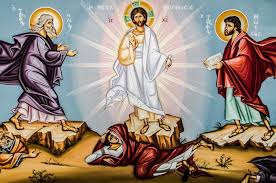
Christ our Lord, is God of all the earth. Perhaps you know this. But do you truly acknowledge it? Do you come to divine service in reverence, awe, fear, and trepidation? Or is this just a Sunday morning routine. Let me tell you this, perhaps you’ve never thought of it in this way. When Moses was required to ascend the mountain of the Lord to speak with Him, the Israelites were so immobilized by fear that they begged him, to go on behalf of them so that they wouldn’t have to bare the glory of the Lord shining upon them. In all other occasions this too is the reality. In the visions of Ezekiel, Elijah, Jeremiah, the appearance of angels even, these moments in God’s redemptive history do not bring comfort so much as strike utter fear and terror into the hearts of the people of God. But when we come into the presence of God on Sunday, God is in our midst, and we treat this as if it were the lightest of all things. We take the Body and blood of the Lord God of heavenly hosts into our mouth and pay little mind to who He is and what we have to do with Him. Do we not know? Do we not see?
When this occurred to Isaiah he cried out “woe is me, for I am a man of unclean lips” that is, a sinner, “and my eyes have seen the glory of the Lord.” The terror that they felt is one with good reason. If you go back to Genesis 3, to the fall, Adam and Eve are kicked out of the garden of Eden, that is, out of the presence of God, and the way is guarded by cherubim, two warrior angels with flaming swords. To see these angels meant you were going to die. These aren’t the cute little winged babies that you see in popular culture, these are what we might call, monsters. Wings everywhere, eyes everywhere, four heads all of different kinds, these things are creatures of glory, and they terrify us because they exist in relation to us as a wall between us and our Lord. Yet when Isaiah has his vision of heaven, he doesn’t even ask for help he just says woe is me, he is resigned to his own destruction and cowering in fear. For my own eyes have seen the King, the Lord of almighty. But then, A seraph, and angel of God comes and brings with tongs a glowing, hot white burning coal, and brings it to Isaiah’s unclean lips and burns them, cleanses them, and says, see, this has touched your lips, your guilt is taken away and your sin atoned for.
Is this not just what should be happening to us when we partake of the Supper? When we come into the the presence of God and He says to us, behold I am here, why do we not quake in fear? Is it because He is with us everywhere? Is it because He lives within our hearts? Do not think that this is a different God. For this is who touches your lips, this is the burning coal, it is the Lord almighty, the judge of all the earth. He is the one who has died for you, the very one you’ve sinned against. The very one who holds eternity in His hands. The very one for whom, in whom, and to whom all exists. This is who touches your lips. This is who says take and eat, this is my body, take and drink this is my blood given for you, shed for you for the forgiveness of sins. This is He, the Lord almighty, the Lord king of glory. And by doing this, by taking Him upon our lips, he cleanses us, our guilt is remitted, our sins atoned for. So that we may now come into His presence and say too with Peter. “It is good that we are here.” It is good that you are among us. For we no longer see only the backside of God as did Moses, we no longer see Him in only in visions, we no longer see His glory only by angels. But we have the very flesh and blood of Christ our God. The glory of the Lord dwells no longer upon a mountain that one among us sees once and only in a hidden way. It no longer dwells in the small room in the depths of the temple that the high priest entered into only once a year on the day of atonement. But now your body is the temple of the Lord, your heart, His dwelling place, and His flesh, a cleansing coal of fire upon your lips.
For we no longer live as Moses, or as Elijah, having a veil over our eyes to hide the glory of God hidden from all ages. But now a cross, where His glory is revealed, and a resurrection, wherein we share in that glory.


