
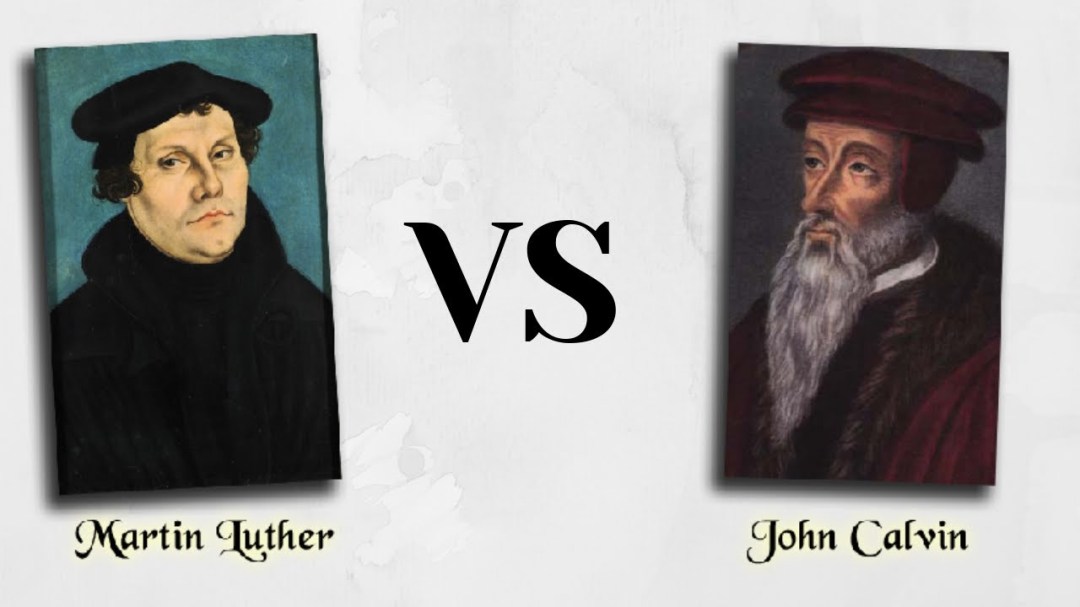
Intro:
As two great and highly influential protestant traditions, the Lutheran and Reformed churches have stood together against Rome, the East, and the radical reformers in upholding the great reformation principles, the most relevant of which is Sola Scriptura. However, these churches agree neither in the meaning nor the application of this prinicple. Their disagreements on the meaning and application of this principle in fact ecause many controversies and debates in the early stages of their development. As history advanced, these two churches found themselves working more closely together as they focused on their similarities rather than their differences and as a result their differences were lessened over time as they influenced each other1. This paper will seek to look at each hermeneutic in its traditional/conservative form both in the 16th century as well as modernity to show contrast the two hermeneutics and to show the importance of the traditional Lutheran hermeneutic and to push back on the Calvinist influence upon it.
In order to do this, the topic at hand will be split into 4 categories; Bibliology, Epistemology, Central unifying themes, and Interpretive rules. This categorization follows the logical process of the topic at hand. The first of these, what the Bible itself is and how we come to know things, as well as the central unifying themes found within the Bible are all presupposed before the discussion of hermeneutical principles themself come onto the table. Just as what one believes about the Scriptures dictates the way the Scriptures are read, so does the presupposed purpose, goal, or central theme of those Scriptures guide the way Scriptures are read, unclear scriptures most of all. These three understandings once presupposed help us to form concrete interpretive rules that produce for us a neatly packaged hermeneutic that can be contrasted and compared with that of others who are coming to the table with different presuppositions.
Bibliology:
Word of God in Words of God
To begin to look into the hermeneutic of the two traditions, that is, how they read the Scriptures, we must first understand what they believe about the Scriptures themselves. In regard to the Scriptures themselves, these two traditions are largely in agreement. But quite early on in the discussion it is clear where the differences lie. Often these differences are small and seem insignificant, but as they grow in number so too does their impact upon the Bibiology of the tradition. The first difference that we run into regarding the Bible is the use of the term Word of God. The Word of God is none other than Jesus Christ, who was with God and who was God, yet we can also speak of the Bible as the Word of God, both in respect to its content, which is Christ Himself, as well as its divine origin and authorship. For the Reformed, the primacy of these definitions is reversed, with the Bible being itself being the narrow and most primary meaning of the term “Word of God” and Christ being a secondary application of this term.2 Robert Kolb touches on this nerve in the book Between Wittenberg and Geneva, discussing the difference between the Lutheran and Reformed Bibliolgoy when he says that Ltuherans beleive that the thing that causes the effect is the content of the Scriptures not the scriptures themselves.3 Kolb is here rightly drawing a distinction between the Scriptures and the Word of God, in that the Scriptures, or the words on the page have no effect in and of themselves. It is only insofar as they communicate Christ crucified to the reader or hearer that they can affect salvation in the recipient. A perfect example of this is to illustrate that the words taken out of context or jumbled together in a word soup do not effect salvation. If i said, “and he went and ate the stew,” I have thus quoted the Words of Scripture, yet not in their context, in a particular order of an authentic sentence in the context of a particular narrative pointing to a very specific Christ these words effect nothing. Even when sentences are taken out of context, such as this portion of 2 Kings 18:27, “Hath he not sent me to the men which sit on the wall, that they may eat their own dung, and drink their own piss with you,” it is seen that out of its context it is not only not effective unto salvation but utterly useless. The disagreement here is not so much between content vs. Words, but on what that content itself is. The Calvinst says that the content varies, having a historical and grammatical meaning or content, yet still acknowledigng core themes, those of covenant and God’s glory, while exegetically trying to stick to the plain historical-grammatical reading.4 This sees the Scripture as the end in itself rather than the means. While the Lutheran exposits the external meaning of the Scripture so as to receive Christ as put forward in the Scripture, the Calvinist exegetes and preachers are merely trying to “preach the text.5 This misses a greatly important detail, the text does not demand that itself be preached, but that in it Christ be preached. Along with this they have differed from us in their ascription of divine attributes to the Scriptures themselves as a text. The Scriptures cannot and do not lie because what they proclaim, namely Christ, is truth Himself.6 The Calvinists however, misunderstand this when they say that the Scriptures cannot and do not lie (or err) because they themselves are from God.7 This difference is not so much one that varies between the Scriptures being God breathed or not, on this much we agree. The difference is a question of what is the point of the whole matter, is it to proclaim Christ’s redemption of sinners, or is it to add another thing of glory into the universe? In making the Scriptures as a text inerrant by virtue of “their” divine attributes we have not added a means of grace, but a thing of glory to the universe. Here is seen a difference between a bibliology of glory and a bibliology of the cross.
The proper understanding of the Word of God is as Logos, the way in which God interacts with the created world.8 We see this both in Genesis one and in John one. In Genesis God speaks and things are created, in John this Word that God speaks is a person who is with God and in fact this person is God. This use of Logos however, is not employed in order to restrict the use of the word only to Christ’s person, but is a word that describes the economy of Christ’s person. Logos in the ancient context served as a term for that by which divinity interacted with the creation.9 Christ here, in being called Logos is shown as the interaction between creator and creation, but this term, Word, is also fit for the means by which Christ is conveyed to men. Just as Christ is the way that God interacts with the world so too can it be said that the Bible is the way in which that task is accomplished insofar as Christ is presented to the world in it.
Written by men
These Scriptures, as all works of God, are an incarnational work. This can be affirmed in two ways. Firstly, God is is being communicated through the means of physical-tangible words on paper, read via the eyes or heard via the ears. Yet in another sense we might also say that the Scriptures, as God’s Word, spoken by men as they were moved by God is incarnational in that it operates through the organ of humanity. God’s Word is not something that merely fell out of the sky, nor even is it all directly written by God as were the 10 commandments. In fact, direct verbally dictated prophecies make up a small minority of the actual Scriptures. Most of the Scriptures are narrative, poetry, and much of it is theological epistle. These forms of literature, though inspired, are not directly dictated to the authors. This is so clearly the case that St. Luke himself records in Luke 1:1-3 that he took to researching written and oral sources so as to give a true account of the historical narrative of Christ’s gospel. This is just one example among many others among which is the inclusion of false statements of those who oppose God (Satan, Balaak, etc), historical-contextual misunderstandings (perspectival truths that are scientifically inaccurate), different perspectives on the same account, and difference in writing style and word choices, none of which would occur with a completely verbally dictated inspiration of the Scriptures. The writing of not all but much of Scripture is similar to the hypostatic union in the person of Christ, their authorship being fully divine and yet also fully man.10
inspiration/inerrancy
The Scriptures themselves are nothing else other than the Word of God spoken and written by men as they were moved by the Holy Spirit. We call the Scriptures “inspired.” In doing so we do not so much just mean that the Holy Spirit can be found within them as the Neo Orthodox believed, but that they are themselves breathed out by God, or “ex-spired.”11 As a result of being breathed out by God and of divine origin these scriptures maintain infallibility and inerrnacy as we see in the preface to the BoC 16 which reads that the Scriptures are pure and undefiled.12 While the inerrancy discussion is admittedly new to the church, the concept is not. The Scriptures maintain divine attributes because they are the Word of divinity as written by men, not in the literal words but in their content. While less traditional forms of Protestantism emphasize to a larger extent the role of man in the Scriptures, the traditional Lutherans and Calvinists often referred to man’s position in the speaking and writing of Scripture as God’s secretaries.13 This does not however remove the human aspect, which the traditional church very much affirms, as is found in the way that different personalities remember or communicate a particular message such as the 4 gospel accounts. Yet, they hold still firmly that God did not permit man’s sin to taint His Word in any aspect. Whether this was meant to be all encompassing and wholistic of the entire biblical cannon or if it refers only to the main content of the Scriptures, namely doctrine and morals, is a matter of intense debate.14 It can be said with certainty that the early lights of the reformation leaned towards the latter and the divines of the high orthodox period toward the former, but as a general statement it can be acknowledged that whether one cares or not about where mustard seeds rank on a list of seed sizes depends largely upon what we think the Scripture is, an end in and of itself or a means through which Christ is revealed, made present, and received.15 As a result of being breathed out by God and being of divine origin these scriptures maintain inerrancy, precisely because these Scriptures contain, communicate, and make present truth Himself. The Calvinists however, state that the Scriptures are breathed out by God and inerrant regardless of what they contain because of their inspiration, whit no relation to Christ or the content.16 While the concept of a God-breathed shopping list being inerrant may be true in theory, it is certianly not a reality that has a valid place in our theology.
Canon
A discussion on the Bible is not complete without speaking about what it is in the material sense. An understanding of the metaphysical nature of the Scriptures is of no help if we cannot identify what actually is included in this collection of Scriptures we call the Bible. Many Lutherans today think that the Reformed and Lutheran churches were in full agreement on the Biblical Canon. This however is not true, but their thinking so does the influence that the Reformed have had on our doctrine, Bibliology included.
To us today, living in a Christian context influenced largely by Reformed protestantism the concept of “the Bible” is nearly synonymous with the Reformed Canon. However, as you likely know, for the majority of Christians around the globe the Bible that we think of is not the Bible they are used to. Their Bible’s likely include not only the Deuterocanon, but the Eastern Orthodox add more books on top of that and remove John’s Revelation, the Oriental Orthodox add on top of that, and the Ethiopians even more still on top of that.17 In Luther’s early context the common notion of the Bible was the Roman Canon, apocrpyha included. Yet as he began to question the authority of the church as the rule of faith, exchanging tradition and reason for the gospel, his concept of canon changed as well. Luther began to ask himself which of these books preached Christ as well as whether the tradition surrounding these books were true or not regarding dating and authorship.18 While his opinion on the book of James is commonly held up as an example why one should not trust Luther by his opponents many fail to make note of the other books that Luther question, the Apocrypha, Esther, Hebrews, Jude, and Revelation included.19 While there is much debate over whether Luther held the NT antilegomena as being closer to the homolegoma in that they were recognized as Scriptures or if they were to him as some kind of NT apocrpyha is of much debate. However, as the Lutheran church developed into its period of high orthodoxy it was not the opinions of Luther that dictated what Lutherans believed. We see then in Chemnitz a more clearly defined doctrine of Canon. Chemnitz distinguished sharply between the homolegomena and the antilegomena, stating that the homolegomena alone was the seat of doctrine.20 While the antilegomena was still accepted as “Scripture” it was not seen as being of the same authority as the homolegomena. This extended just as much to the OT aprocpryha as it did to the NT antilegomena. Beyond this also, Chemnitz went further to say that even within the NT homolegomena not all books had equal authority, whit the gospels and the Epistles of Paul being preeminent over the rest.21 While this may at first seem radical it is for the most part common sense. If we take each book of Scripture we would find parts in many if not all of them that bear less authority over us. Examples of such a text would include but not be restricted to the Levitical laws, the erroneous heretical teaching of the Galatians, and Paul’s commands for women to cover and men to uncover their heads (maybe switch with council of Jer). Chemnitz’ usage of the Scriptures, which included the apocrypha was altered greatly by Johann Gerhard who came to the table with a different Canon Theory that collapsed the distinction between homo and anti legomena leaving him with a Canon much more akin to that of the Reformed or Roman Canon, as Preus marks out as being a distinct shift in Lutheran dogmatics on the issue of Canon.22 Not only is the distinction between homo and anti legomena an important Lutheran distinction to keep, but the use of the apocrypha is likewise important.23 The outcome of this in Lutheran theology is seen in that we do not confess a Canon in our sybolical books. This must be recognized as unique. For while it is rightly acknowledged that the BoC has no set chapter on Bibliology, there is a Bibliology confessed through our confessional writings. There is not however, a confessed Canon either with dedicated chapter or interspersed throughout. If we were to take all references to and citations of texts generally regarded as Scripture in the BoC we would find that parts of the Deuterocanon are included in and among them.24 This is not to say that the Lutheran church traditionally has a Canon in which the apocrypha is included, it is rather to say that the Roman and Reformed concept of confessing a canon does not fit in with Lutheran Bibliology, nor is it compatible. The doctrine of Scripture, or rather, God’s Word is a doctrine of gospel, not of Law. Christ approaches us in the Scriptures, not us Him. The Holy Spirit does not need us to recognize the divine authorship of Scripture in order to make it efficacious unto salvation. Rather, it is from the Holy Spirit working its effect in our hearts that Christ is revealed in them. Yet, the Reformed church has does much to influence us in this matter, placing upon our bibliology their law/gospel distinction, making Scripture a command, not a promise.
When one looks at the Reformed concept of Canonicty they find firstly that their concept of it in respect to law and gospel is far different from the Lutheran concept. For the Reformed the acceptance of the Canon is an article of Faith.25 In a sense this is true, the Scriptures cannot be recognized as the Word of God by reason but only by faith. However, they prop up not the reception of Scripture in faith, but the proper list of those Scriptures. This is seen clearly in the WCF wherein it reads that saving faith is the belief in the whole Word of God, a notion that Pieper thoroughly debunks as an impossibility that nobody is capable of post-lapse.26 While almost never taken to the full extent, if done this makes trust in Christ crucified for the forgiveness of sins useless wihtout the acceptance of the proper Canon list, and the question then remains, what of those who add books? What of those who remove? This throws down the promise of Christ and breaks it underfoot and exchanges it for another person in the Godhead that must be believed. It is no longer sufficient to believe in, trust in, and find assurance in Father, Son, and Holy Spirit, but now you must look to the Bible as well. Yet having ascribed so many divine attributes of the Holy Scriptures they missed the most important one, divine promeity. God’s incarnational use of things in His work, human beings, water, bread, wine, paper, ink, vebral proclamation, etc, these things are not by result of their being used insturmentally embuded with omniscience, yet their use is truly one that is for us. The water of Baptism is not omnipotent, but the water of Baptism is truly for us. The Scriptures therefore, as used by God are used for us and for our salvation. They approach us as dead sinners and resurrect us by proclaming to us our resurrection in Christ. This is the Logos of God. God’s Word is never and has never been propositional. It does not ask you to affirm, but creates affirmation in you as a gift of free grace. The Reformed miss this greatly, with the Scripture not being a source of joy, promise, grace, and freedom, but the Scripture with its promeity removed is a thing of fear and of law, that the Christian must get right, must recognize, and must exegete correctly or else.
The Reformed Canon as we all know is 66 books. They affirm what we commonly understand as “the New Testament”, and the “Old Testament” excepting any books commonly called apocrypha. The reason for their doing this is found in the WCF 1.8 which presupposes the necessity of their common text coming as a physically received document, such as a codexes or at the very least a collection of scrolls. Because they received their OT from unbelieiving rabbinical Jews almost a millenium after authentic judaism had entirely ceased from existence rather than the Christian church built on the bedrock of true Messanic Jews they did not take the Deuterocanon along with their textual tradition, despite its use by Christ, the apostles, and the early church.27 It is to the Medieval Jews that the Reformed look for the OT, in belief that God had preserved truth among the Jews who had rejected God, Father, Son, and Holy Spirit and abandoned Biblical Judaism all together.
Functionally, the first thing one notices about the Reformed canon once it is presumed is that they have a level canon and feign that all texts are of equal importance and authority.28 This leads to them Judaizing several texts, negatively explaining away the NT exegesis of the OT written by the apostles and Christ Himself, and flattening to a great extent the dynamic relationship between the redemptive historical epochs. A key example of this is in their stumbling around the text of Christ teaching on the Sabbath when He is accused of breaking it.29 In the Matthean account Jesus not only does not state that he is innocent of this Law, but states even that Daniel rightly violated this Law in order to obey the spirit of the Law behind and beyond the letter, and even furthermore that the levitical priests violate this Law every week. It is only because of their presupposed necessity of a Cannon with equal value and authority that stops them from accepting the Hermneeutic of God incarnate in these Sabbath texts.
To conclude on the topic of Bibliology, the Bible is the Word of God written by men incarnationally. It is wholly inspired but in a dynamic way. The Bible as we know it has an open Canon, not to be listed or “put in a box” as one might say but to be encountered. Through which Christ comes to us in His saving presence, who is Himself truth. As to inerrancy, the point is moot, and the argument relatively useless. It matters not whether mustard seeds are the smallest, only that the kingdom of God begins as small as a mustard seed and grows into an enormous kingdom encompassing all things. The Scriptures are for us, not as Law to be affirmed and followed, but as gospel to be experienced.
Epistemology
Having understood traditional Lutheran Bibliology, we now turn toward the epistemology of these two traditions. What is truth and how do we come to know it? While the key essentials of epistemology are affirmed by both traditions here just as they were on the discussion of Bibliology, there remains many important key differences between the two traditions.
While fallen man is certainly much worse off than he was before the fall it must be acknowledged that even before man fell, all that he knew of God was revealed to him by God.30 Even with pre-fall natural reason functioning at full capacity before it was stained with sin there was still nothing to know of God without revelation, either natural or supernatural, general, or special. It is in God creating that He reveals His existence, His power, His majesty, and His creative, sustentative, and beneficent relationship to the His creation. The fall inhibited man’s ability to exercise his reason and mental faculty especially in way of understanding or grasping the things of God. In fact, not only can the fallen mind not understand or grasp the things of God revealed in His Word, but such things are contrary to fallen reason.31 While we can know the Law of God through the exercise of natural reason in most cases, pre or post-fall, the mysteries of God, the incarnation, the Trinity, and the grace and mercy of God handed to us in the Gospel are not truths that can be arrived at by human reason. These truths are contrary to fallen reason and must be accepted by faith if accepted at all.32 The difference here between the two traditions is found primarily in this concept, that the truths revealed to us must be accepted by faith contrary to fallen reason. On this point the Calvinists follow the school of the Thomists, positing instead that the revealed truths are merely beyond the capacity of fallen reason, not contrary to it.33 The Calvinists furthermore believe that when God regenerates the sinner, their fallen reason is regenerated and made capable to accept the truths of God as if they were set forward propositionally.34 The Word’s revelation is therefore made no longer performative or creative but is rendered a mere proposition to be accepted or rejected, insignificant to one’s salvation save as a part of the ordo salutis, with their justification being a declaration given at a point in time when they accept this truth that they have been made able to accept. While there are an unlimited number of problems with this such as the rejection of the inherent worth of the death of Christ and its efficacy, the chief issue is exchanging the performative Word of grace with a 2nd order proposition, and the gift of faith, with the gift of reason. Yet still, this chief problem is not the worst of the matter, for the effect that it has on our hermeneutic is worse, namely the way that it affects our use of reason in hermeneutics and theology.
External/internal clarity
Its affect upon hermeneutics and theology can only be seen once the distinction between external and internal clarity is understood. Firstly, there is an understanding of the Scriptures (or a meaning) that is external. This is what the text literally says. In order to grasp the external understanding of the Scripture one must have an understanding of the language being used, the grammar, the syntax, and at a more dynamic level they must also understand the textual, cultural, and geographical context of what was being said.35 This is not because the Scriptures are externally unclear. They are clear, but we may be blind. A text can be written with the utmost clarity in german, but if the reader does not know the german language it will be of no use to the reader’s understanding. The same can be said for the textual, historical, and geographical context of the Scripture. It is no use to my understanding to hear that the blood of bulls and goats do not save unless I first know the context that this is being said of, namely the OT temple sacrifices. Secondly, we have the internal understanding or meaning of the Scriptures. As Kilcrease writes, the internal meaning of the Scriptures is not separate from the external, but it is found in the external and communicated by it.36 This can be understood merely by ascribing fresh terms to these two ideas. The external clarity to be understood as what the Scripture says, and the internal to be understood as what the Scripture means. This can and has been described as a difference between grasping the text itself and grasping Christ for you in the text, as Kilcrease notes.37 The affect of the aformentioned problem of reason is applied to this concept of external and internal clarity in that while both acknowledge the use of reason to arrive at the external meaning of the Scriptures, the Calvinist expands this further to include also the internal meaning, albeit with the aid of the Holy Spirit in regenerating and renewing their mind and their will to be able to do so.38 With the aformentioned distinction between reason and faith applied to the issue of external and internal in respect to the Word we mgiht rightly say that the external is the way that we approach the text and wrestle with it to understand what it is saying, the internal on the other hand, is the Word working on us and in us.
Hidden/Revealed:
Within the scheme of revelation is must also be noted that within the distinction of hidden and revealed that we as Lutherans hold so dearly, the Calvinist plows through to veuyerize God, attempting to peak at the naked God in His glory.39 As Herman Bavinck says, the difference between the Lutheran and Reformed is that the Lutheran is content with what God has revealed to them in plain Scripture while the Calvinist seeks to understand the mind of God behind it.40 They seek to do this of course not with the Scriptures, for they say nothing on matters of that which is hidden but exert their fallen reason upon the text with “good and necessary consequence” which most often leads to them nullifying and flattening the Scriptures to reduce and remove anything that did not fit in their system of reason.41 This fundamental difference is no other than the clear distinction between a theology of glory and a theology of the cross. Not only are the Calvinists not content with the cross, but they see it merely as a means to the end which is glory.42 They seek to gaze on the glory and holiness of God while they give almost no mind to His incarnation, denying the presence of the whole Christ in the supper, the universal promise, and the concept of a mediated and rejectable grace in exchange for an immediate and etheareal grace that one cannot truly know if they have it, nor can they go and find it if they do not have it. Almost of this is itself a result of their use of fallen reason to close gaps between revealed truth without divine allowance to do so, thus their whole TULIP acronym shows itself to be a jump from truth to error in search of logical conclusion. The inability of man to come to faith on his own is affirmed, the electing grace of God is affirmed, yet in order to close the gap between the grace of God and man’s rejection of grace they conclude that grace is irresistible, from this they conclude that grace is particular, from this they conclude that God never set out to save those who reject Him, thus in the name of reason’s good and necessary consequence they reject the plain and clear meaning of nearly all gospel texts, distorting the character of God and making redemptive history into a triumph of elitist factionalistic gnosticism.43
Central Unifying Themes
Coming now to the presupposition of central unifying themes we must recall that both traditions had a strong understnaidng of the Bible as having one cohesive divine author alongside many human authors through whom the Holy Spirit spoke. These Scriptures, many in number are not a collection of different perspectives on the one truth, but they are all the same one truth, thus we have central unifying themes. However, the differences in Bibliological and Epistemological presuppositions already mentioned cause quite the differnece in the presupposed central unifying themes that these two traiditons see in the Scriptures. It must also be undderstood that at some level there is a cyclical relationship between the presuppositions and the interpretive rules and outcomes that is involved here.44 The interpretive rules lead to interpretive outcomes which lead to central uninfying themes which are presupposed to create interpretive rules which then in turn lead back to the unifying themes, so on and so forth.
In a way one could rightly say that the Lutherans have a stronger grasp on the concept of a central and unifying theme. As Luther said, the cross alone is our theology.45 It is not without public ecumenical notice that we have mostly kept true to this axiom, with all of our theology being done in light of, in refenrece to, and in relation to Christ crucified for the forgiveness of our sins. What this means of course, is that in every poriton of Scripture we hold firmly that the content is Christ for us.46 The Calvinist does not see it this way, teaching instead that while many texts can be read Christologically, they do not believe that they shoudl be.47 This difference can be seen in the understanding of Davidic texts, of the animal sacrifices, of the bronze serpent, and even of the OT prophets, examples of which will be shown. This is to say that Calvinists pride themselves on what they claim is the “plain reading” of the text. Meaning that while they accept some Christological typology their recognition of it is much more limited than that of the Lutherans, the conclusion of which is a bible that speaks about a variety of things, not just Christ.48 It has rightly been said by many an excellent reformed theologian that from their perspective Christ is not the main content of the Scriptures, but one facet that fits into the unifying theme, which is God’s glory.49 The most extreme form of this can be found in Calvin himself who stated that the death of Christ has no inherent worth, but the only worth it had was due to the Father predestinating it to have worth, making the position so extreme that even Christ Himself is not about Christ Himself but is about the sovereign glory of God that ascribed worth to His death.50 At this point we must ask ourselves if God inarnate is evne God any longer or just an empty sack of meat that is to be thrown around and nailed to a stick just for show. And the question then is, what of David, what of the bronze serpent, what of the temple sacrifices? These are lowered in status and worth to the point that they speak to nothing beyond themselves, their end is the same as that of Christ’s death, essentially nothing except that the Father predestined it to mean something. This is why the Reformed churhc has so loved to throw Paul’s words in the trash when he says that the blood of bulls and goats cannot forgive sin. No they say, it cannot forgive sin, but the Father predestined it to and therefore it could for a time until He decided that now sins would be forgiven whit a different equally useless meat sack being nailed to a tree. Hallelujah and amen, God is hidden and He cares not for most.
Another distinct and secondary central unifying theme in the Bible is the distinction between Law and Gospel. As teaches, everything in the Scriptures is either Law or Gospel, it is either a command or a promise.51 This is not a theme in the way that Christ or the glory of God are themes, but it is a theme insofar as it encompasses all of Scripture and is the content thereof. This does not remain a neutral theme in the text but is to be wrestled with at the external level of the text and to be experienced as it works on our heart through the internal level of the text. It is through wrestling with the text at the eternal level that we discover which is Law and which is Gospel. Through this we experience the Law which accuses us and condemns us, and we experience the Gospel which promises to us redemption and salvation. Law and Gospel are to be taken out of the Scriptures, not fit into them. All traditions recognize that the Scriptures contain commands and promises, however they do not all distinguish between them to keep them pure and distinct as the Lutherans. The Reformed on the opposing side do have a concept of Law and Gospel, however their concept of Law and Gospel contains mixing. Wherein the primary use of the Law is 3rd, and the gospel is presented more as a command than an unconditional promise.52 In Early Reformed theology the difference was even more distinct, with Law and Gospel being affirmed in name but not in meaning, with Law meaning the OT and Gospel meaning NT.53 Yet as we know, Law and Gospel exist in both testaments, and in each book. But this flowed not from any understnaidng of command and promise as core themes in the Scriptures, rather it came from what they consider to the in place of our Law and gospel as their secondary theme, Covenant theology. While this can be just as harmless and neutral as saying that all traditions ahve some kind of use of Law and Gospel in their hermeneutics and theology in the sense that all students of the Scriptures will recognize that covneants are in the Bible and will by necessity stake a place in the ground where they stand on the matter of their relation to one another, the Reformed concept of Covenant theology carries with it the common theme of good and necessary consequence. It does this in fact, to the point that they ignore the 7 covenants of Scripture and instead replace them with 3, 2 of which are never metinoned.54 The Covnenat of Redemption between the persons of the Godhead to redeem a certain elect people, the Covenant of Works wherein man dwelt in the Garden with God on the basis of His own righteousness, and the Covnenat of grace, which they believe is administered in several different adminstrative forms, making those covneants not several covenats but several forms of one single covenant. Beyond the ffact that this is the same issue that keeps popping up, a negative hermeneutic that uses reason to nullify, and explain away the plain statements of the Scripture, this also feeds into the insidious avoidance of Christological readings. Where the Lutheran reads the texts of the Sacrificing of animals through the lens of Christology applied through the distinction between law and Gospel, namely that this is a reminder of our need for a saviour who is innocent to die for us, to take our sin, be cast out, be slaughtered, and to partake of His body in a holy meal, the Reformed merely says that this is just part of that particular administration of the Covenant of Grace and its stipulations.
The conclusion of this is that as far as central unifying themes God the Reformed avoid at all costs a reading of Scripture that is as they see it overly Christological, placing Christ below the glory of God when He and His work in saving us is in fact where God’s glory is manifest best, as the exalted sacrifice lamb, and not only this, but the Law and Gospel distinction which see’s our state of condemnation and need and Christ’s coming and saving us in that condemnation and need is exchanged rather with historical contextual stipulations amounting to points in time where God was glorified.
Interpetive Rules
With a Bibliology, Epistemology, and central themes being presupposed one can now sit down and draw out some hermeneutical principles. Since this paper is focused on the differences between the traditions, the important similarities derived from basic Protestantism will not be covered.
The first difference that needs to be noted is that the prime foundational use of the term Sola Scriptura is not used the same hermeutically. As was discussed earlier, Lutherans and Calvinists do not agree on the use of reason in theology. Just as with works with traditon, so as to say, we reject the assumption of mary as church dogma because it is found in man’s tradition and not the Word of God, so also we can and should apply this to our own reason, rejecting predestination to hell because while it is found in man’s fallen reason it is not in the Scriptures. The severity of this would however be lost if we did not mention the fact that at the very least the assumption of mary does not contradict the Scriptures while double predestination does. This needs to be noted first because all of the other differences in interpretive rules follow it as a result.
Alloeosis
Following this allowance of fallen reason into the mix alongside Scripture in Reformed hermeneutics they developed a form of figurative reading called Alloeosis which we hear about in our SD 8:38-43. The treating of Alloeosis in the SD and in many other writings is commonly restricted to the issue of the Hypostatic union, however it is seen explitly applied everywhere and often in Reformed theology. To begin with the basics of what it is, Alloeosis is a figurative reading wherein the text says one thing and means another. The immediate example of this in relation to the topic of SD 8:38-43 is that the text may say such a thing as Christ suffered, and Zwingli reads this as Jesus the human suffered, not Christ the God-man. This is exactly the point at which the Lutheran-Reformed debate develops into a heresy trial for both account, whit Zwingli’s Alloeosis flying in the face of the rule of faith and basic orthodoxy, reading the text as if he were a nestorian, begging the question if he has some nestorian leanings. Zwingli’s leanings aside, Alloeosis is not merely a weapon that Satan has used to attack orthodox Christology, but the whole Christian faith. The only guiding principle behind its execution being man’s fallen reason, one would rightly expect that it’s execution not be arbitrary but aimed solely and only at the rule of faith itself. In the context of Christology our reason says that while the text says Christ it cannot mean the person Christ who is both God and man, it must mean only the human nature because God cannot suffer.55 Since Lutherans hold Sola Scriptura rather than Scripture and reason we do not nullify the plain Word of God through the employment of Alloesis. Rather we affirm what is proclaimed. The biggest problem one will see with the use of Alloeosis is that it is not used on unclear texts, to employ reason as a buffering agent to bring clarity, but it is employed upon clear texts, and we will see, these texts are not simply texts which teach Lutheran orthodoxy, but basic ecumenical Christian orthodoxy.
Positive/Negative Hermeneutic:
This theme of Alloeosis as an enemy of ecumenical orthodoxy is seen in the Refomred understnading of Scripture interpreting Scripture as well. For the reformed dthis is commonly used negatively, to show that a text cannot mean what it says, just as they do with their fallen reason. For the ltuherans however it is of a differnet use, one to show that in fact the text does mean what it says. An excellent example of this is in Hunnius’ work The Judaizing Calvin wherein he responds to Calvin’s reading of Elohim in Genesis. Calvin writes here that there is not enough evidence to conclude that this refers to the plurality of persons within the Godhead. Hunnius responds to this by saying, and where is the evidence for this found? In both old and New Testaments God reveals Himself as Father, Son, and Holy Spirit. The difference here being displayed is a difference between stating that a text cannot mean X becuause Y, and showing that an unclear text means X because a clear text proclaims X indeed. To elaborate on this further there are 4 particular examples to be shown textually; that of the Supper, Baptism, the communication of the attributes, and the universal atonement. In the case of the Lord’s Supper, the Margburg Colloquy grants itself as a perfect case study. This colloquy and the debate over the words of institution show more than enough of what ought to be proven. As far as Luther was concerned, the words of Christ meant what they said, “is means is” was his main statement throughout the debate. That is to say, the Lord Christ has said “this is my body” we receive this in faith though it is beyond or even contrary to reason. As Kilcrease states (pp. 230) the Marburg Colloquy was not over a disagreement about the text itself, the text was clear. It was about whether or not human reason could find a hidden truth behind and beyond the text.
As for examples of negative hermeneutic, we might note the baptismal text in John 3, unless one is born of water and the Spirit they cannot enter the kingdom of God. What is this for those who use Alloeosis and negative hermeneutic? Certainly they say, this water is none other than the amniotic fluid that flows when a child is born. While many calvinists claim that this is a reasonable rendering of the text, since by fallen reason it is shown that one cannot be regenerated by baptism and faith together, just as they do whit the texts on Christology, and also they say, the word born is here in the verse, and when babies are born there is amniotic fluid. This is nothing more than a poor attempt to rationalize and metaphorize a plain and clean text that proclaims baptismal regeneration. They must here be pressed further so that their true intention is exposed, for if it is true that one can be either regenerated by the Holy Spirit or by Baptism then so it must be that one can either be regenerated by amniotic fluid or the Holy Spirit, and as this text is clearly causal, they have not actually solved their exegetical problem, merely just shown their unbelief in God’s sacrament. If it were so that the water here is not causal, then there would be no reason to read this metaphorically as amniotic fluid, for it would not be saying that the water’s of baptism regenerate, merely that they accompany the regenerated as amniotic fluid does. Yet that too for them would be too much, because it would mention baptism, something they avoid at all costs, just as they do with all other points of ecumneical orthodoxy as will be seen.
Rule of Faith
On the complete adverse side of this, the Lutheran when coming to an unclear text uses the rule of faith to bring it to clarity, that being clear texts of the homolegomena, the apostolic doctrine, and the creed, the culmination of all being Christ crucified for the forgiveness of our sins. In the Reformed camp you see two common responses to this, the first is to affirm the rule of faith as the whole canon of the Scriptures, so as to point to the self interpreting nature of the Scriptures, which as we have seen is used by the Reformed to mean that Scripture cannot mean what it says in one place because fallen reason does not find that agreeable whit what was said elsewhere. The second way in which they commonly respond to this is that we cannot interpret the Scriptures according to a presupposed theology. This brings in the fundamental distinction between theological hermenuetics and plainly historical grammatical hermeneutics. Regarding such a distinction the Refored clearly and certainly have their theology play much less a role in their hermeenutics, even to the point that it is seen that their Allaeosis and negative hermeenutic, while they include both Scripture in its historical-grammatical sense as well as fallen reason, it militates against their own theology as far as basic ecumenical orthodoxy is concerned. As far as Reformed distinctives are concerned in their hermeneutic, these come as a result of their negative hermeneutic and their alloeosis and neither guide their hermeneutic as a rule of faith, nor are they attacked by the negative hermeenutic or Alleosis, these are merely the result of the use of Alloeosis and other hermeneutic methodology.
To say that this has not already influenced the Lutheran church would be untrue. The first example of this chronologically speaking is found in Osiander’s account of the Marburg colloquy in which pressed by Zwingli on John 6:63 he responded by saying that John 6 is not at all about the Supper and therefore cannot mean that, engaging in negative hermeneutics. This same concept does not seem to be any issue for Luther in his overall Christology however when he brings the same accusation against Zwingli in SD 8:38-43, saying that if the human nature of Christ alone died on the cross for our sins than we would still be dead in our sins. Still, one cannot help but still notice the difference between the Reformed use of this methodology which militates against its own basic Christian orthodoxy, and Luther’s use of it here which was merely to dodge Zwingli’s point, which in any case would have been handled far more than sufficiently if he had handled it with an orthodox Christology.
As for the Calvinists using this methodology against ecumenical orthodoxy, we might turn to Aedgidius Hunnius’ The Judaizing Calvin, a book comprised entirely of examples of Calvin using his Reformed hermeneutic against basical creedal Christianity. We have here Calvin arguing against the Trinity, arguing against a Christological reading of Messianic prophecies, and a reading of the prophets as being about mere historical prophecies with no room for Christ in their fulfillment, even arguing against the exegesis of Christ and His apostles. In the case of many prophecies he replaces via Alloeosis the number of a party in a text. Example is found here in Hunnius 53-54, where Calvin replaces “a new thing, the woman will enclose a man,” with, women who are Jews will enclose that is entrap and conquer the Chaldeans. How Calvin gets to this point is far beyond any Lutheran theologian to figure out, there is no reason to benefit for Calvin here. All this does is remove the edification, instruction, prophetic voice, and Gospel of Christ, that one might otherwise find in the text. In cases of such severeity, which in Calvin are not few or far between, the use of Alloeosis is not even driven by fallen reason, but the spirit of depravity of unbelief itself. For where Paul himself says that there is one seed of Abraham, Christ Jesus, Calvin says that Paul does not mean to say that this is only of Christ,56 but of all believers in like manner whit Christ. This theme of swapping numbers as well as taking Christological prophecies and expanding them to being texts about those who are like Christ in shared belief, ethincity or otherwise is found thorughout Calvin’s work as seen highlighted in Hunnius. When one finds that the common theme in Calvin’s rendering of texts about Christ is to democratize them and say that they are only about Christ as an example for us one must wonder if we are saved by Christ or if Christ is merely an example of how we too are to resurrect ourselves from the dead.
Finally, it is only the denial of basic nicene orthodoxy that the Calvinst creates his distinct theology. AS seen the Reformed hermeneutic is negative. Reformed commentaries are netorious for being highly polemical. Focusing on why they believe that they text does not mean what certain groups believe that it says. They also as has been demonstrated for some reason or antoher do this also to doctrines of basic nicene orthodoxy which they themselves claim to hold in some way, although to what extent that is debatable. In fact, all things considered, one struggles to find what a Calvinist does prove positively from the Scirptures. Even when it comes to their chief magisterial doctrines of sovereignty and glory, they get there not positively by reading texts truthfully, but negatively by stating that the texts which seem to speak of our ability to reject Christ and His gospel, or God’s universal grace and love in fact do not say what they seem to say. It is even still more important to grasp the fact that these doctrines being rejected in order to affirm and formulate Reformed distinctives are the essence of the Christian faith itself, namely the universal grace of God in Christ Jesus delivered through Word and Sacrament to all who hear and all who receive.
Conclusion
To conclude all that has been said, Lutheran theology is what it is because of its hermeneutic. As time has gone on the ecumneical movement has sought to stress similarities, and in part that is right to do, so long as we do not forget that we confess what we confess because it is true and Scirptural, rejecting what is fasle and the false hermeneutics that gave birth to such errors. It becomes ever more important as we continue into the digital age to have a deep understnaidng ourselves of not only our theology but our hermeneutic as well, to not only know whatr we believe but why we believe it, so that as our parishioners go out onto the internet and interact with content from the Refomred or other traditions whiuch make them question if God’s promise to them or to their children in Baptism, the supper, in the Word is true and can be trusted that we have a defense for our faith and a rebuttle to the schemes of the devil. For this is not a , but between the proclamation and the denial of basic nicene orthodoxy.


